Home › Quick Breakfast Ideas › Cottage Cheese Breakfast Casserole
Cottage cheese breakfast casserole
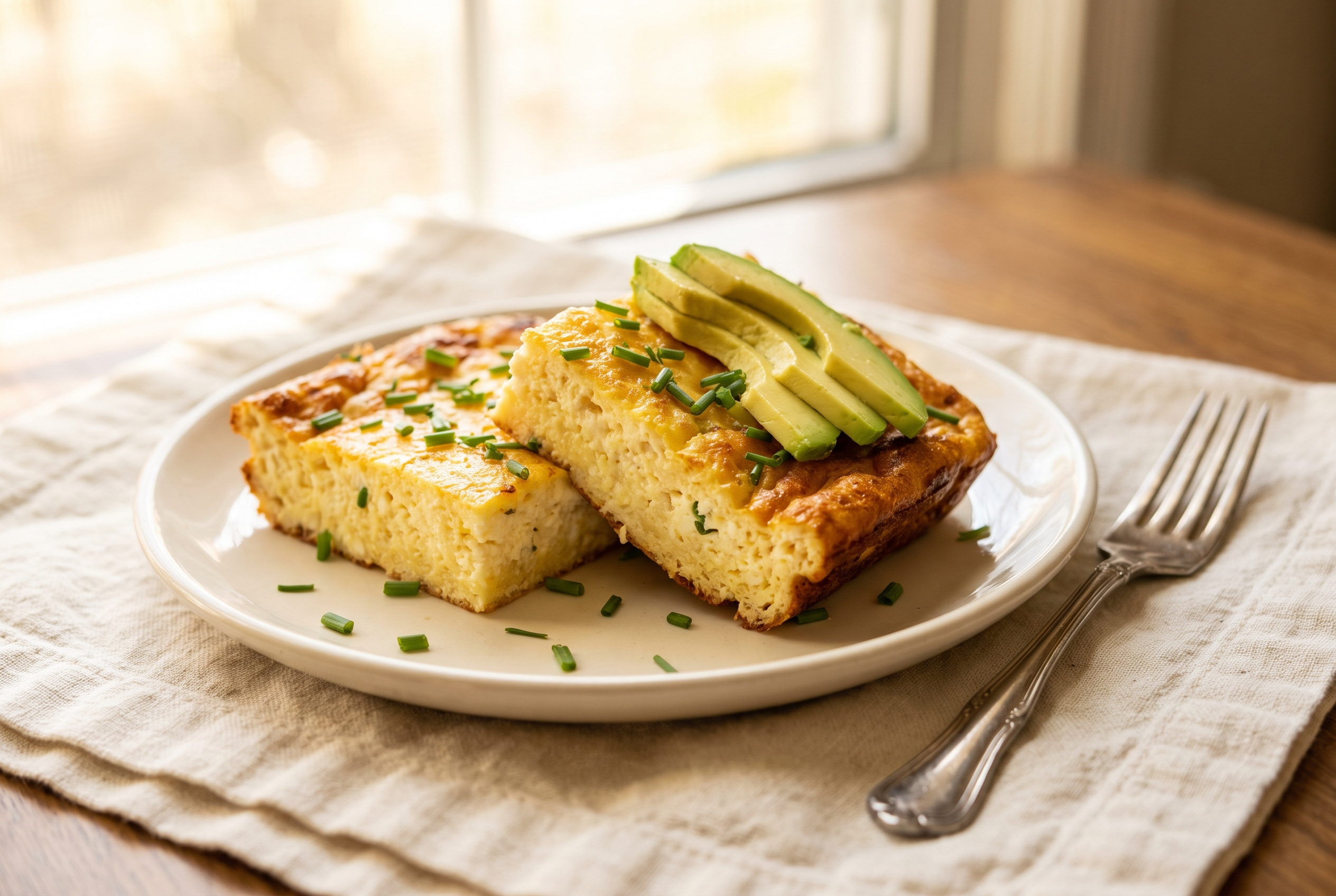
This cottage cheese breakfast casserole is what I make on Sunday so that Monday through Wednesday take four minutes each. A tub of cottage cheese goes into the blender with the eggs, which sounds odd and turns out to be the entire trick — it bakes up soft and custardy instead of rubbery, with 26g of protein a square.
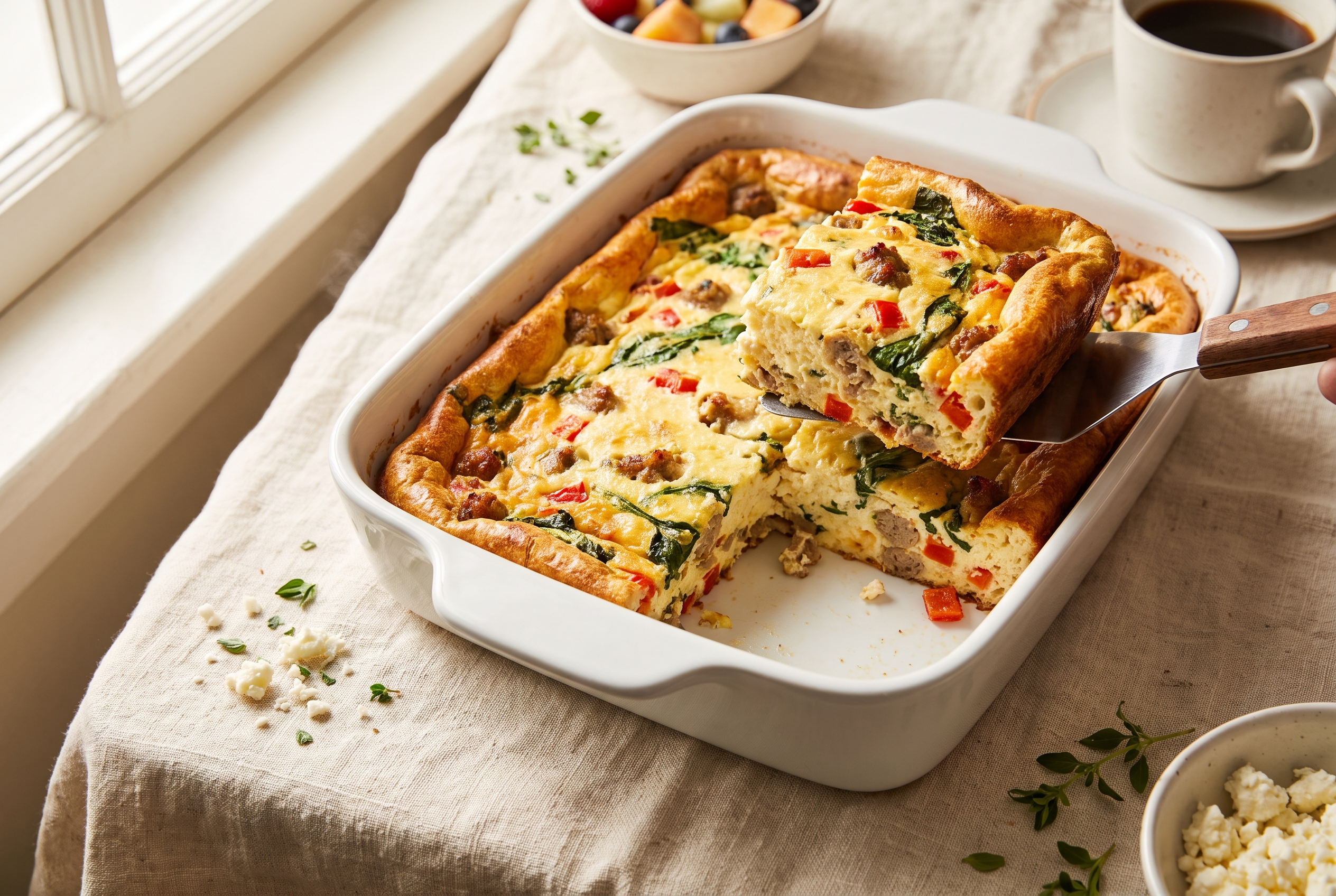
This is the make-ahead breakfast that actually holds up.
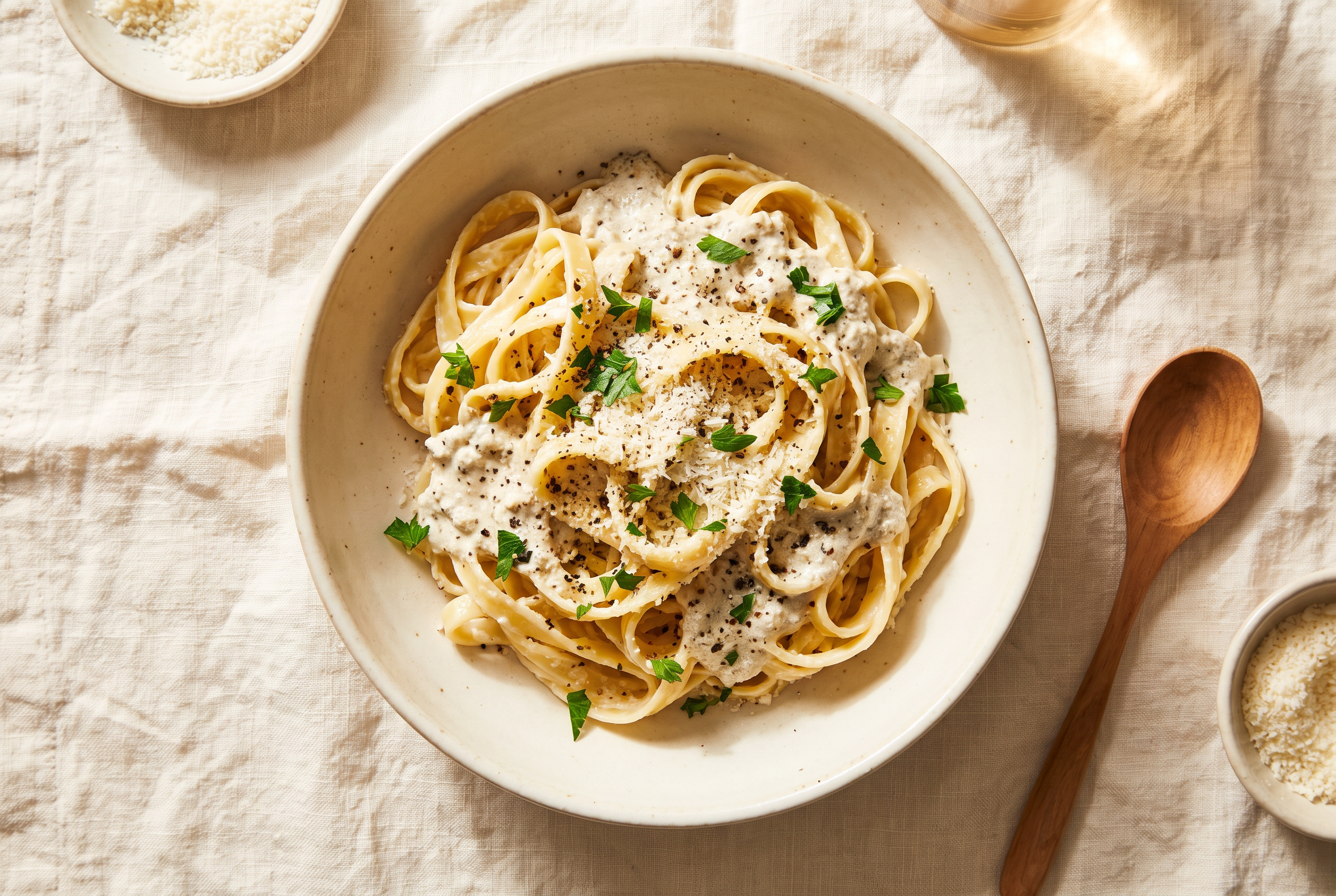
- Blending the cottage cheese is the whole secret. Whole curds leave wet pockets and a grainy bite; blended, it disappears into the eggs as a smooth custard and you'd never guess it was in there. Same principle that makes cottage cheese alfredo pasta work.
- No crust, no carbs to speak of. Eight grams of carbohydrate a serving, which makes it a genuinely easy healthy recipe to keep in the fridge if you're watching that — and it's naturally gluten-free without substituting anything.
- 26g of protein before you've done anything else. That's a real breakfast number — see where you land with the protein calculator — and it's why this shares a shelf with cottage cheese egg bites and high protein overnight oats in my meal prep week.
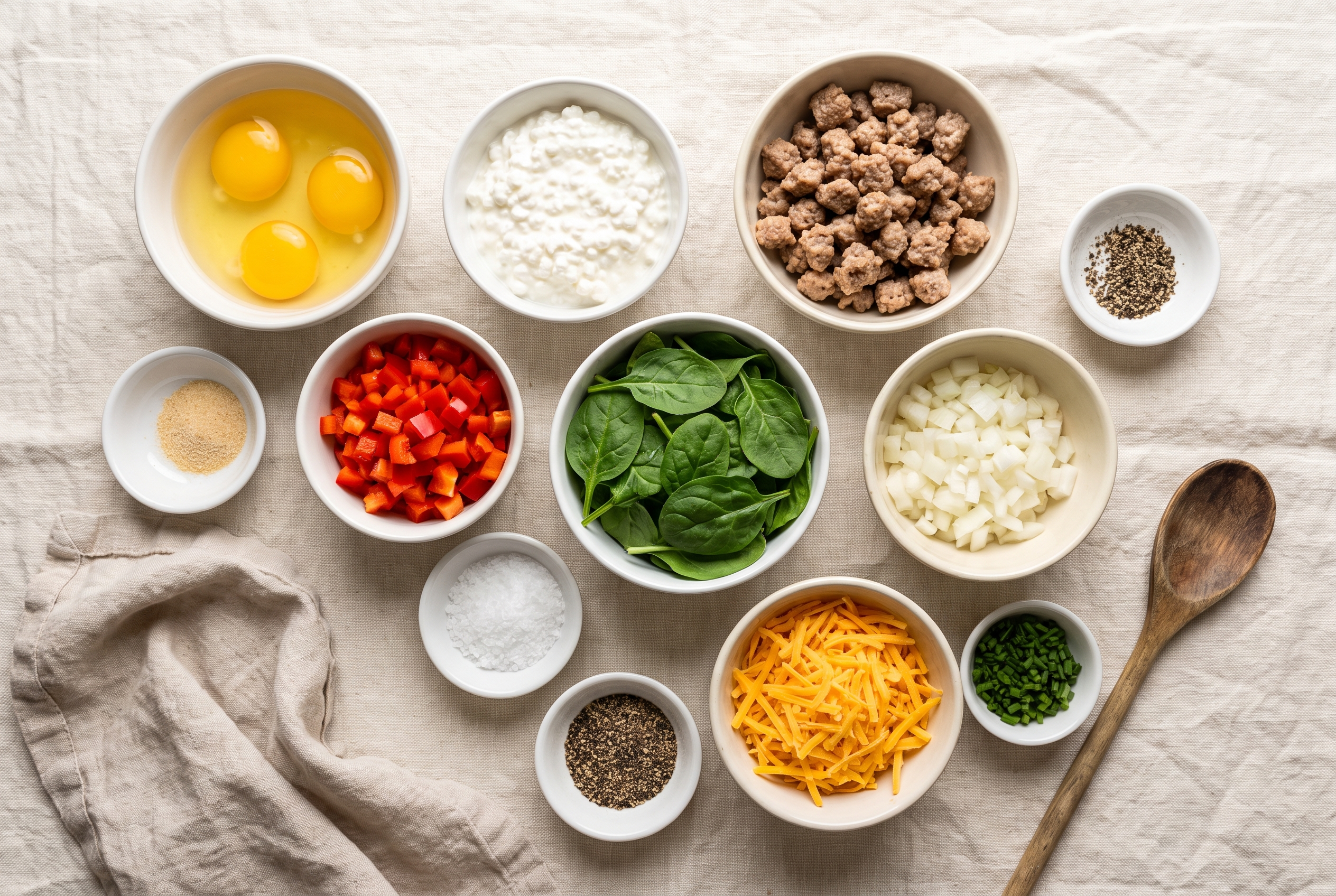
Here's what you'll need.
Two things are worth being fussy about: use full-fat (4%) cottage cheese, because low-fat versions weep water into the bake, and squeeze the cooked spinach genuinely dry. Everything else is flexible.
Here's how it all comes together.
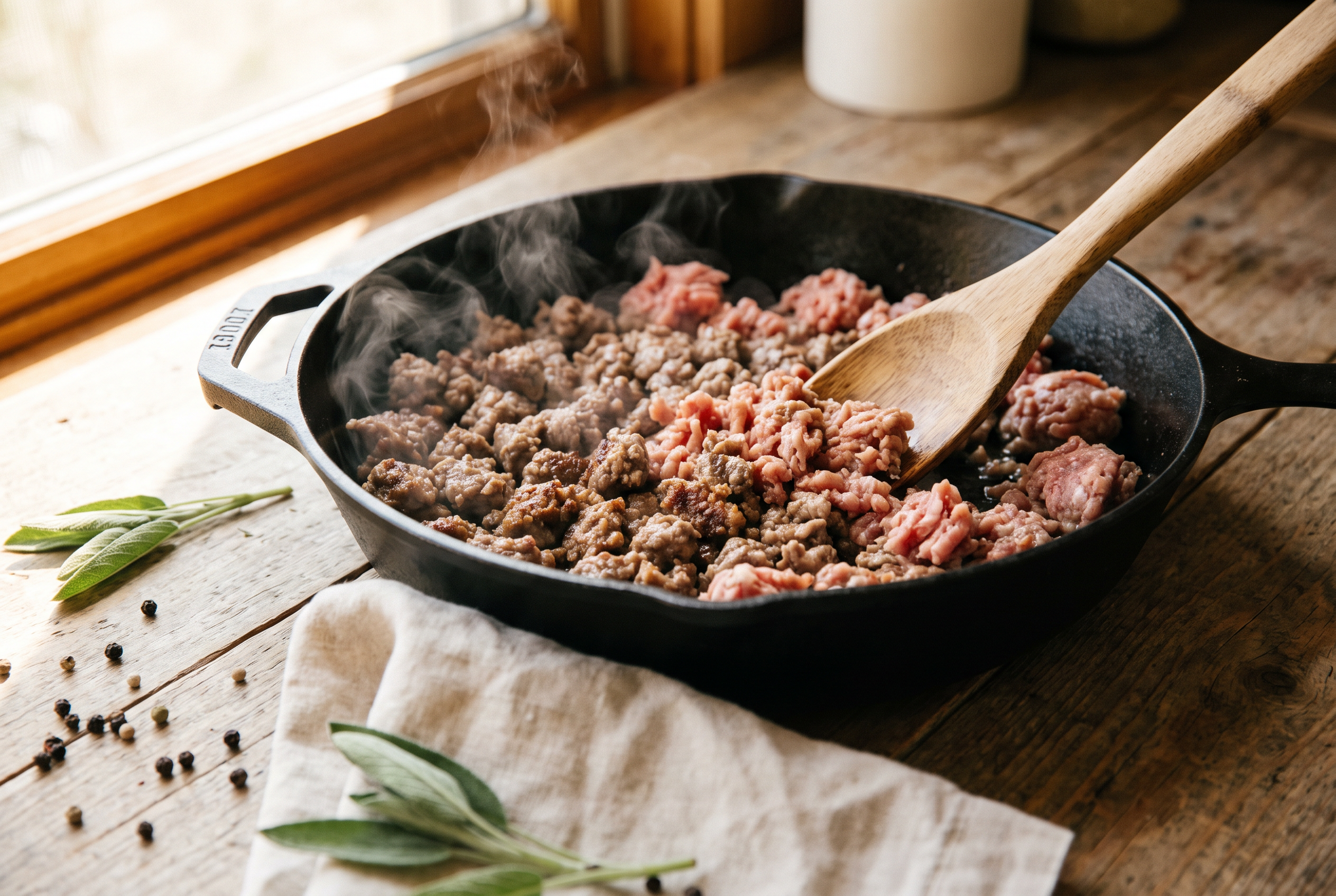
Cook the turkey breakfast sausage in a skillet over medium-high, breaking it into small crumbles. Get some real color on it — this is the only browning in the whole dish, and the casserole tastes flat without it.
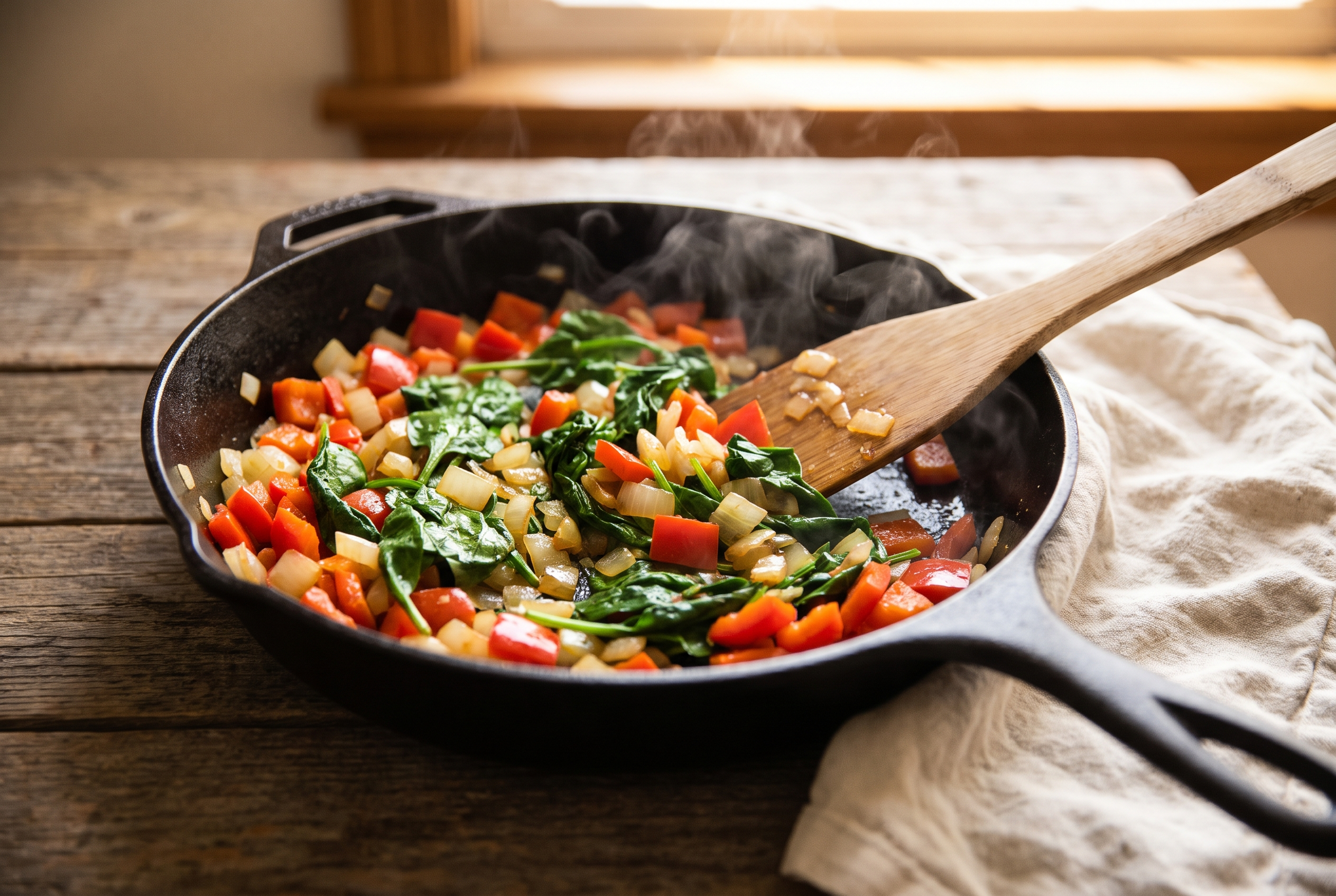
Add the diced onion and red pepper to the same pan and cook until softened, then wilt the spinach in at the end. Cook them longer than feels necessary — raw vegetables release water in the oven and that water ends up at the bottom of your casserole.
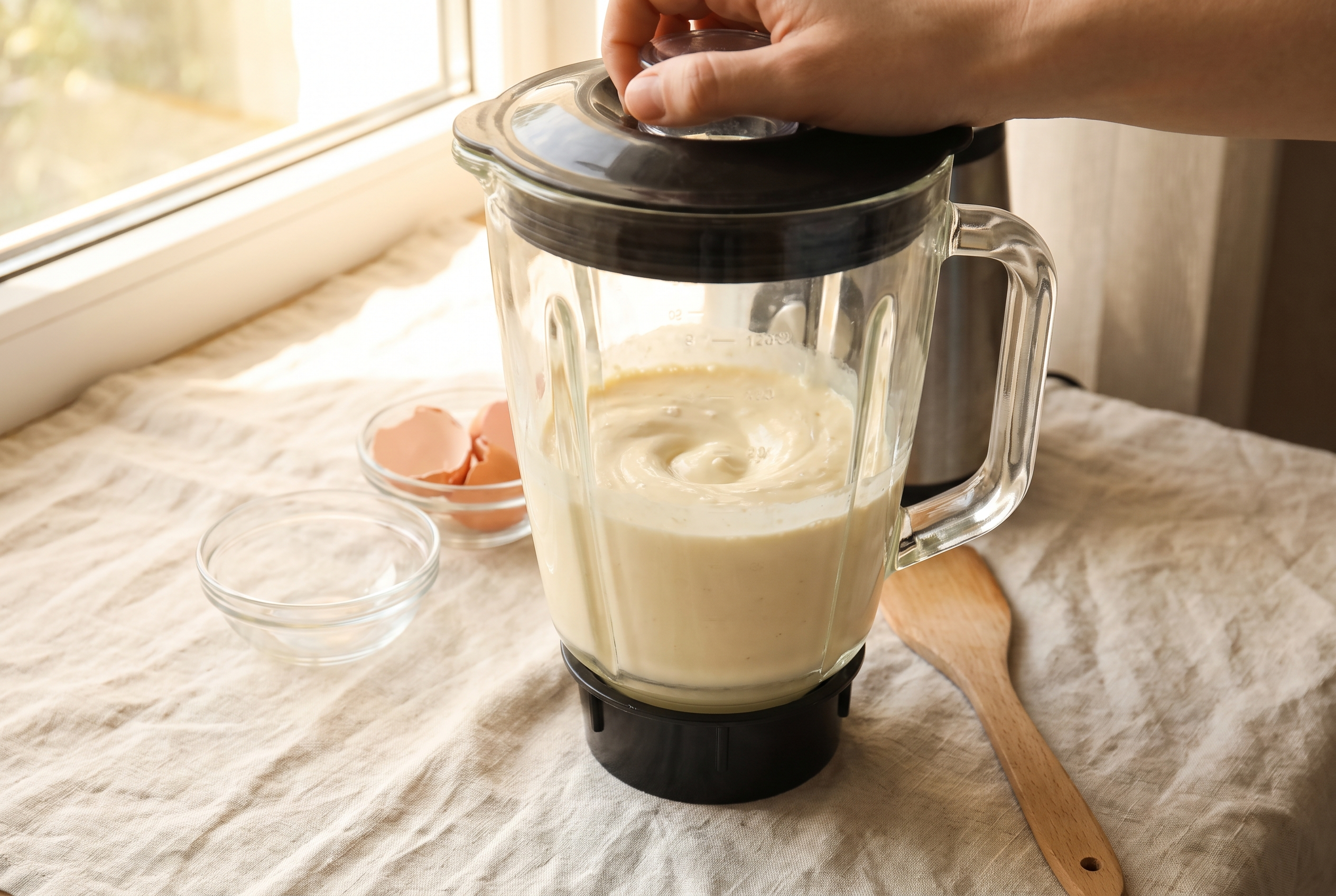
Put the eggs, cottage cheese, salt, pepper, and garlic powder in a blender and run it for a full thirty seconds until it's completely smooth and slightly frothy. You want no curds visible at all.
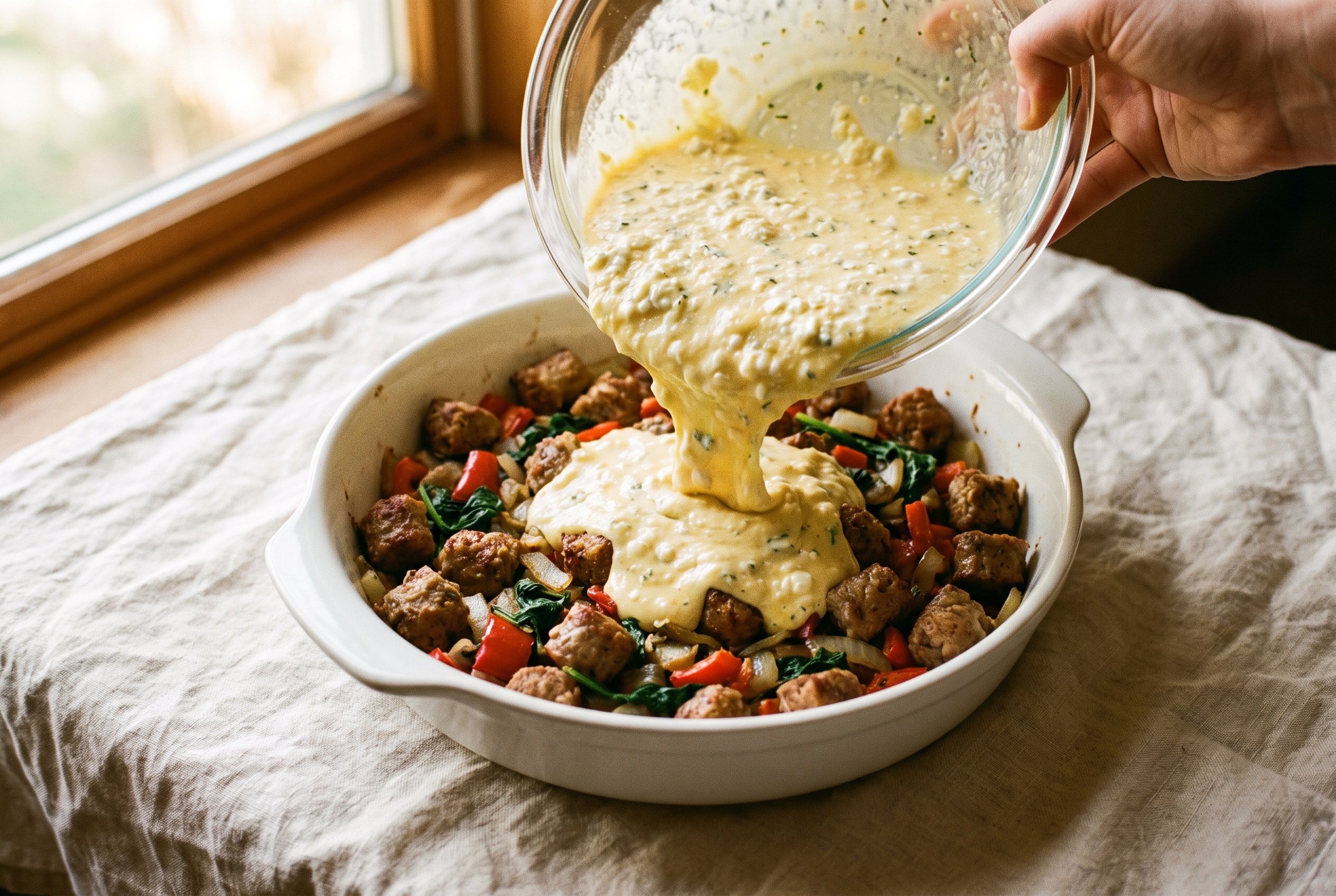
Spread the sausage and vegetables evenly across a greased 9x13 dish, then pour the blended custard over the top. Give the dish a gentle shake so everything settles level rather than stirring it, which knocks the air back out.
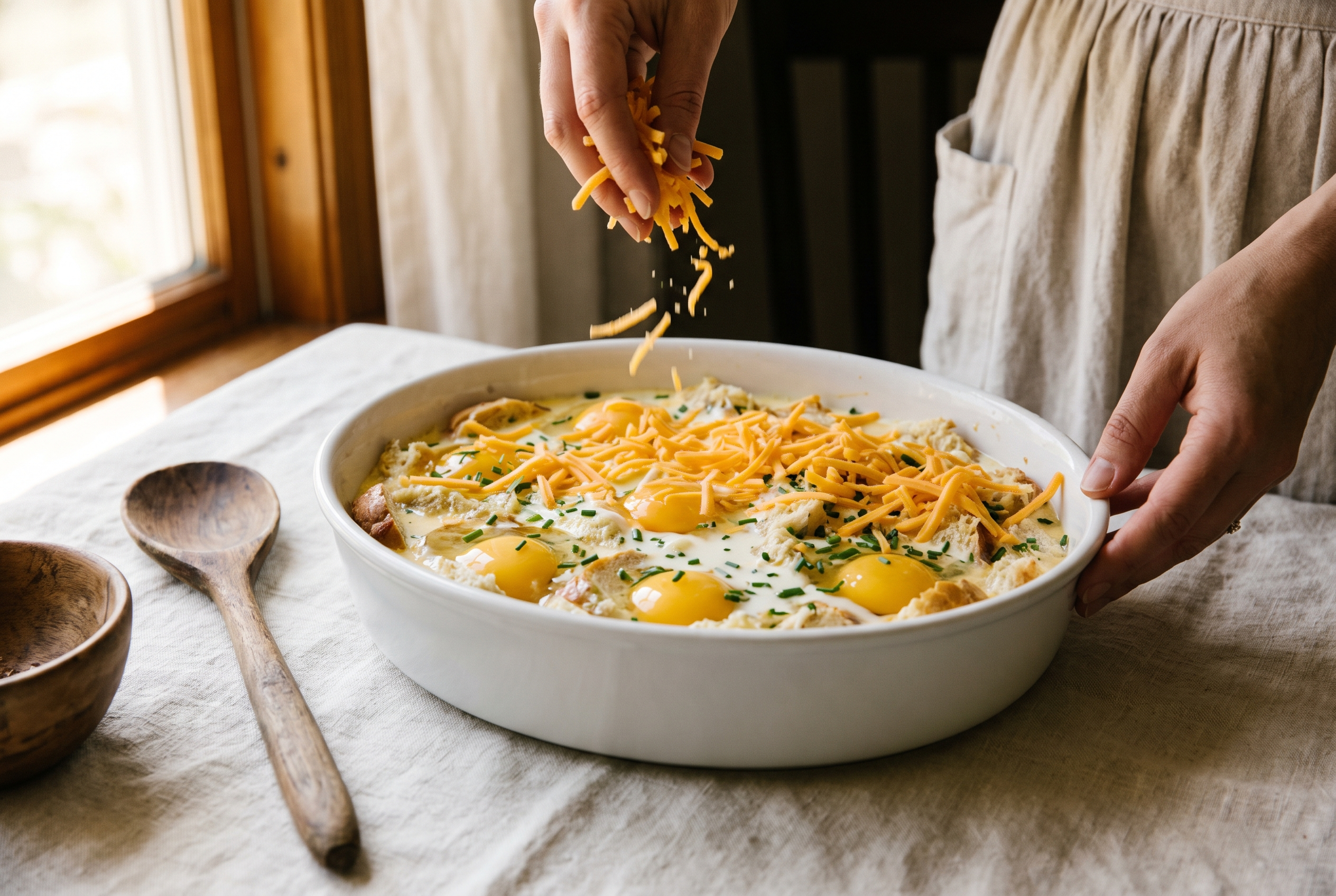
Scatter the shredded cheddar over the surface. It melts into a thin golden lid that keeps the top from drying out while the middle finishes setting.
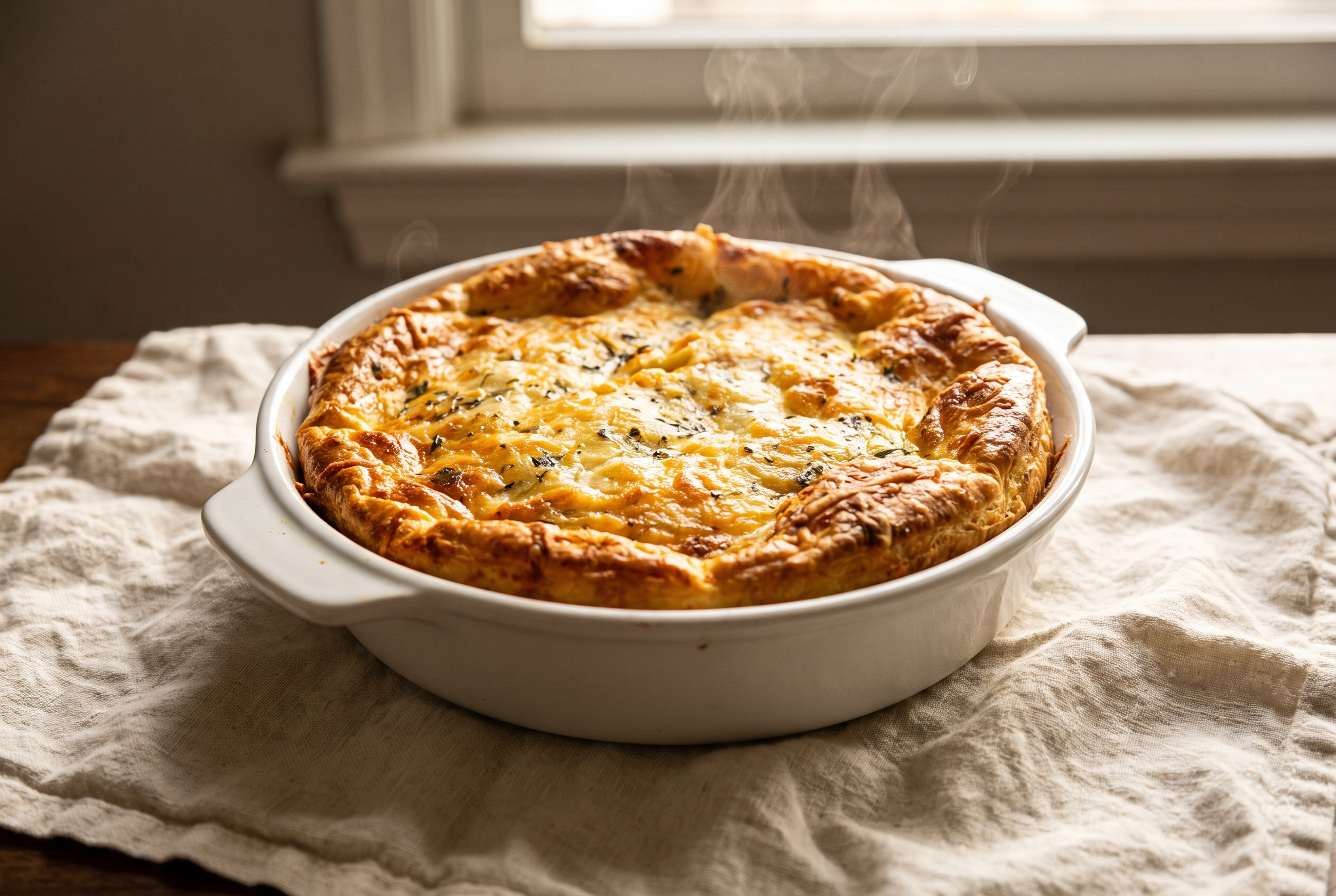
Thirty-five minutes at 350°F. It's ready when the edges are golden, the center barely wobbles, and a knife an inch off-center comes out clean. It puffs dramatically in the oven and settles as it cools — that's normal.
Things I learned while testing this recipe.
- Full-fat cottage cheese, always. The 4% version bakes into a proper custard. Low-fat and fat-free both weep, and you end up cutting squares out of a puddle.
- Blend longer than you think. Fifteen seconds leaves faint curds you can feel on the tongue. Thirty gets you a texture nobody can identify.
- Dry vegetables or wet casserole — pick one. Frozen spinach must be thawed and wrung out in a towel. Fresh spinach must be wilted and drained. Skipping this is the single most common failure.
- Rest it 10 minutes before cutting. Straight out of the oven it tears; after ten minutes it slices into clean squares. The same discipline that makes baked mac and cheese portion properly.
Why this is the make-ahead breakfast I actually keep making.
- It reheats without turning rubbery. The cottage cheese custard holds moisture far better than a plain egg bake, so day-four squares are still soft rather than springy.
- You can assemble it the night before. Mix everything, cover the unbaked dish, refrigerate overnight, and add 5 minutes to the bake in the morning.
- It's an easy GLP-1 friendly breakfast. High protein, low carbohydrate, and small portions that stay satisfying — worth pairing with the numbers on the protein calculator if you're tracking intake.
Here's what I'd serve with this.
- Sliced avocado and hot sauce, or a handful of berries if you want something bright alongside — there are more morning ideas in the breakfast section.
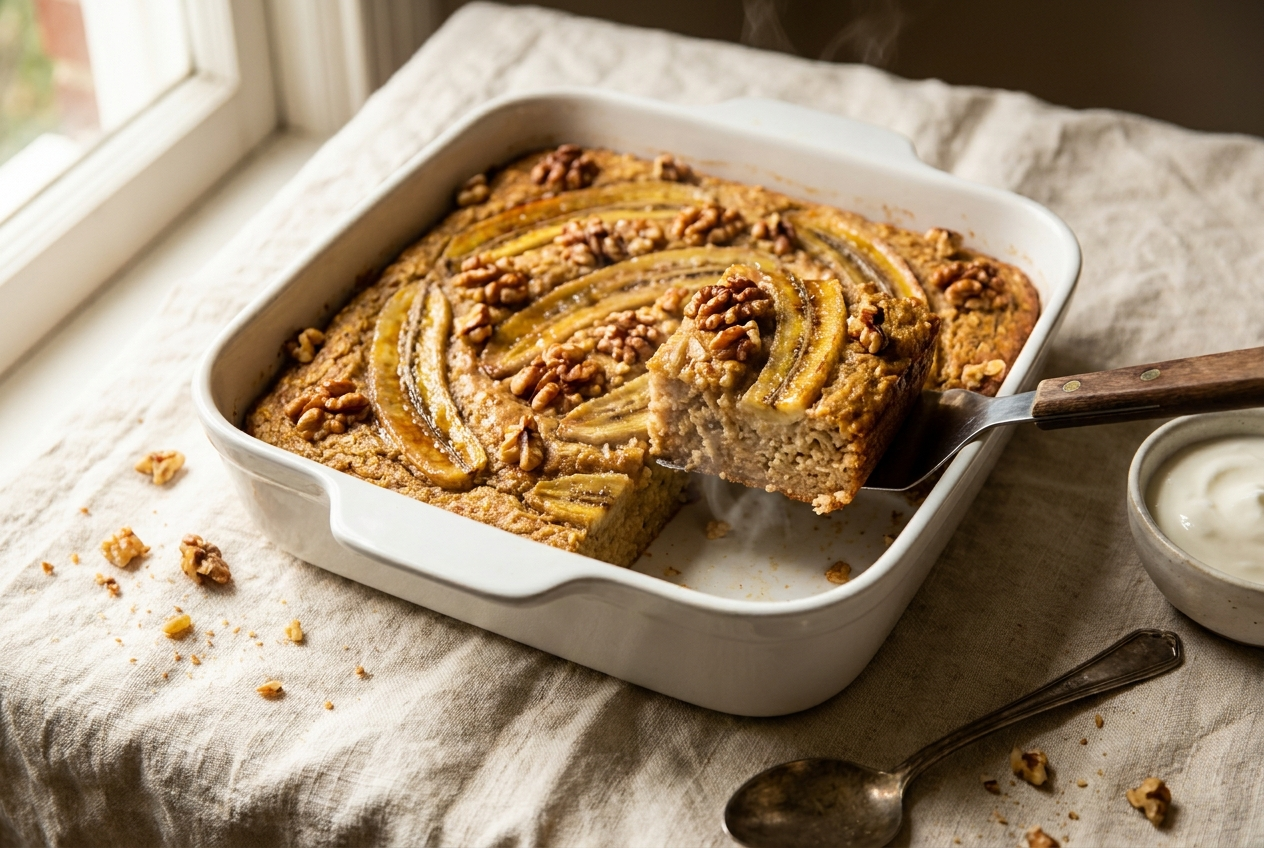
- Making a full brunch? Banana baked oatmeal bakes at the same temperature and can share the oven.
- For a portable version of this exact idea, cottage cheese egg bites do the same job in a muffin tin.
- If you'd rather eat your protein cold, high protein overnight oats take five minutes the night before.
- Today's other new recipe, one pot creamy chicken and rice, is the dinner end of the same make-ahead week.
Just in case you have leftovers.
Storing: cut into squares, cool completely, and refrigerate in an airtight container up to 5 days — cutting it cold gives you much cleaner edges than cutting it warm. It also freezes well, which most egg bakes don't: wrap individual squares and freeze up to 3 months, then thaw overnight in the fridge before reheating.
Reheating: 45 to 60 seconds in the microwave at 70% power is the sweet spot — full power drives the moisture out and turns the eggs tough. From frozen, unwrap and microwave 2 minutes at 50% power, then 30 seconds at full. In the oven, 12 minutes at 325°F covered with foil brings a whole dish back nicely.
More easy high protein breakfast recipes...

Cottage cheese breakfast casserole
★★★★★ 4.8 from 47 reviews — eggs blended with cottage cheese into a soft custard, baked over turkey sausage, peppers and spinach. Crustless, make-ahead, 26g protein a serving.
Ingredients
- 10 large eggs
- 1½ cups (12 oz) full-fat 4% cottage cheese
- 1 lb ground turkey breakfast sausage
- 1 red bell pepper, diced
- ½ medium onion, diced
- 4 cups fresh baby spinach (or 1 cup frozen, thawed and squeezed dry)
- 1 cup shredded sharp cheddar
- 1 tsp salt, ½ tsp black pepper, 1 tsp garlic powder
- 2 tbsp chopped fresh chives, to finish
- Butter or oil, for the dish
Instructions
- Brown the sausage. Heat the oven to 350°F and grease a 9x13 baking dish. Cook the turkey sausage in a large skillet over medium-high heat, breaking it into small crumbles, 6–7 minutes until well browned.
- Cook the vegetables. Add the onion and red pepper to the same skillet and cook 4 minutes until softened, then add the spinach and cook until fully wilted and any liquid has evaporated. Drain off any moisture.
- Blend the custard. Blend the eggs, cottage cheese, salt, pepper, and garlic powder for a full 30 seconds, until completely smooth and slightly frothy with no visible curds.
- Assemble. Spread the sausage and vegetables evenly in the baking dish, pour the egg mixture over, and shake the dish gently to level it.
- Top and bake. Scatter the cheddar over the surface and bake 33–38 minutes, until the edges are golden, the center barely wobbles, and a knife inserted an inch off-center comes out clean.
- Rest and cut. Rest 10 minutes, scatter with chives, and cut into 6 squares.
Notes: Pork sausage, bacon, or diced ham all work in place of the turkey — use about 1 lb either way. To make it vegetarian, double the vegetables and add 8 oz of sautéed mushrooms for savoriness. To assemble ahead, cover the unbaked dish and refrigerate overnight, then bake straight from cold with 5 extra minutes. A 9x9 dish also works but needs 50–55 minutes. Do not substitute low-fat cottage cheese; it releases water and the casserole will not set cleanly.
Nutrition (per serving, estimated): 265 calories · 26g protein · 8g carbs · 15g fat
Eating higher protein on purpose? The GLP-1 Cookbook is built around exactly this.
High-protein, lower-carb, satisfying portions that don't feel like a diet — the GLP-1 Cookbook is full of tested recipes with the protein already counted for you, including plenty of make-ahead breakfasts in the same spirit as this casserole.
Get the cookbook on AmazonFAQ
- Can you taste the cottage cheese in this breakfast casserole?
- Not if you blend it properly. Thirty seconds in a blender turns the curds into a smooth custard base — people who don't like cottage cheese eat this without noticing. Skipping the blender is what gives it away.
- Can I make this cottage cheese breakfast casserole the night before?
- Yes, and it's how I usually do it. Assemble the whole thing, cover it unbaked, and refrigerate overnight. Bake it straight from the fridge and add about 5 minutes to the time.
- Why did my casserole come out watery?
- Two usual causes: low-fat cottage cheese, which releases liquid as it bakes, or vegetables that weren't cooked down enough. Use 4% cottage cheese and make sure the spinach and peppers are dry before the custard goes over them.
- How much protein is in a serving?
- About 26 grams per square when it's cut into six, from the eggs, cottage cheese, sausage, and cheddar together. That's roughly double a standard two-egg breakfast.