Home › Dinner › Korean ground beef bowls
Korean ground beef bowls
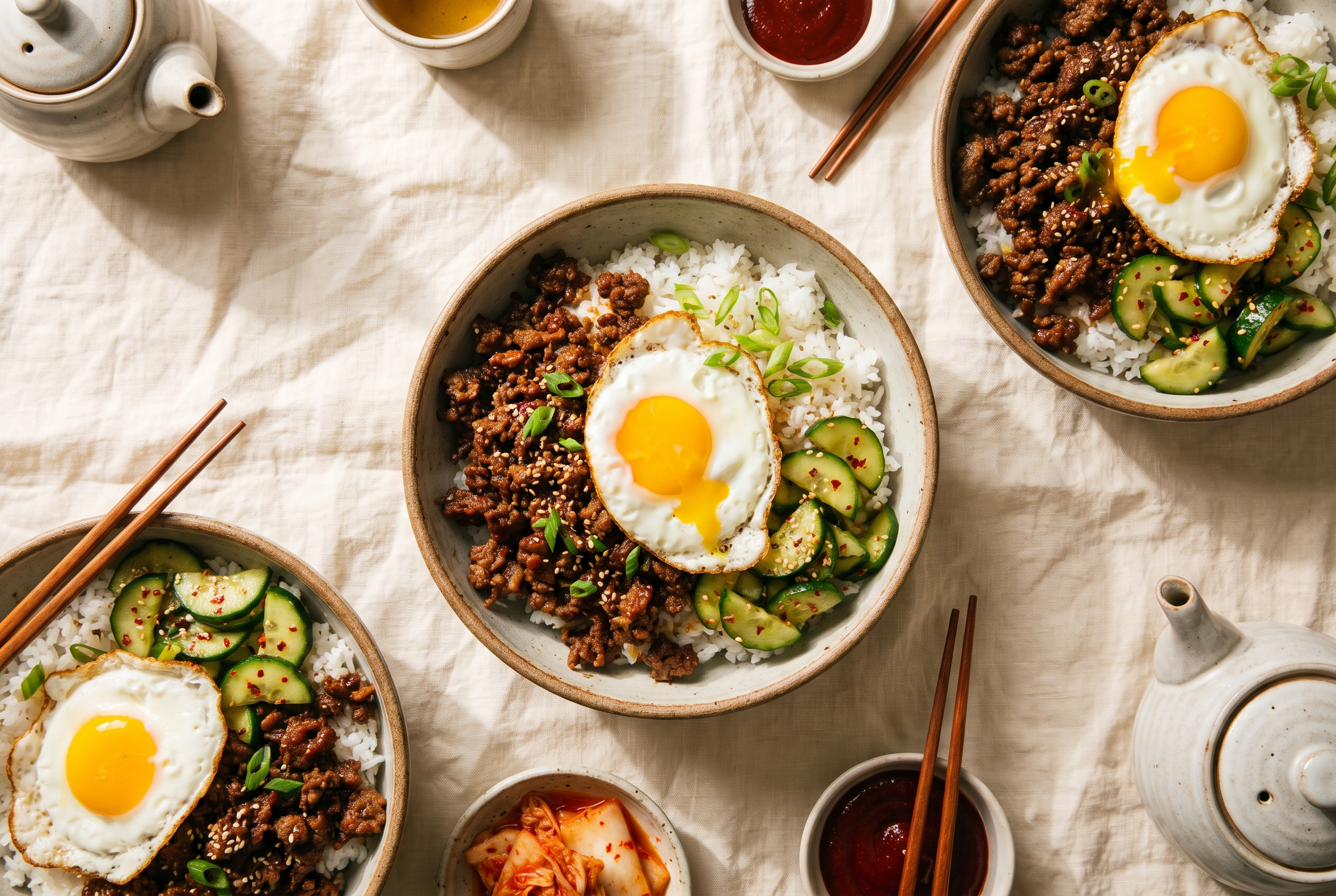
Korean ground beef bowls are the easy dinner recipe I fall back on when it's 6pm and dinner is still theoretical — one pound of ground beef, a four-ingredient sauce you stir in a mug, and rice. Twenty minutes, one skillet, 42g of protein a bowl, and it costs less than takeout for one.
 Save recipes like this straight from TikTok and plan your week in minutes with RecipeLoop, the free AI meal planner.
This is the cheapest twenty-minute dinner in my rotation.
- The sauce is four things you already own. Soy sauce, brown sugar, sesame oil and garlic. That's ground beef bulgogi in its honest form — no marinating, no thin-sliced ribeye, no shopping trip. Same trick that makes beef and broccoli work on a weeknight.
- 42g of protein for about three dollars a serving. Ground beef is the most underrated protein per dollar in the store, and a pound feeds four people properly here. Run your own target on the protein calculator if you're tracking.
- Everyone builds their own bowl. Rice, beef, then whatever's in the fridge — cucumber, kimchi, shredded carrot, a fried egg. Picky eaters get plain beef and rice and nobody argues, the same way chicken burrito bowls keep the peace.
Here's what you'll need.
Use 85/15 ground beef — 93/7 goes dry and chalky because there's no braising liquid to save it. Light brown sugar is what gives you that glossy, almost-lacquered sauce; honey works but scorches faster. Gochujang is optional but it's what separates this from plain teriyaki, and one tub lasts a year in the fridge.
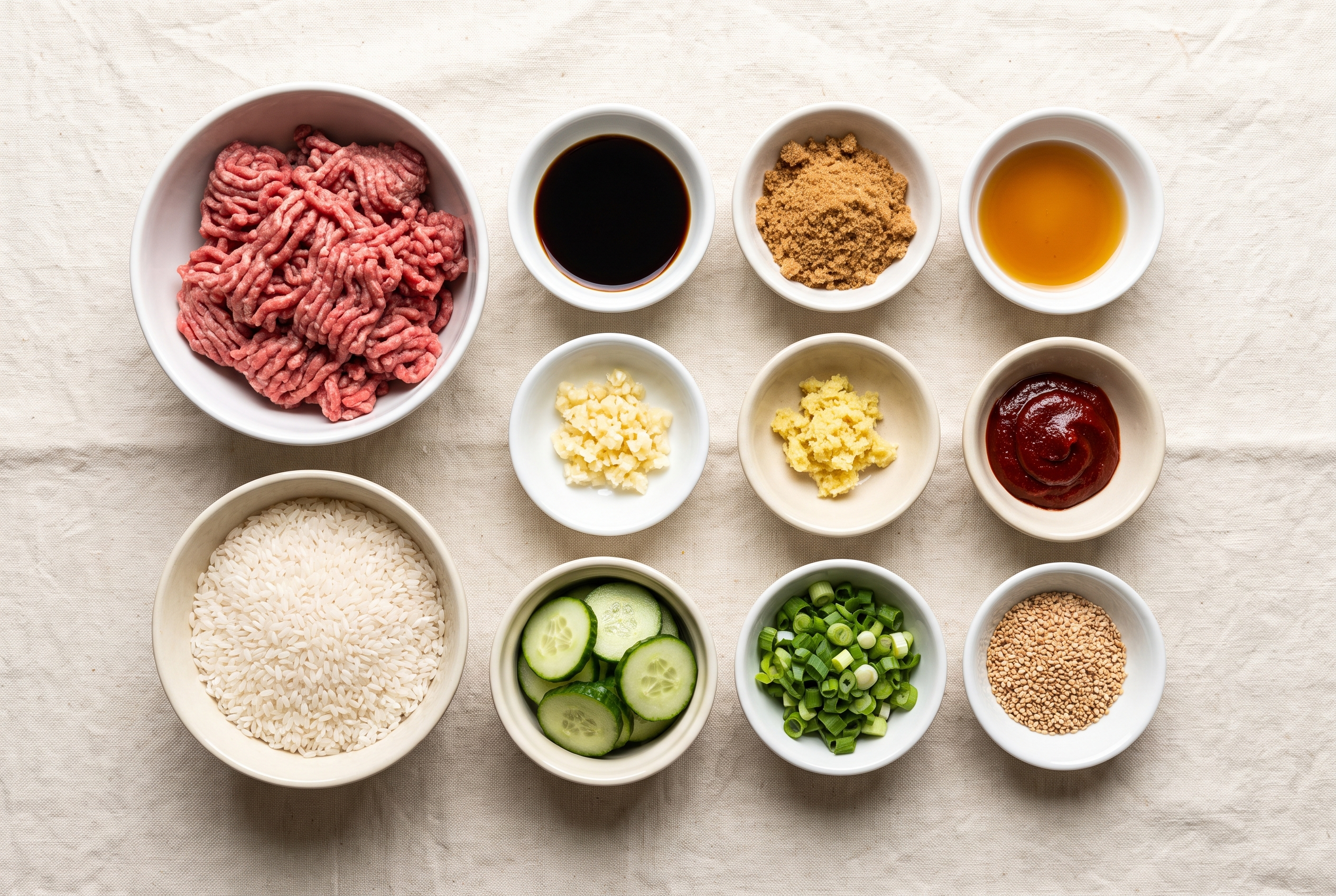
Here's how it all comes together.
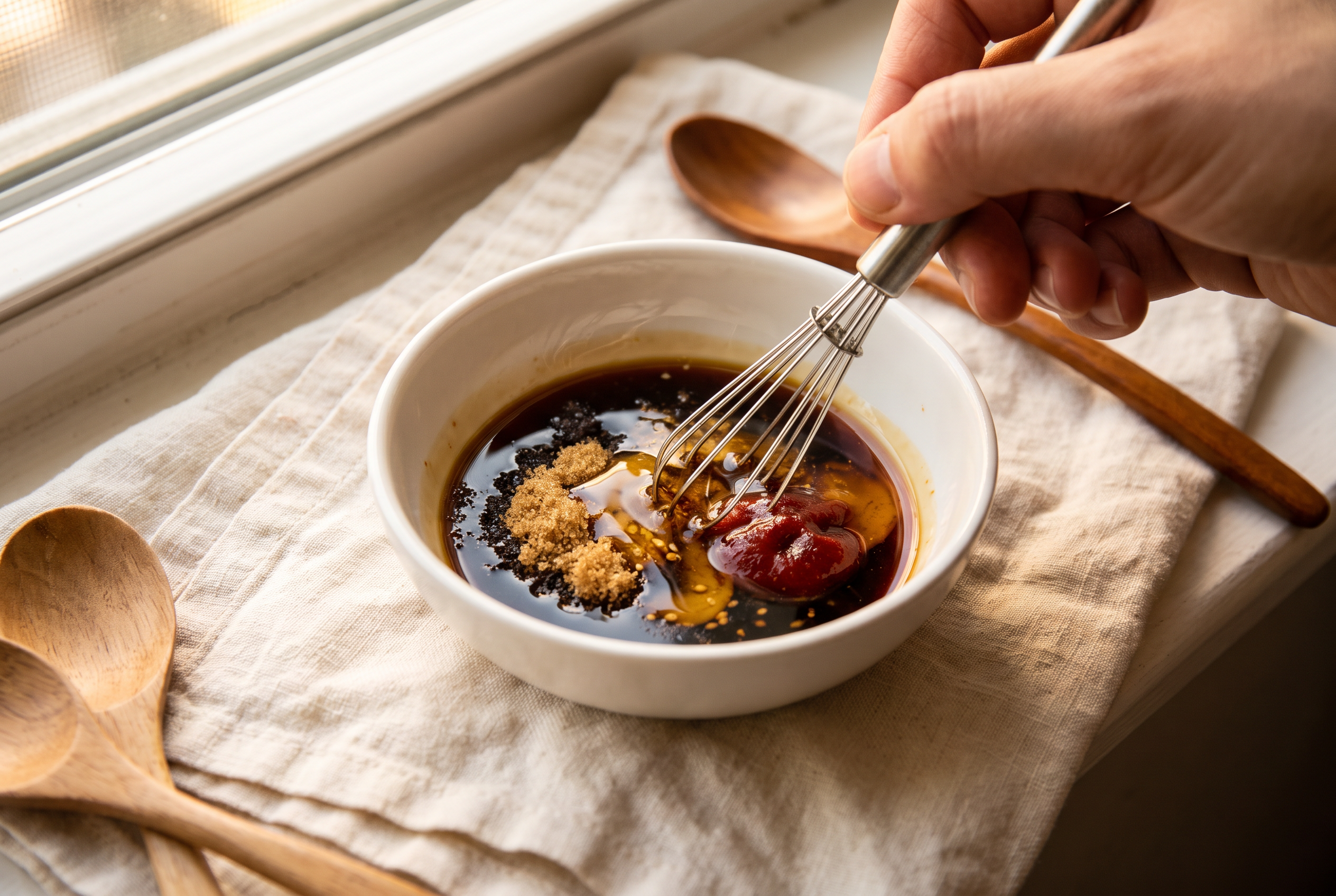
Whisk the soy sauce, brown sugar, sesame oil, rice vinegar, grated garlic, grated ginger and gochujang in a small bowl or mug until the sugar dissolves. Doing this first means it hits the pan all at once instead of you measuring over a spitting skillet.
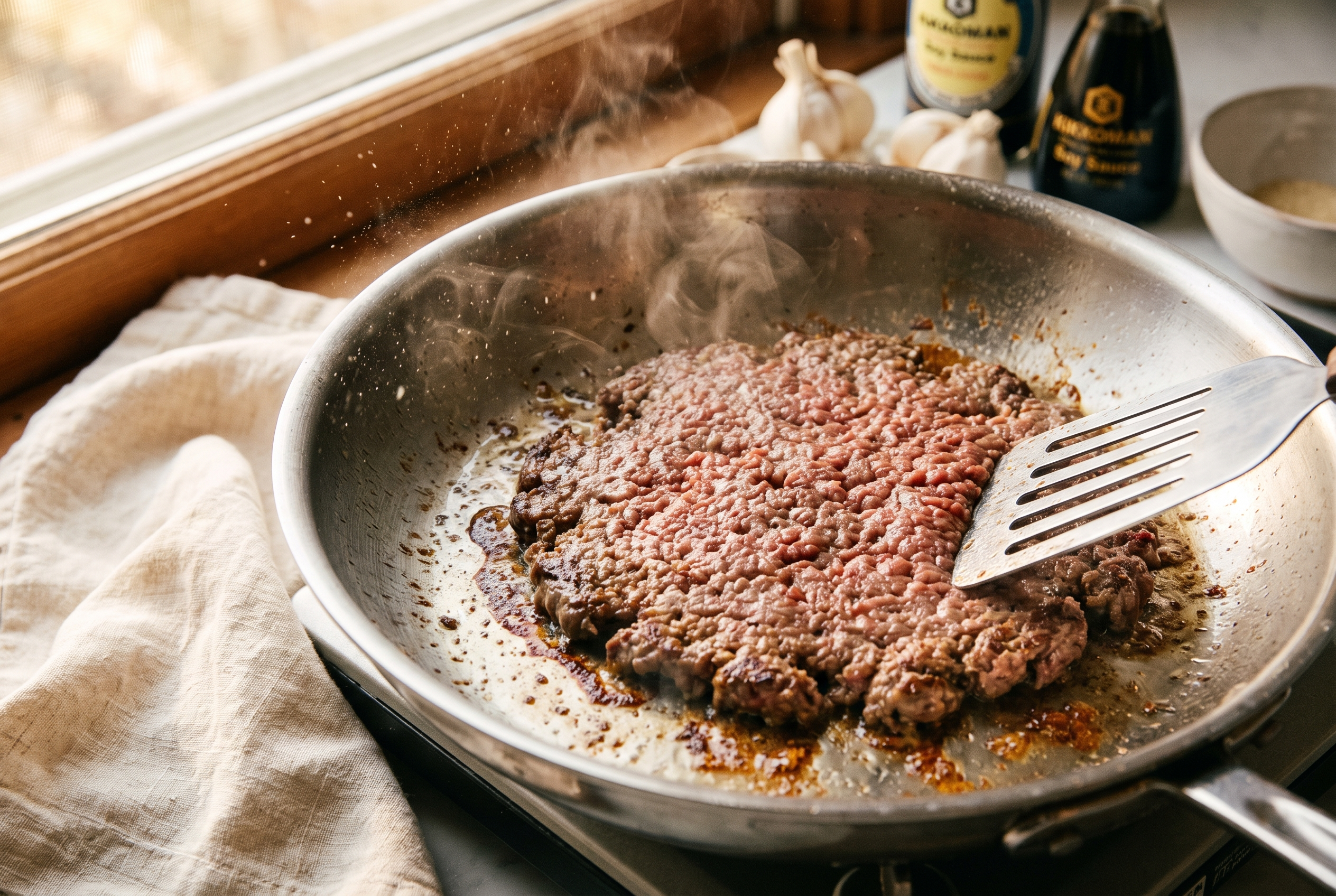
Get a wide skillet properly hot over medium-high, add the ground beef and press it flat. Leave it alone for three full minutes before you break it up — that undisturbed contact is where the browning comes from, and browning is most of the flavor here.
Crumble the beef into bite-size pieces and cook 3 to 4 minutes more until no pink remains. Tip off all but about a tablespoon of fat — leave too much and the sauce slides off the meat instead of clinging to it.
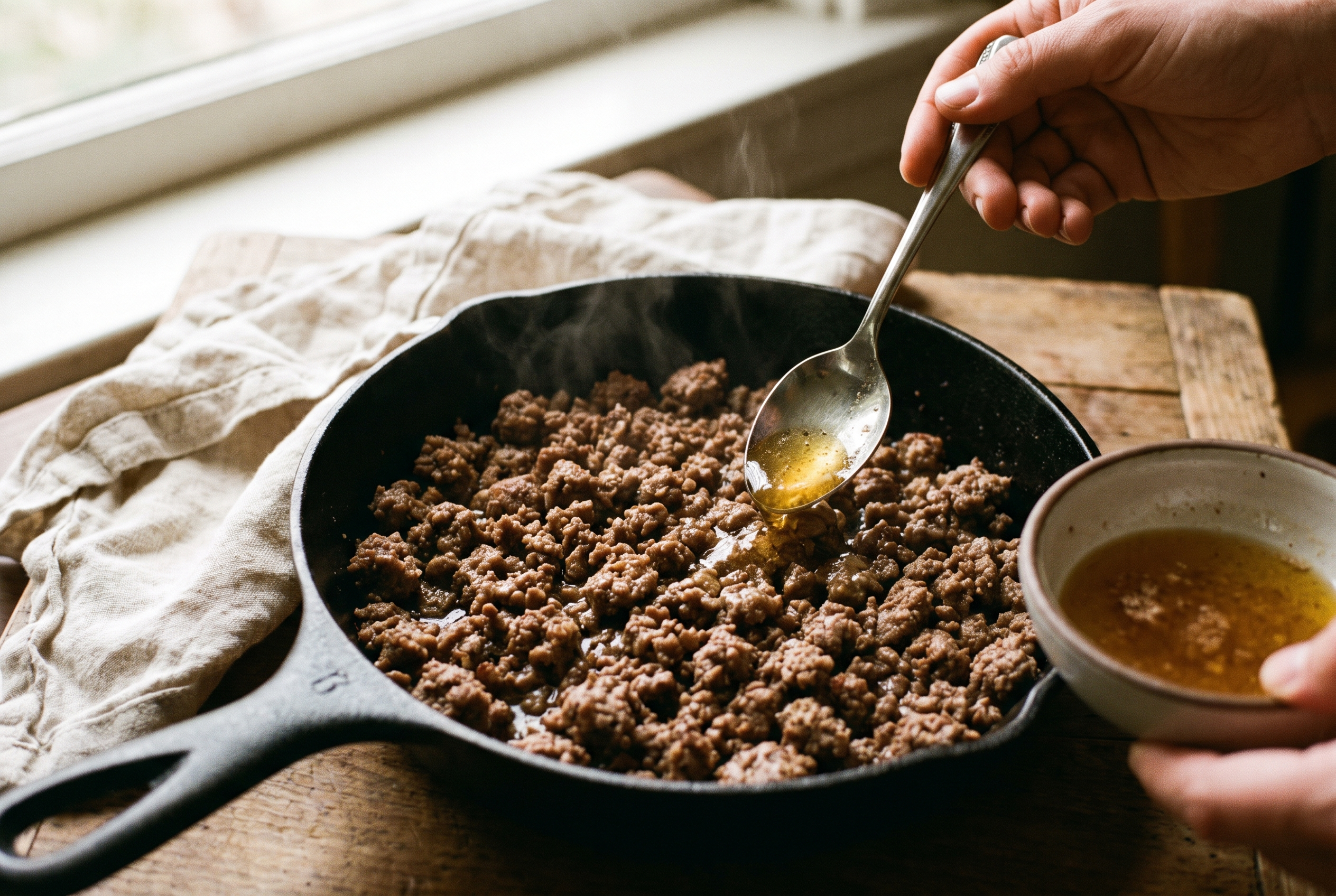
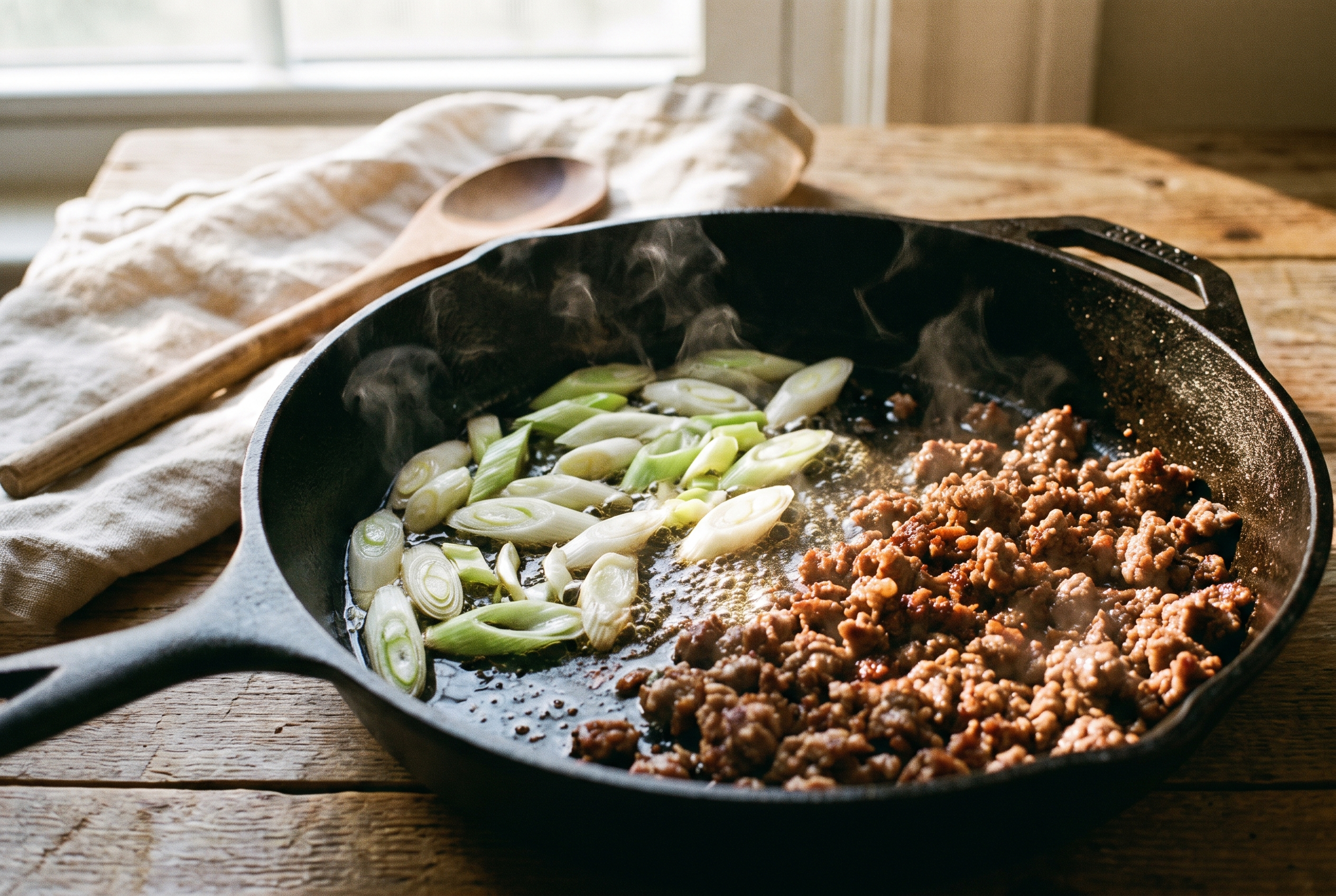
Push the beef to one side, add the white parts of the scallions to the bare pan and cook 30 seconds until they smell sweet. Thirty seconds is the whole commitment and it gives the sauce a base it otherwise lacks.
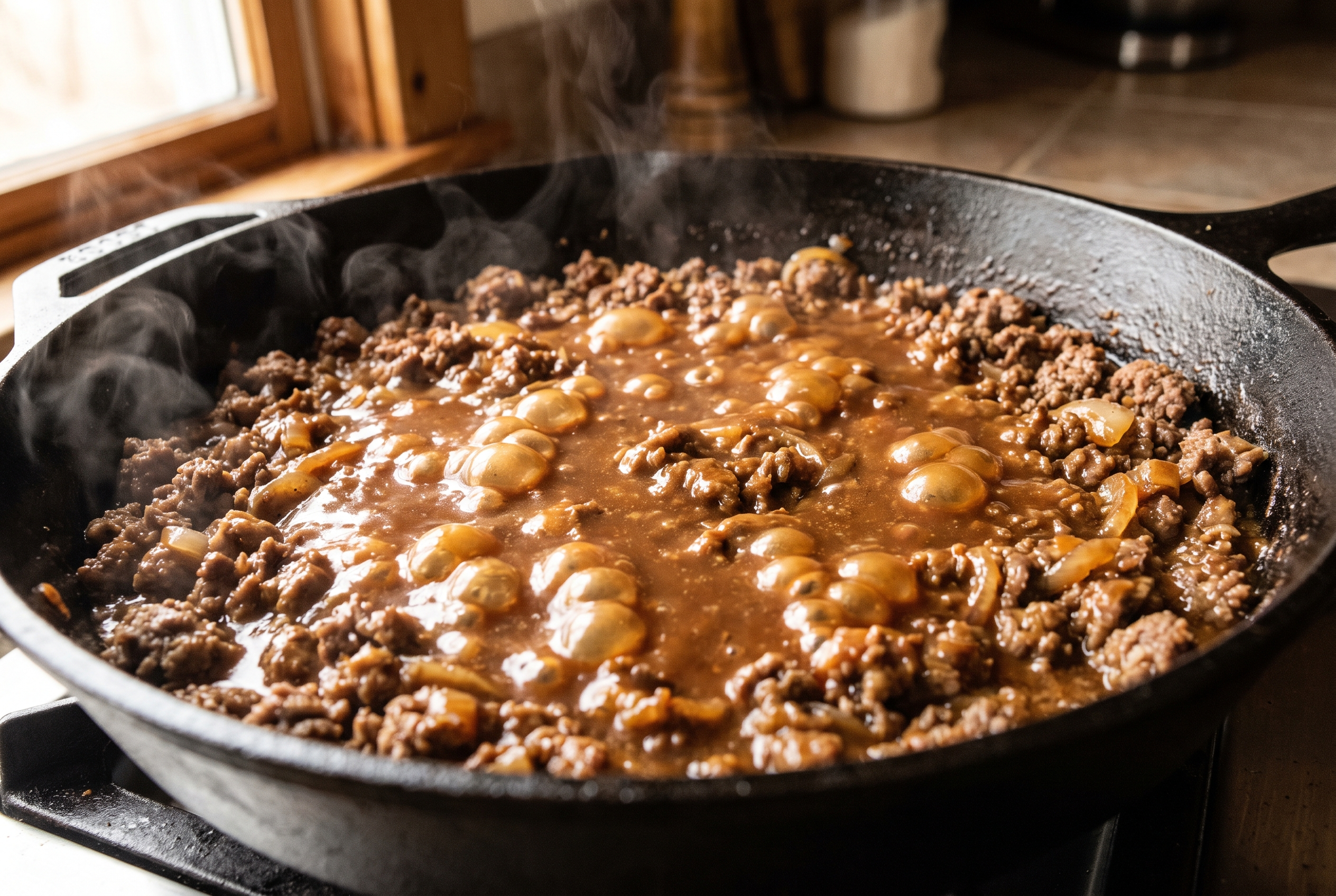
Add the sauce and stir constantly for 2 to 3 minutes. It will bubble, thicken and turn glossy, coating every crumb of beef. Pull it off the heat while there's still a little sauce pooling — it keeps tightening as it sits.
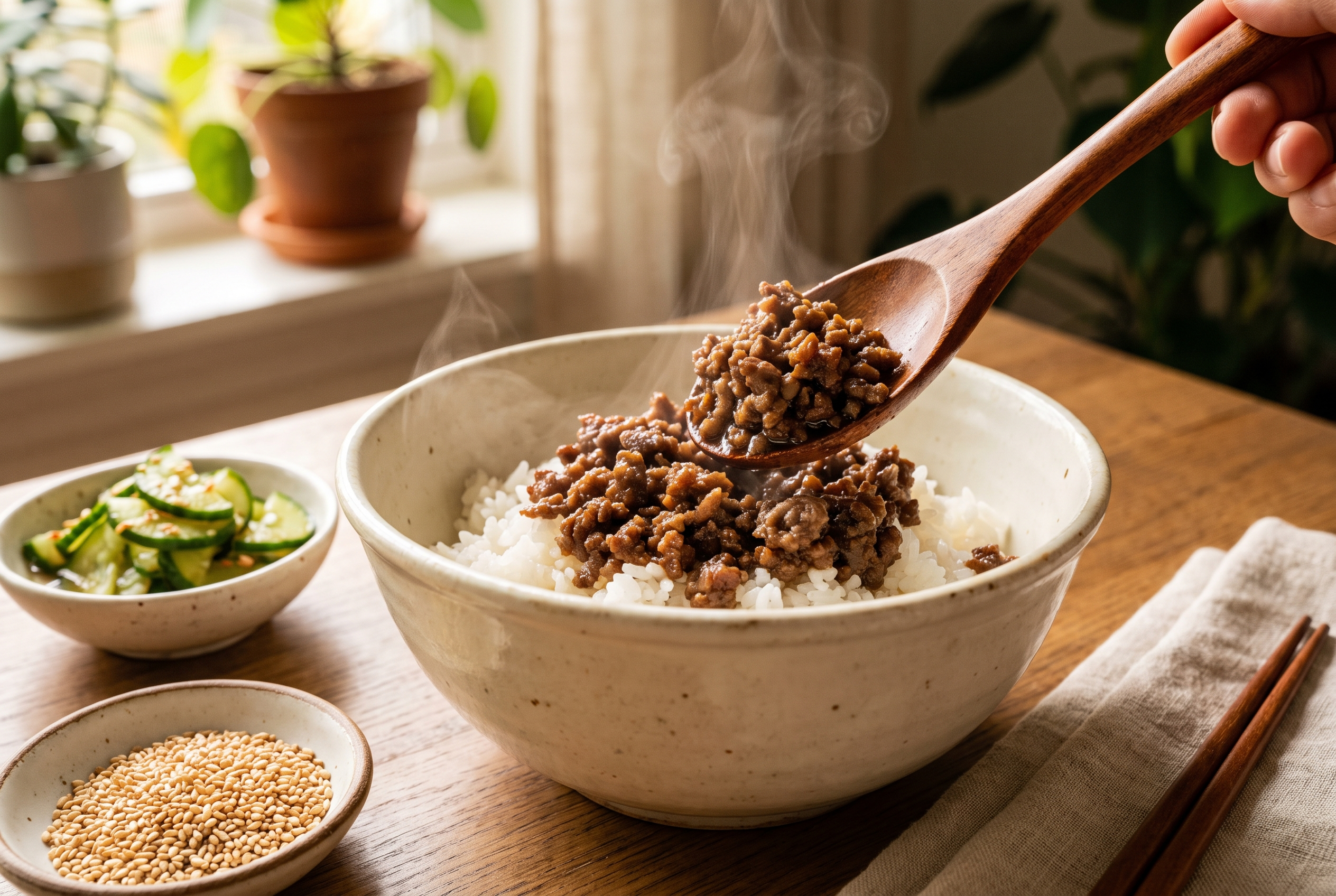
Spoon the beef over hot rice, then add the quick cucumber salad, a scatter of sesame seeds and scallion greens, and a fried egg if you want dinner to feel like more than it was. Serve immediately while the rice is steaming.
 Eating higher-protein on purpose? The Ultimate GLP-1 High Protein High Fiber Cookbook is full of meals like this one.
Things I learned while testing this recipe.
- Don't stir the beef for the first three minutes. I know it feels wrong. But a stirred-from-the-start pound of beef steams grey and tastes like nothing; an undisturbed one builds a brown crust that carries the whole dish.
- Grate the garlic and ginger, don't mince. On a microplane they melt into the sauce instead of sitting in it as chunks that catch and burn in the last two minutes.
- Salt the cucumbers ten minutes ahead. A teaspoon of salt and a rest pulls the water out, so the quick salad stays crunchy and sharp instead of flooding the bottom of the bowl.
- Taste before the last of the sugar goes in. Soy sauce brands vary wildly in saltiness. Start with three tablespoons of sugar, taste the glaze, then decide — you can't walk it back.
Make it ahead, and make it stretch.
- The beef reheats better than most. Cook the full batch, refrigerate, and it's four lunches. The sauce keeps it moist in a way plain browned beef never manages.
- Freeze it flat. Portion the cooked beef into freezer bags pressed flat and it thaws in ten minutes under warm water. Three months, no texture loss.
- Swap the protein freely. Ground turkey or chicken works with an extra teaspoon of sesame oil to make up for the leaner meat. The sauce is the recipe; the meat is negotiable.
Here's what I'd serve with this.
- Quick cucumber salad — sliced thin, salted, tossed with rice vinegar and sesame.
- Steamed rice, or cauliflower rice if you're keeping it lighter.
- Egg roll in a bowl if you want the same flavors with no rice at all.
- Air fryer brussels sprouts roasting while the beef cooks.
- Chocolate cottage cheese mousse for a high-protein finish.
Just in case you have leftovers.
Storing: keep the beef in an airtight container in the fridge for up to 4 days, with the rice and cucumber stored separately so nothing goes soggy. It's one of the few dinners that genuinely tastes better on day two once the sauce has soaked in.
Reheating: microwave a bowl at 70% power for 90 seconds, or warm the beef in a skillet over medium with a splash of water to loosen the glaze. Add fresh cucumber and scallions after reheating, never before.
More easy dinner recipes...
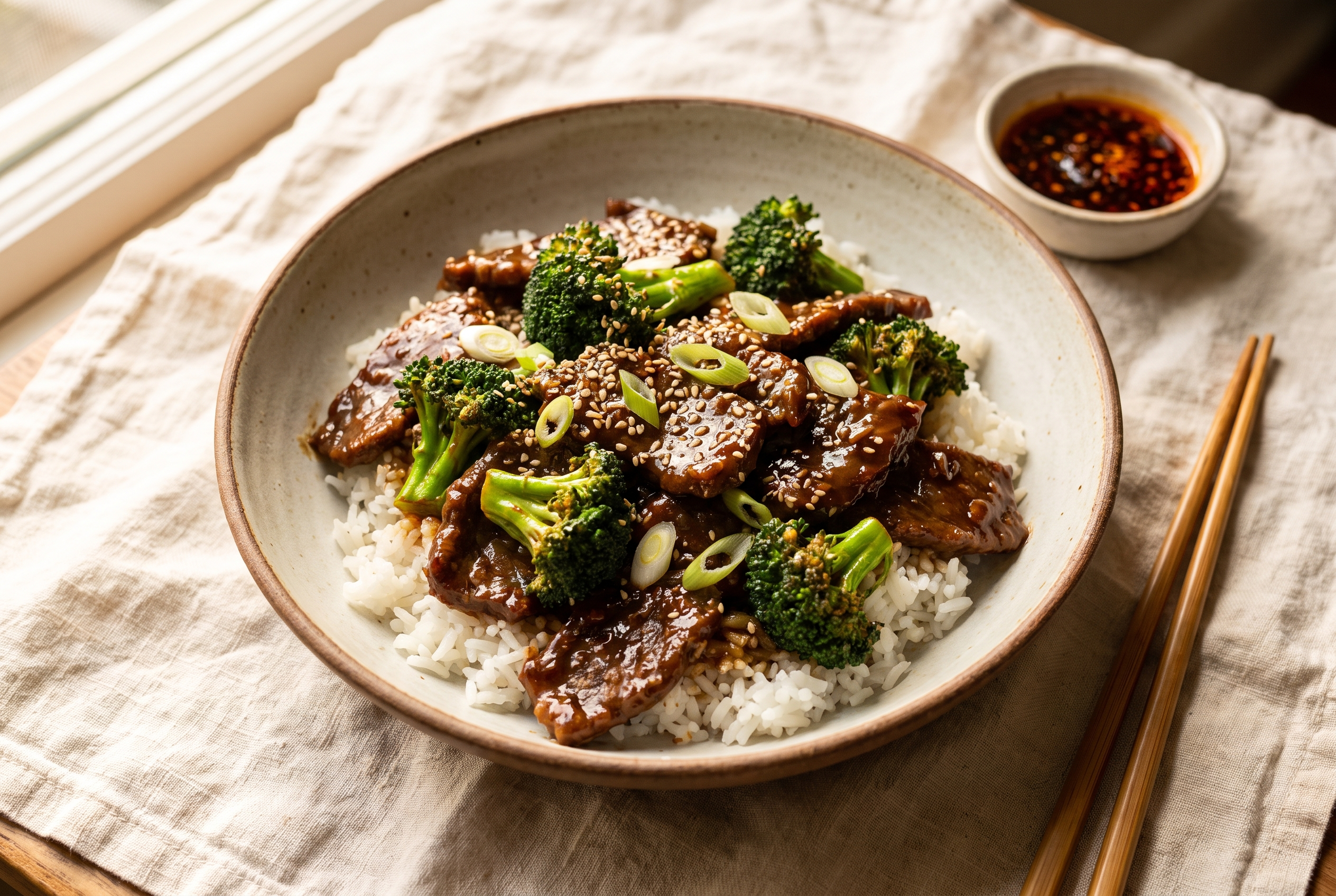
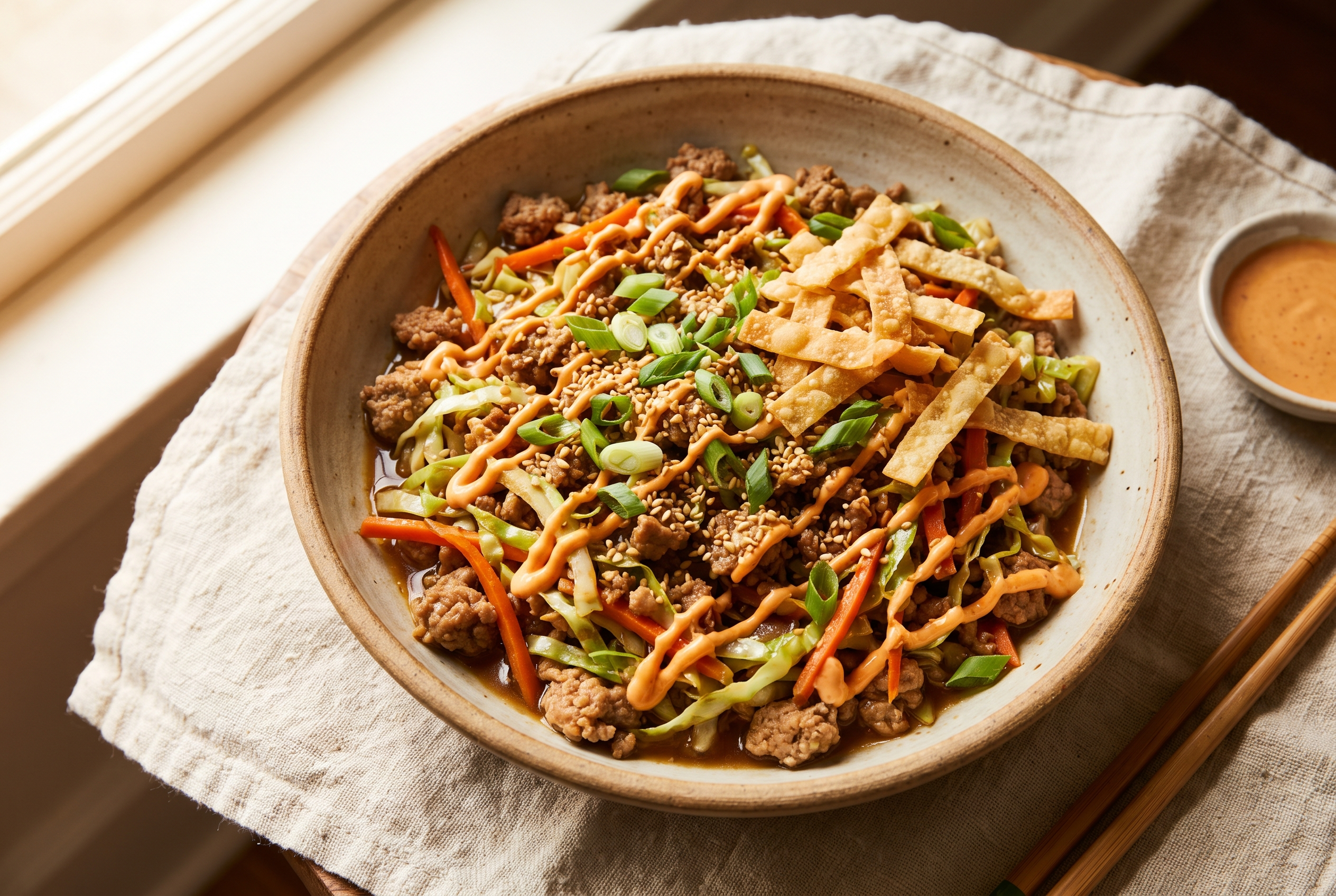
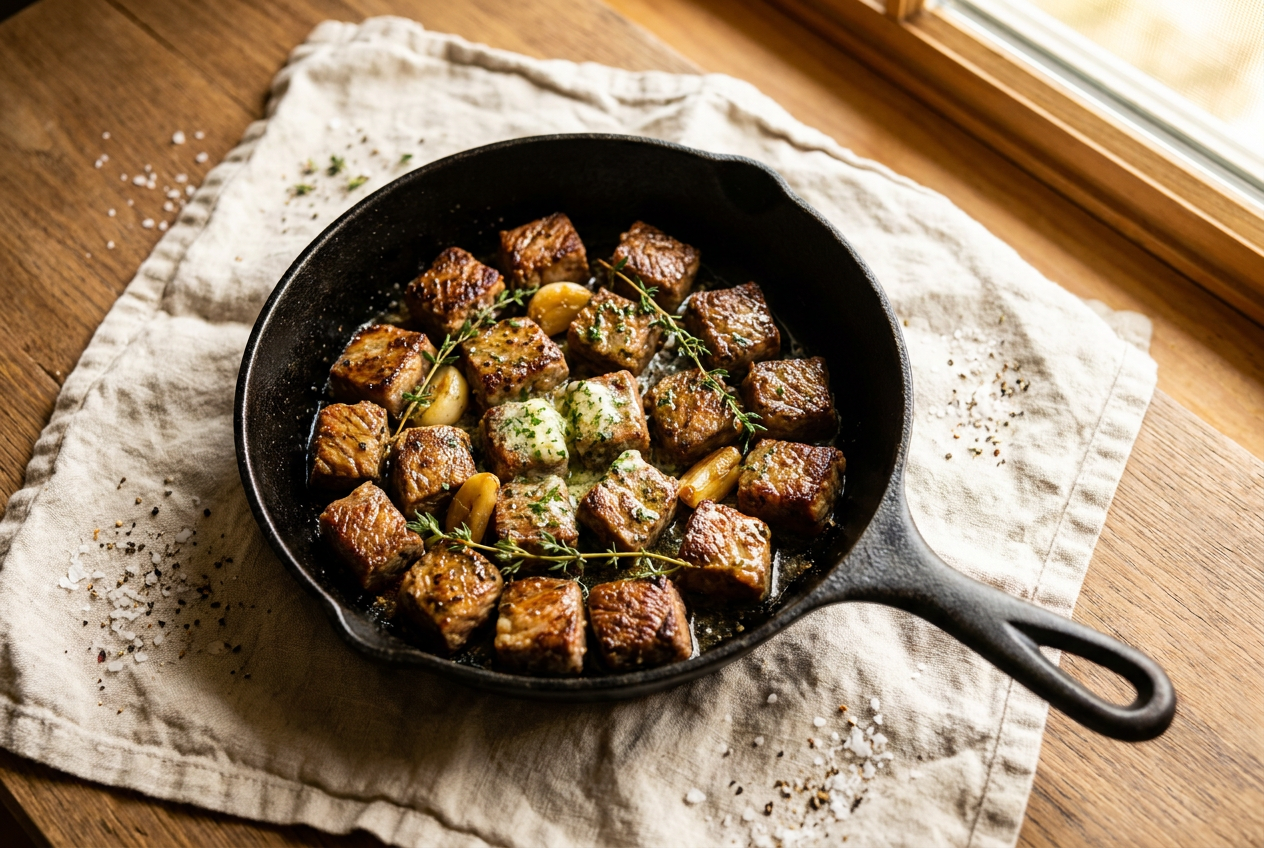
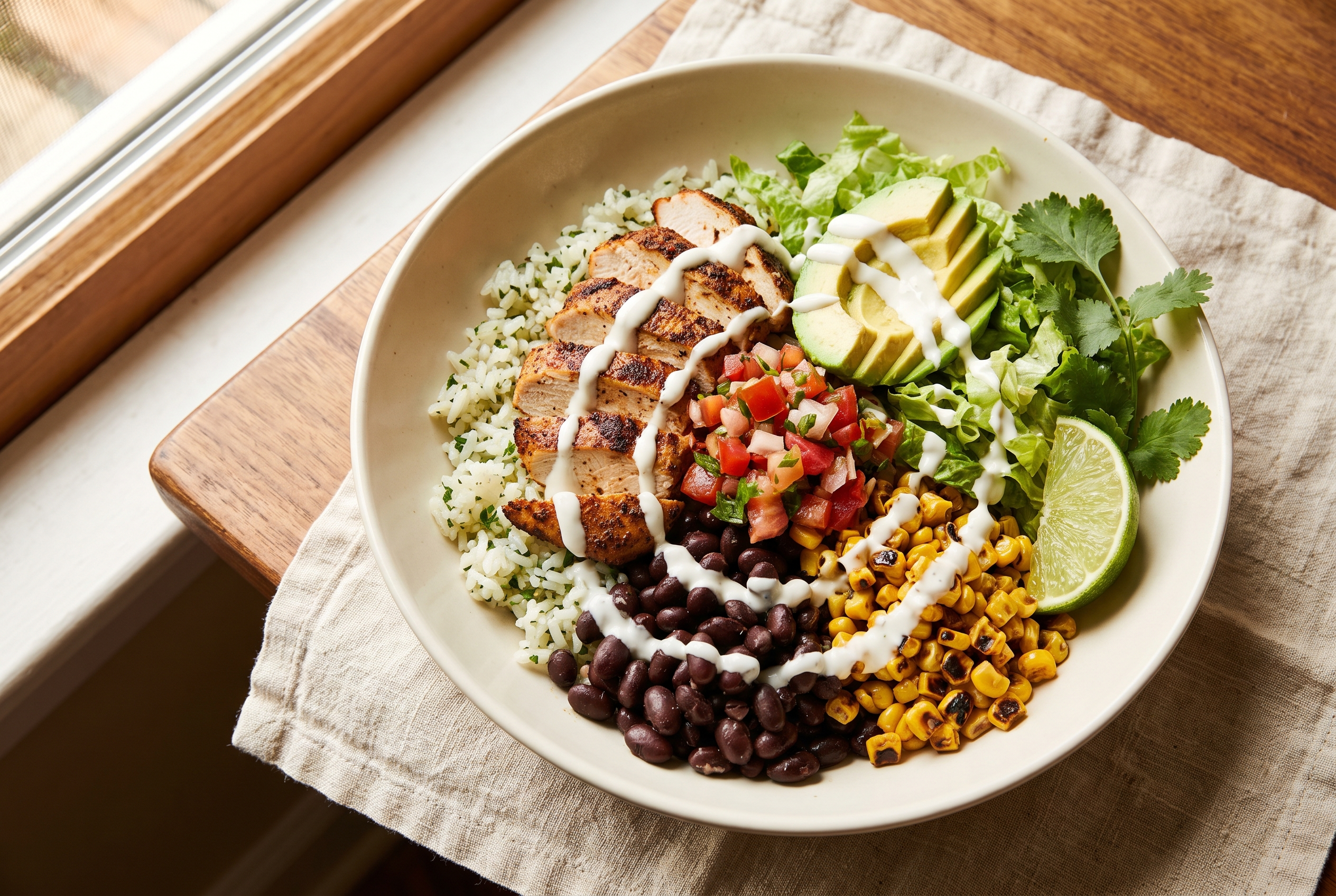
Korean ground beef bowls
★★★★★ 4.9 from 186 reviews — sweet-savory Korean ground beef bowls with a four-ingredient soy garlic sauce over rice, quick cucumber salad and sesame. 20 minutes, one skillet, 42g protein.
Ingredients
- 1 lb ground beef (85/15)
- 1/4 cup low-sodium soy sauce
- 3 tbsp light brown sugar
- 1 tbsp toasted sesame oil
- 1 tbsp rice vinegar
- 4 garlic cloves, grated
- 1 tbsp fresh ginger, grated
- 1 tbsp gochujang (optional)
- 4 scallions, whites and greens separated
- 1 tbsp sesame seeds
- 4 cups cooked white or jasmine rice
- 1 English cucumber, thinly sliced
- 1 tsp kosher salt, for the cucumbers
- 1 tbsp rice vinegar, for the cucumbers
- 4 eggs, fried (optional)
Instructions
- Salt the cucumbers. Toss the sliced cucumber with 1 tsp salt and set aside 10 minutes, then drain and dress with 1 tbsp rice vinegar.
- Mix the sauce. Whisk the soy sauce, brown sugar, sesame oil, rice vinegar, garlic, ginger and gochujang until the sugar dissolves.
- Brown the beef. Heat a wide skillet over medium-high. Add the beef, press flat and leave undisturbed 3 minutes, then break up and cook 3-4 minutes more. Drain all but 1 tbsp fat.
- Aromatics. Push the beef aside, add the scallion whites to the bare pan and cook 30 seconds.
- Glaze. Pour in the sauce and stir 2-3 minutes until glossy and thickened. Remove from heat while a little sauce still pools.
- Serve. Spoon over hot rice with cucumber salad, sesame seeds, scallion greens and a fried egg.
Notes: Use 85/15 beef — leaner grinds go dry. Grate the garlic and ginger on a microplane so they melt into the sauce. Taste before adding the last of the sugar; soy sauce saltiness varies by brand. Gochujang is optional but adds real depth. Ground turkey works with an extra teaspoon of sesame oil. Beef freezes 3 months pressed flat in bags.
Nutrition (per serving, estimated): 520 calories · 42g protein · 48g carbs · 18g fat · 2g fiber
If this is how you want to eat every day, this cookbook makes it easy.
The Ultimate GLP-1 High Protein High Fiber Cookbook for Weight Loss is built on the same idea as this recipe — lean protein, plenty of fiber, real food and portions big enough to keep you full. Simple, tested recipes for anyone eating higher-protein on purpose, on a GLP-1 medication or not.
Get the cookbook on AmazonMeal-plan the whole week around recipes like this with RecipeLoop — save recipes from anywhere, get a grocery list automatically.FAQ
- What is the difference between this and beef bulgogi?
- Traditional bulgogi uses thin-sliced ribeye or sirloin marinated for hours, often with grated pear as a tenderizer. This is the ground beef shortcut — the same sweet-savory soy garlic flavor profile, but because ground beef has so much more surface area it takes the sauce immediately, with no marinating at all.
- Can I make Korean ground beef bowls ahead for meal prep?
- Yes, and it's one of the better candidates for it. Cook the beef, then store it separately from the rice and cucumber in airtight containers for up to 4 days. The sauce keeps the meat from drying out on reheating, which is usually the problem with prepped ground beef.
- Is it spicy?
- Not as written without the gochujang, which is why it works for kids. One tablespoon of gochujang gives it a gentle warmth rather than real heat; two makes it noticeably spicy. You can also serve chili crisp on the side and let everyone decide.
- What can I use instead of gochujang?
- Sriracha plus half a teaspoon of miso paste gets you close on both heat and fermented depth. A teaspoon of chili garlic sauce alone works fine too. It's genuinely optional — the bowl is good without it.