Home › High Protein › High protein tuna salad
High protein tuna salad
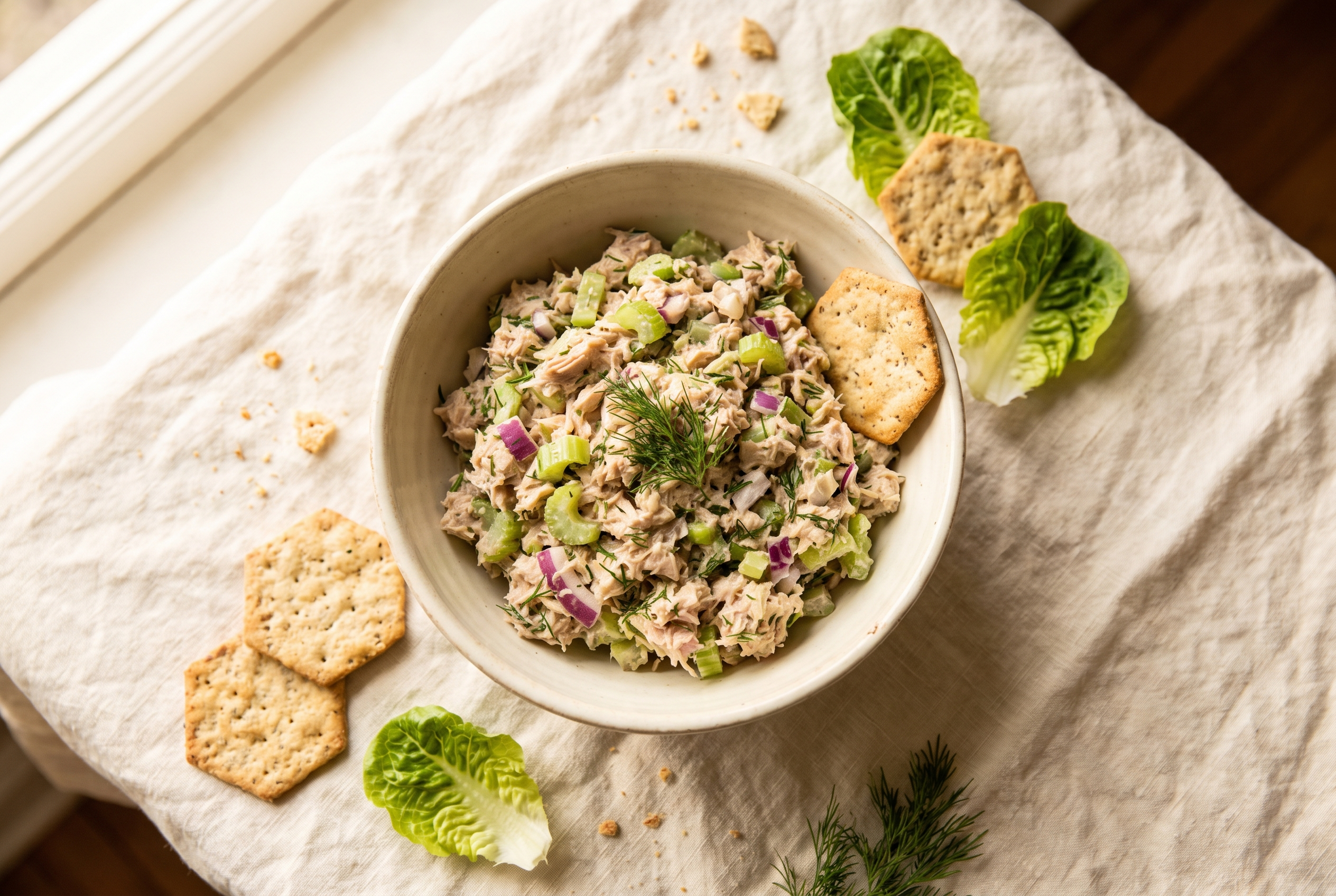
High protein tuna salad swaps most of the mayonnaise for Greek yogurt, and the reason it works is that I stopped trying to hide the substitution and leaned into crunch and acid instead. Ten minutes, 34g of protein, and no cooking at all.
 Save recipes like this straight from TikTok and plan your week in minutes with RecipeLoop, the free AI meal planner.
Greek yogurt works here, but only with enough acid and crunch.
- Two tablespoons of real mayo is the compromise worth making. All-yogurt tuna salad tastes thin and sour. A little mayo brings back the fat that carries flavor, and the yogurt does the rest of the volume.
- 34g of protein for about 260 calories. Canned tuna and Greek yogurt together make this one of the best protein-per-calorie lunches there is. Worth checking against your own target on the protein calculator.
- Crunch is doing more work than the dressing. Celery, red onion and pickles in real quantity give it texture, which is what most lightened-up tuna salad forgets entirely.
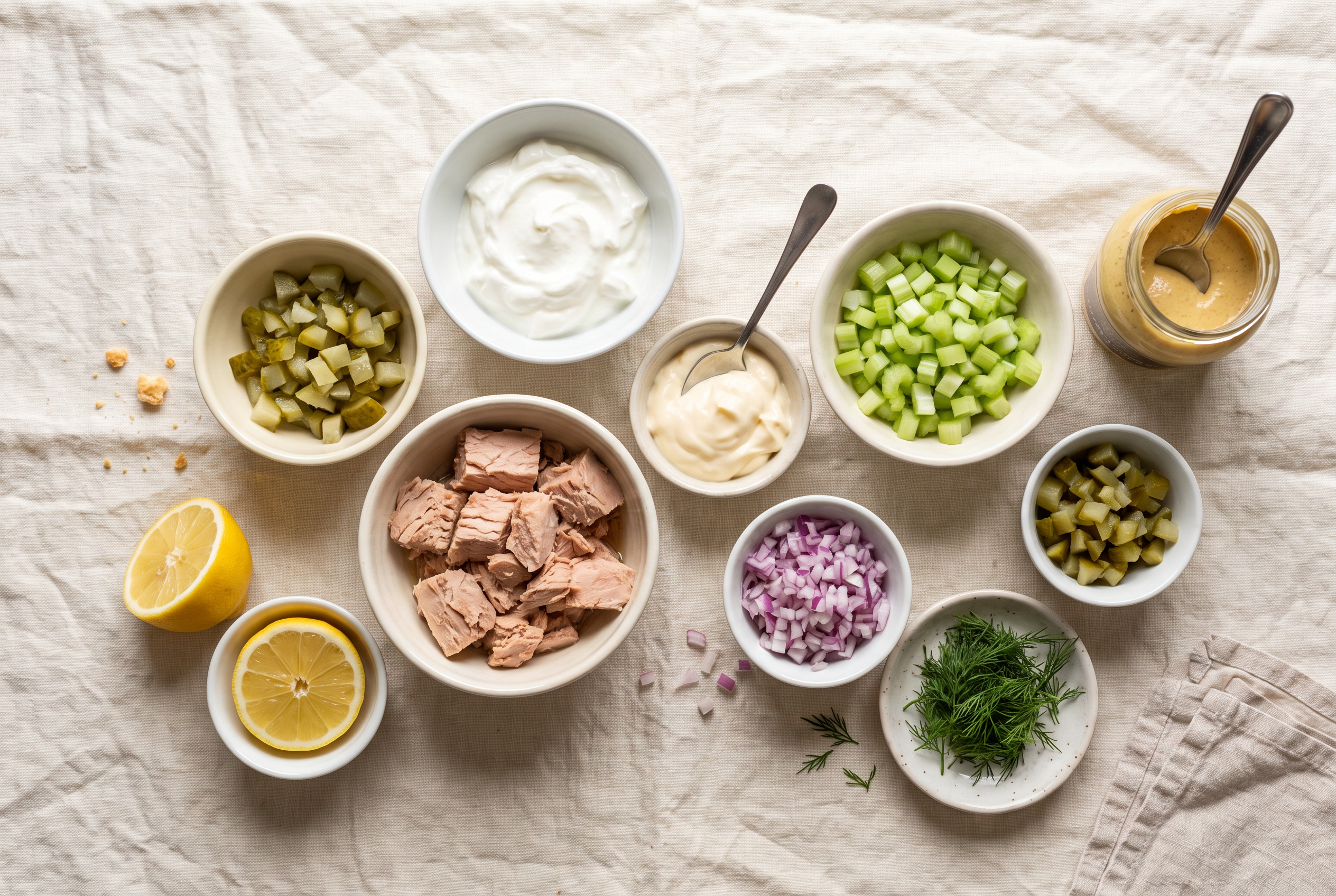
Here's what you'll need.
Tuna packed in olive oil has better flavor and texture than water-packed, and draining it well means you keep the flavor without the extra fat. Drain either kind thoroughly — pressed dry in the can with a fork is the step that stops the salad going watery. Fresh dill is worth buying; dried dill tastes like nothing here.
Here's how it all comes together.
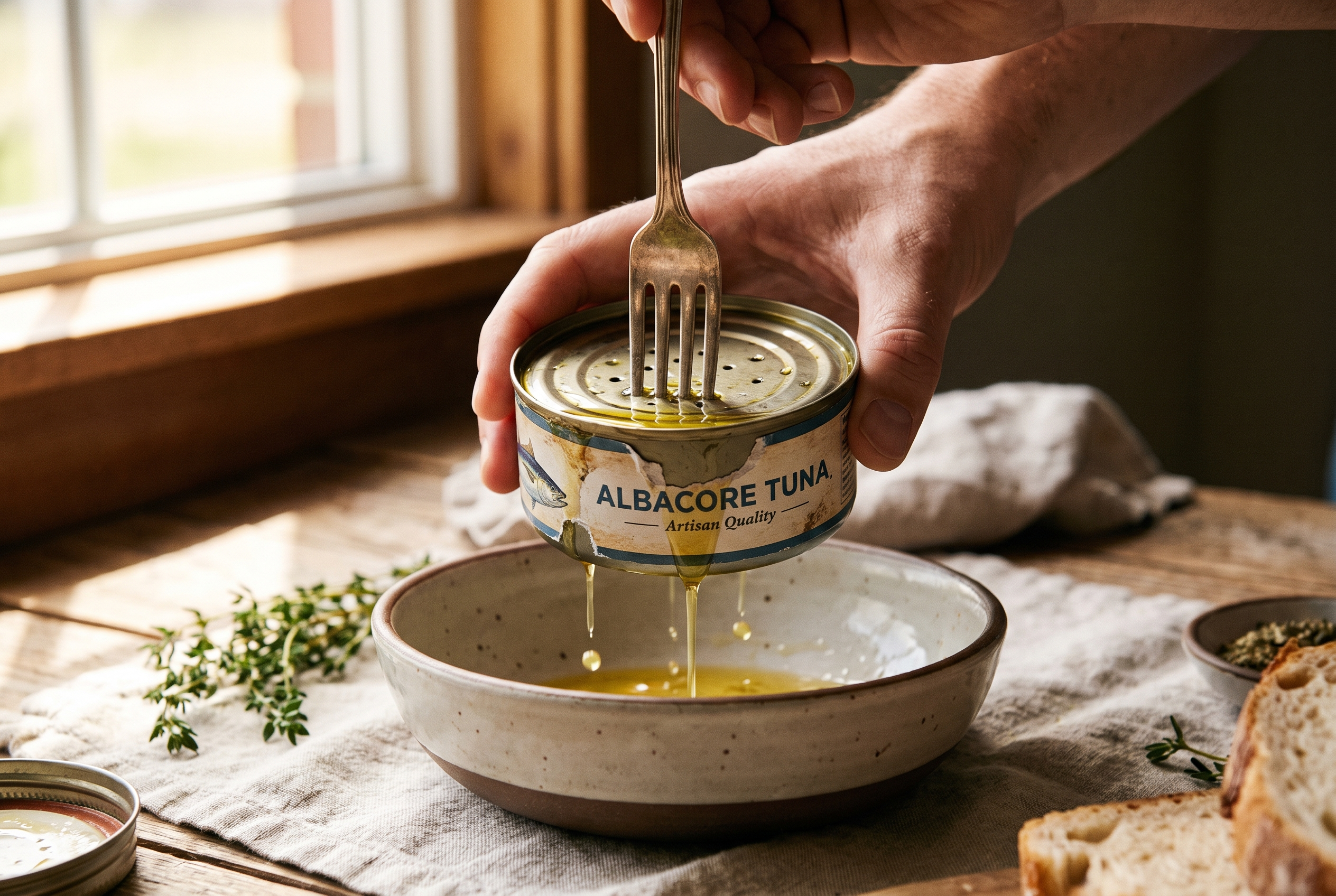
Open the cans and press the tuna firmly with a fork to force out as much liquid as you can. Watery tuna makes watery salad, and no amount of extra yogurt fixes it after the fact.
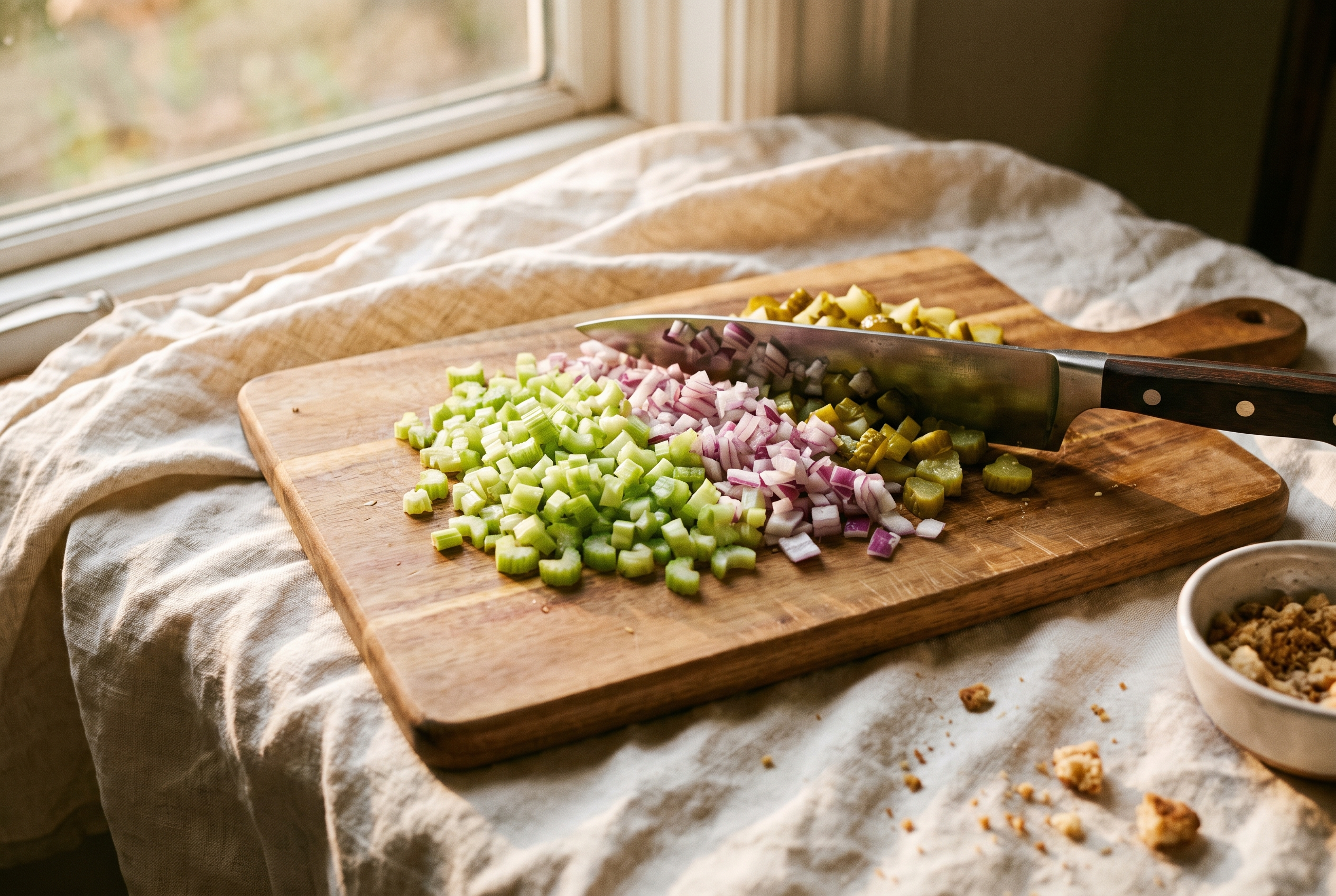
Finely dice the celery, red onion and dill pickles into pieces about the size of a pea. Small and uniform means you get crunch in every bite rather than occasional large batons of raw onion.
Whisk the Greek yogurt, mayonnaise, Dijon, lemon juice, salt and pepper together in the bottom of the bowl. Building the dressing first means you can taste and adjust it before the tuna goes anywhere near it.
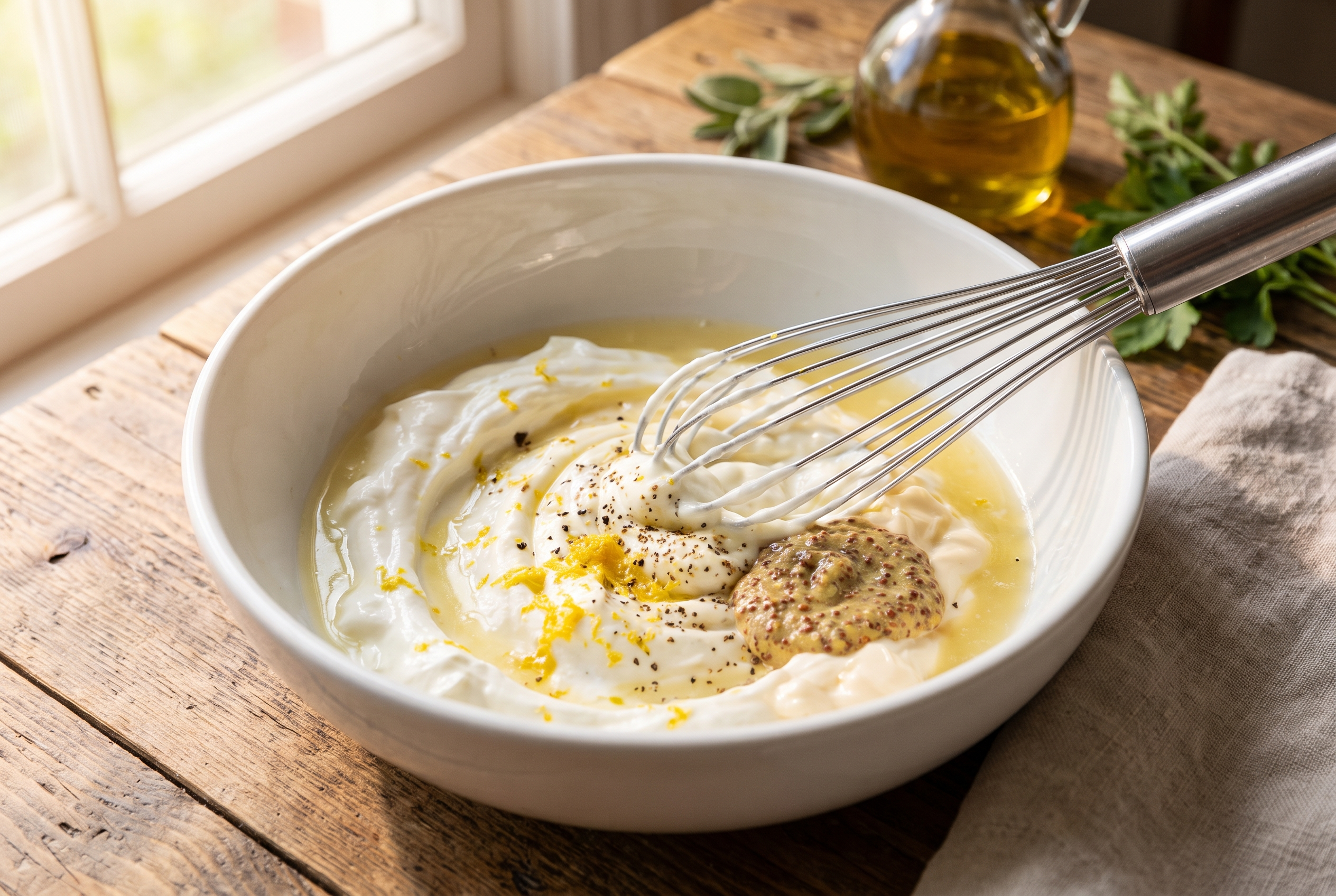
Add the diced celery, onion, pickles and fresh dill to the dressing and stir to coat. Doing the vegetables before the tuna means everything gets evenly dressed without over-stirring the fish.
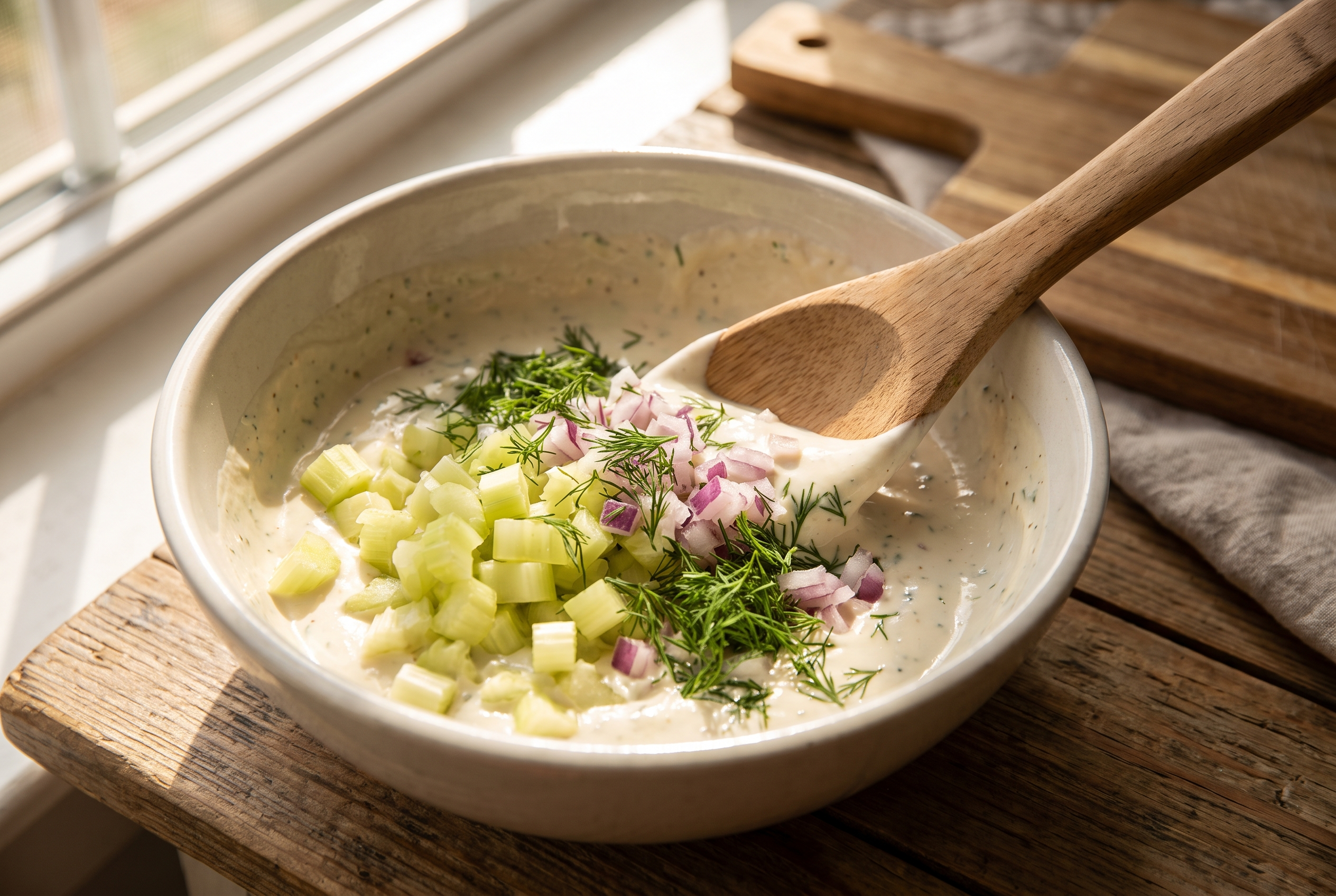
Tip in the drained tuna and fold with a spatula just until combined, keeping some flakes intact. Mashing it into paste is the most common mistake and it changes the whole eating experience.
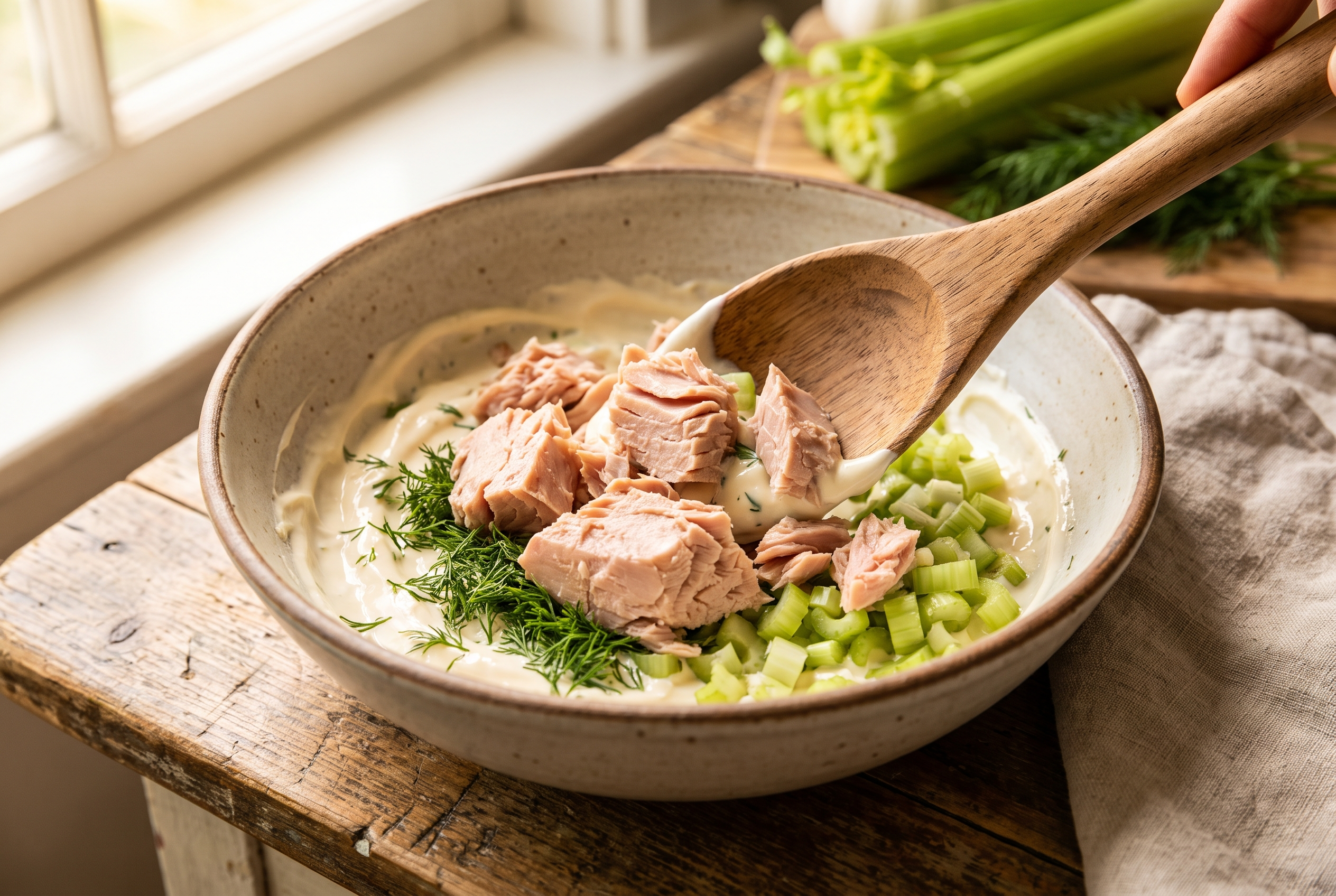
Taste for salt, lemon and pepper, then let it sit 10 minutes in the fridge. That rest lets the onion mellow and the dressing thicken slightly around the tuna.
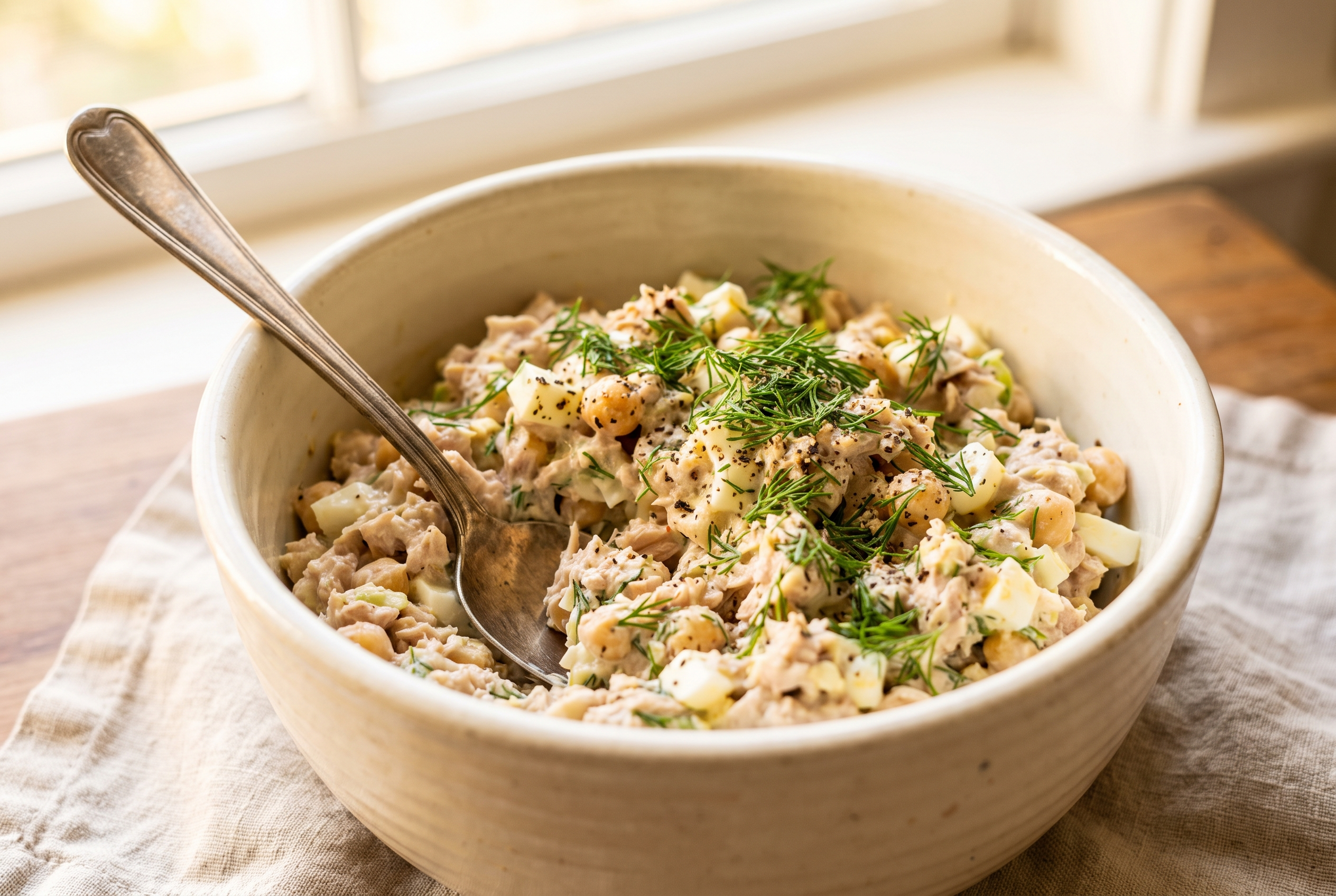
 Eating higher-protein on purpose? The Ultimate GLP-1 High Protein High Fiber Cookbook is full of meals like this one.
Things I learned while testing this recipe.
- Press the tuna dry in the can. Thirty seconds with a fork removes a surprising amount of liquid. This is the difference between creamy and soupy.
- Don't go all-yogurt. Keep two tablespoons of real mayonnaise. Fat carries flavour, and a fully yogurt-based version tastes noticeably sour and thin.
- Fold, never mash. Use a spatula and stop early. Intact flakes of tuna are most of what makes it feel like a proper salad rather than a spread.
- Let it rest ten minutes. Raw red onion is aggressive straight away and mellows quickly. Ten minutes in the fridge makes it taste like it was made by someone patient.
Meal prep it, and serve it four ways.
- Three days in the fridge, and day two is best. The flavors settle and the celery stays crunchy. Beyond three days the vegetables start to weep and it loosens.
- Prep the components separately for a week. Diced vegetables in one container, dressing in another, tuna unopened. Assembly takes ninety seconds on the day.
- Don't freeze it. Greek yogurt splits when frozen and thawed, and celery goes limp. This is a fridge dish only.
Here's what I'd serve with this.
- Butter lettuce cups if you're skipping bread entirely.
- Sourdough toast, or between two slices with extra pickles.
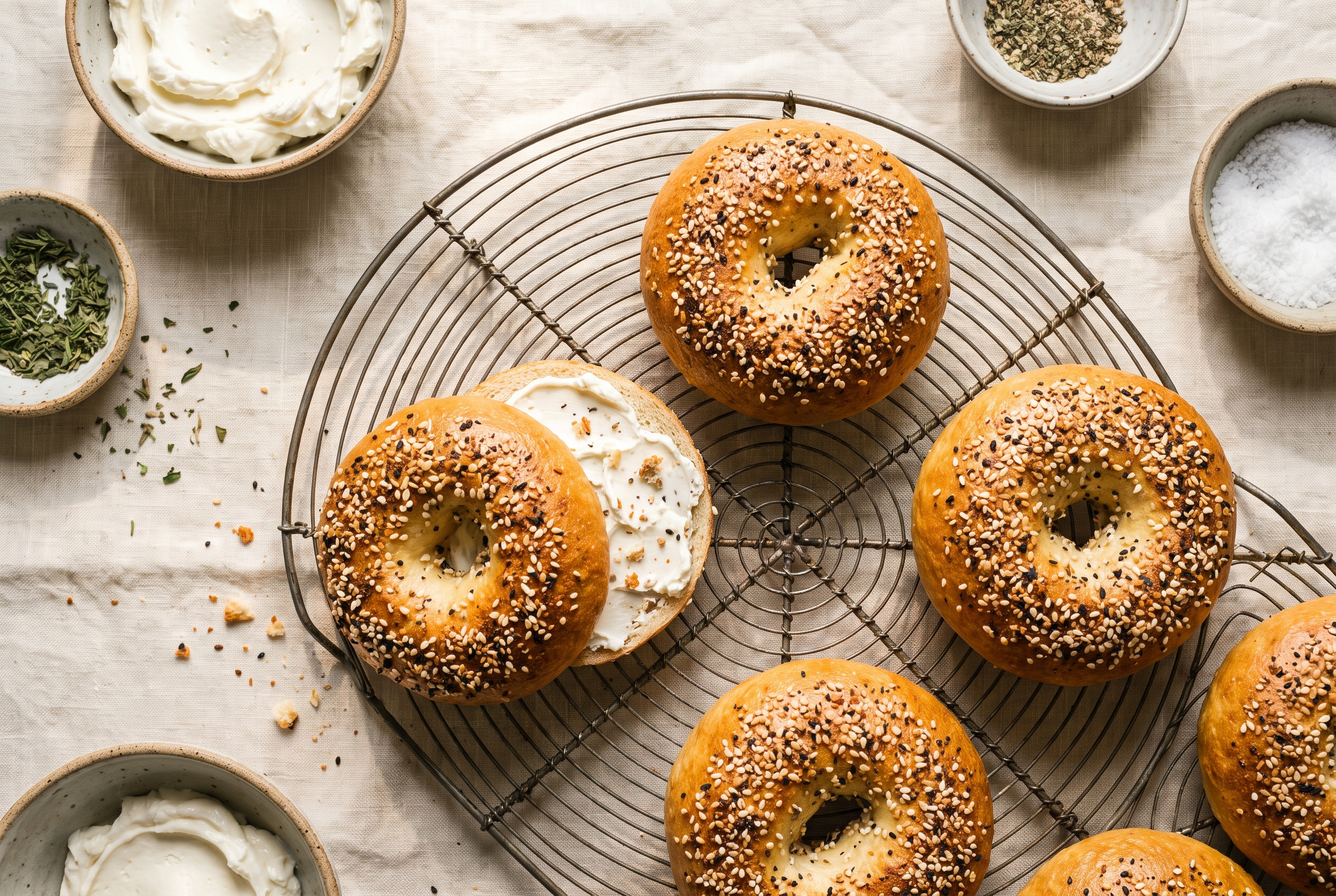
- Greek yogurt bagels split and toasted, which is the high protein version of a deli lunch.
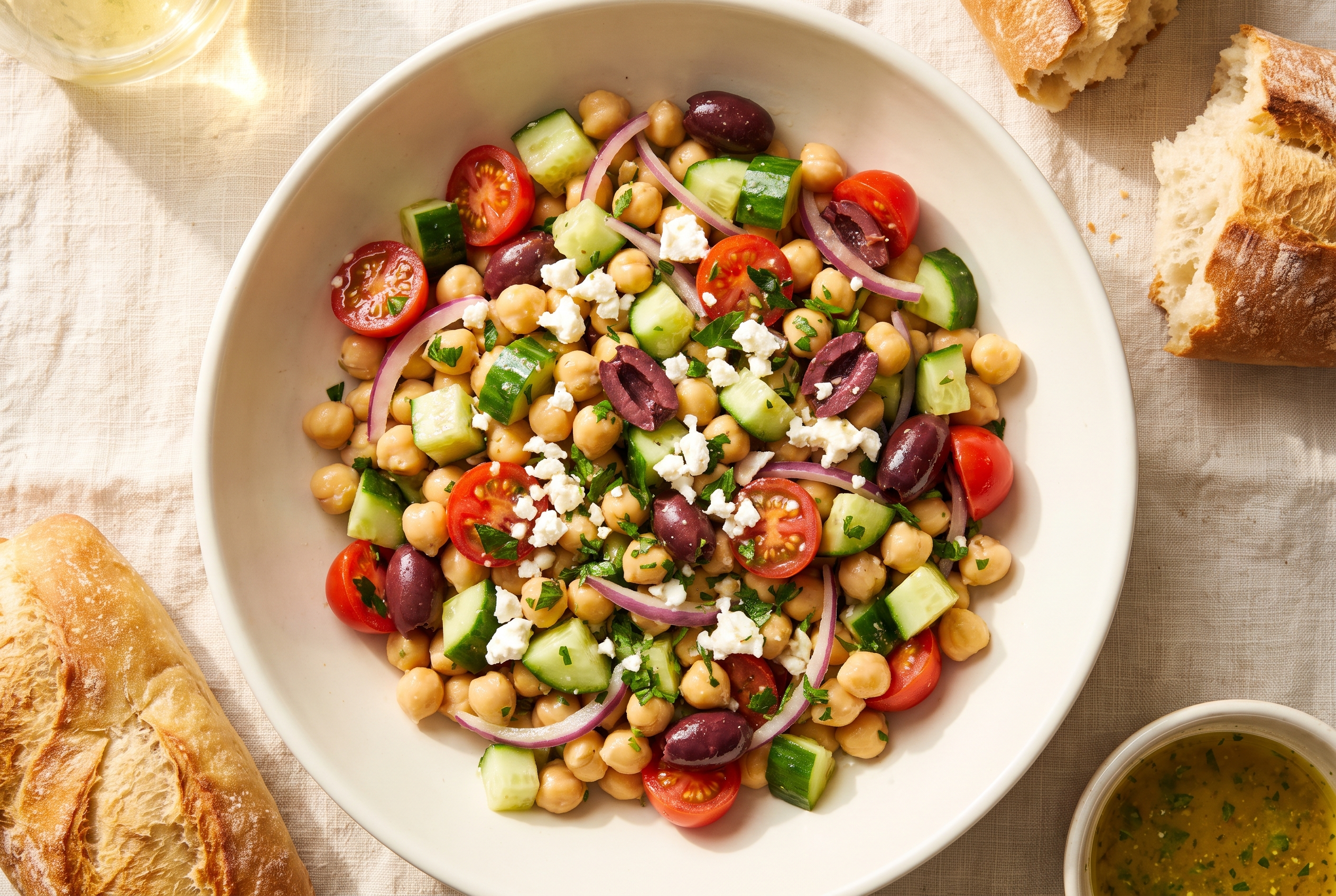
- Mediterranean chickpea salad alongside for a two-salad plate.
- Cucumber salad for something sharp and cold on the side.
Just in case you have leftovers.
Storing: keep it in an airtight container in the fridge for up to 3 days. Press a piece of plastic wrap down onto the surface to stop it drying out and picking up other fridge smells, which tuna does readily.
Reheating: not applicable — this is a cold dish. If it has loosened slightly after a day or two, stir in a spoonful more Greek yogurt and a squeeze of lemon to bring it back together.
More high protein recipes...
High protein tuna salad
★★★★★ 4.8 from 174 reviews — high protein tuna salad with Greek yogurt in place of most of the mayo, plenty of crunch and fresh dill. Ten minutes, 34g protein, no cooking.
Ingredients
- 2 (5 oz) cans tuna, well drained
- 1/2 cup thick Greek yogurt
- 2 tbsp mayonnaise
- 2 tsp Dijon mustard
- 1 tbsp lemon juice
- 2 celery stalks, finely diced
- 1/4 small red onion, finely diced
- 2 dill pickles, finely diced
- 2 tbsp fresh dill, chopped
- 3/4 tsp kosher salt
- 1/2 tsp black pepper
Instructions
- Drain. Press the tuna firmly with a fork in the can to force out as much liquid as possible.
- Dice. Finely dice the celery, red onion and pickles to about pea size.
- Dressing. Whisk the Greek yogurt, mayonnaise, Dijon, lemon juice, salt and pepper in a bowl. Taste and adjust.
- Vegetables. Fold the celery, onion, pickles and dill into the dressing.
- Tuna. Add the drained tuna and fold gently with a spatula, keeping some flakes intact.
- Rest. Taste again, then chill 10 minutes before serving.
Notes: Press the tuna dry in the can — this is what keeps the salad from going watery. Keep the 2 tbsp of real mayonnaise; all-yogurt versions taste thin and sour. Fold rather than mash so the flakes stay intact. Fresh dill matters; dried adds nothing. Rest 10 minutes so the raw onion mellows. Keeps 3 days but never freeze it.
Nutrition (per serving, estimated): 260 calories · 34g protein · 6g carbs · 11g fat · 1g fiber
If this is how you want to eat every day, this cookbook makes it easy.
The Ultimate GLP-1 High Protein High Fiber Cookbook for Weight Loss is built on the same idea as this recipe — lean protein, plenty of fiber, real food and portions big enough to keep you full. Simple, tested recipes for anyone eating higher-protein on purpose, on a GLP-1 medication or not.
Get the cookbook on AmazonMeal-plan the whole week around recipes like this with RecipeLoop — save recipes from anywhere, get a grocery list automatically.FAQ
- Can I make tuna salad with only Greek yogurt and no mayo?
- You can, but most people find it noticeably sour and thin. Fat is what carries flavour and gives tuna salad its body, so keeping even two tablespoons of real mayonnaise makes a disproportionate difference. If you're avoiding mayo entirely, add a tablespoon of olive oil instead to replace some of the fat.
- Is tuna in oil or water better for tuna salad?
- Oil-packed has better flavour and a silkier texture, and draining it well means you don't carry much extra fat into the finished salad. Water-packed is leaner and perfectly fine, but tends to taste flatter and drier, so it benefits from an extra splash of olive oil or lemon.
- How long does tuna salad last in the fridge?
- Up to three days in an airtight container, and it's arguably best on day two once the flavours have settled. Past three days the celery and onion start releasing water and the dressing loosens. Don't leave it at room temperature for more than two hours.
- How much mercury is in canned tuna?
- Canned light tuna, usually skipjack, is lower in mercury than albacore or white tuna. The FDA classifies canned light tuna as a best choice at two to three servings a week, and albacore as a good choice at one serving a week. If you eat tuna often, choosing light over albacore is the simple adjustment.