Easy Dan Dan Noodles (25 Minutes, Crispy Pork, 31g Protein)
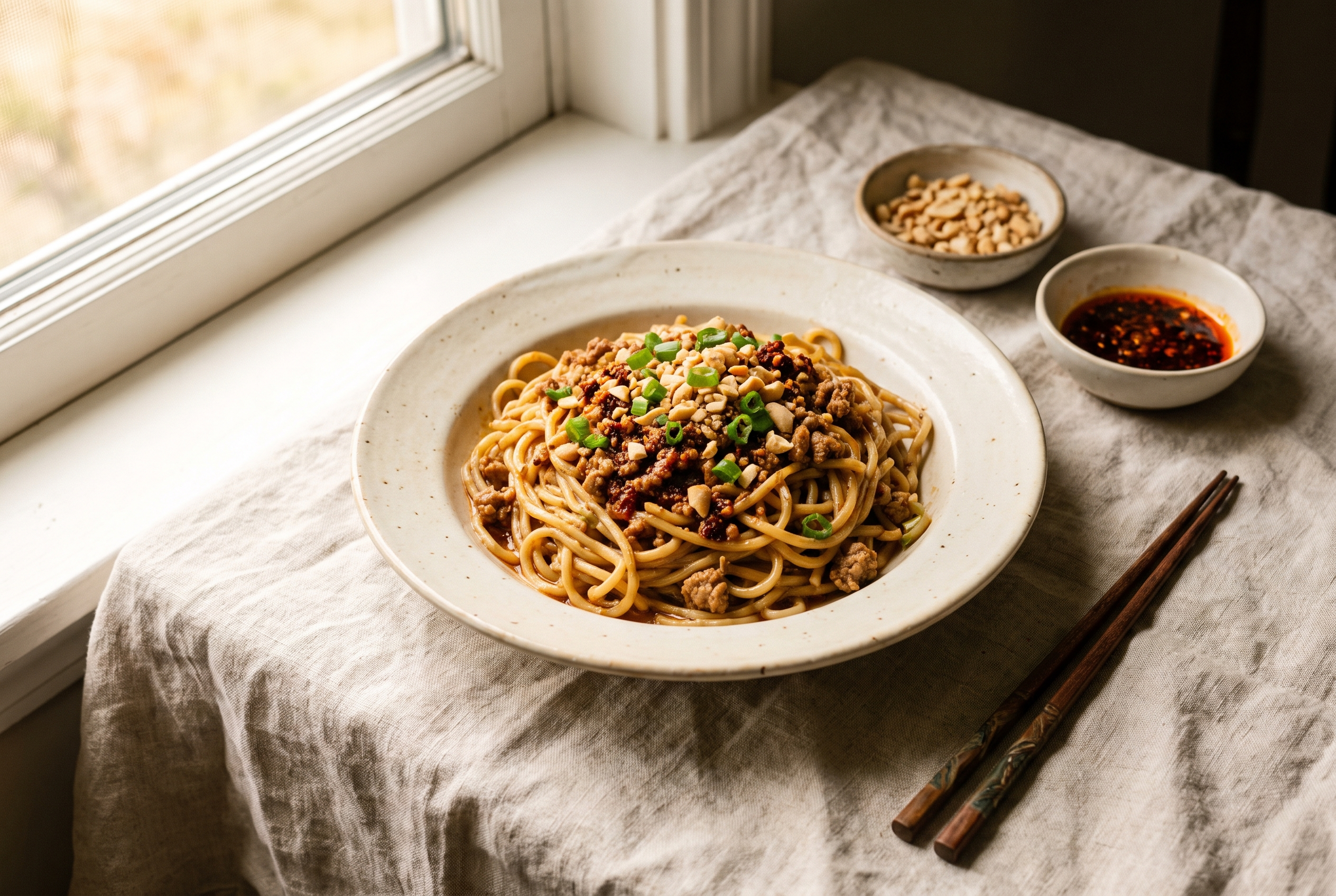
Easy dan dan noodles are what I make when I want Sichuan takeout and do not want to wait for it: chewy wheat noodles sitting in a spicy, nutty sesame and chili oil sauce, topped with crispy ginger-garlic pork, scallions and crushed peanuts, all on the table in 25 minutes with 31 grams of protein a bowl.
Traditional dan dan noodles use preserved mustard greens and a very specific Sichuan pantry. My version keeps the flavors that matter — the numbing Sichuan pepper, the chili oil, the toasty sesame and the black vinegar — and uses things you can find at a regular grocery store. It is my go-to after my beef and broccoli when I want something with a little more fire.
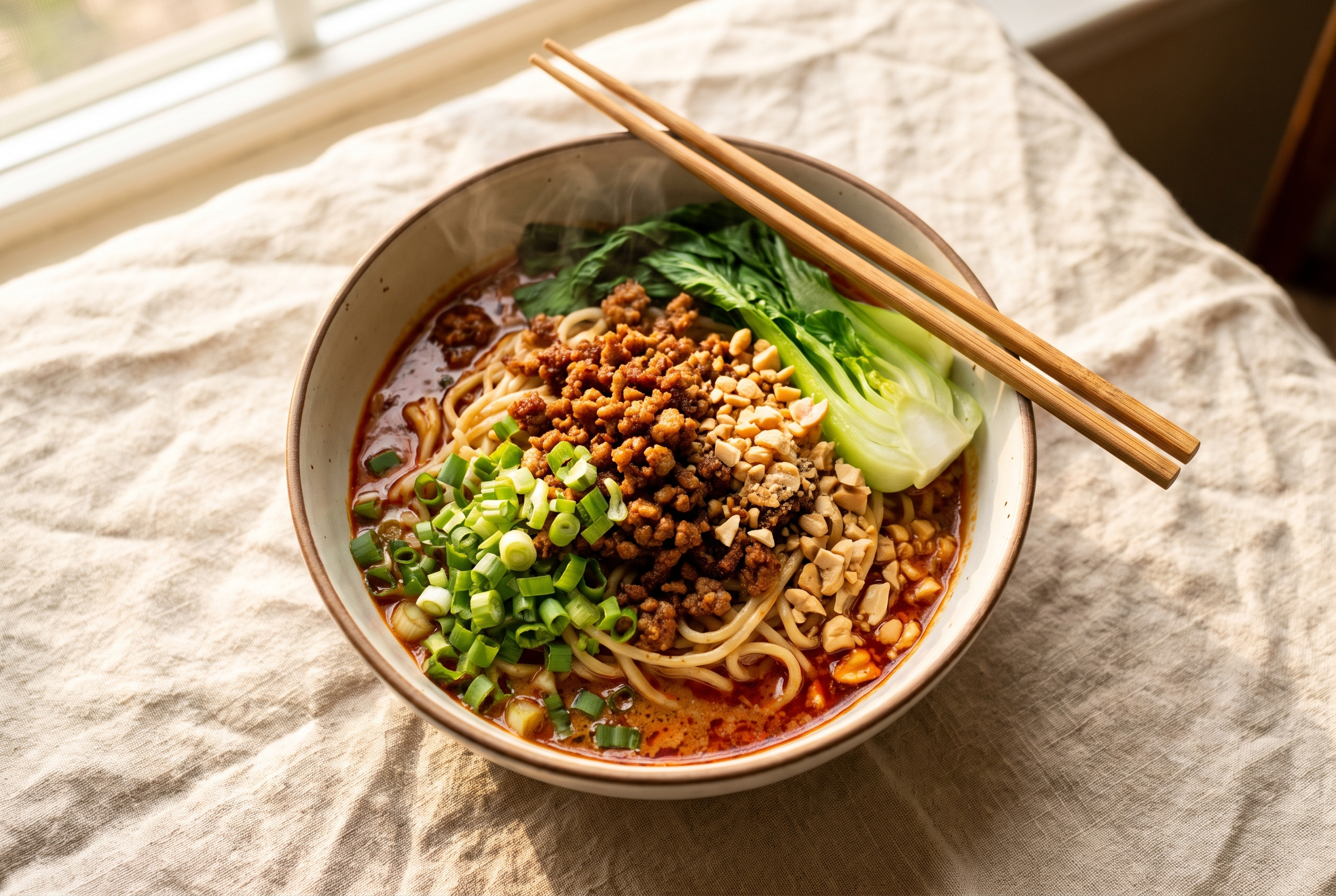
 Save recipes like this straight from TikTok and plan your week in minutes with RecipeLoop, the free AI meal planner.
Why these easy dan dan noodles beat takeout.
- The sauce goes in the bowl first. Sesame paste, soy sauce, chili oil, black vinegar and a little sugar get whisked together and spooned into the bottom of each bowl, and the hot noodles go right on top. Every strand gets coated when you toss, and nothing gets diluted in a pan.
- The pork is fried until it is actually crispy. Most home versions stop when the pork is just browned. Letting it sit in the hot wok for a few extra minutes until the edges crackle gives the dish its texture, the same trick I use for the pork in my egg roll in a bowl.
- Thirty-one grams of protein in 25 minutes. A quarter pound of pork per bowl plus the sesame and peanuts adds up fast, and the bok choy cooks in the noodle water so you get your greens with no extra pan. Run the numbers for your own day in the protein calculator.
Here's what you'll need.
Ground pork, garlic, fresh ginger, Chinese sesame paste (or tahini), soy sauce, chili oil with the crunchy bits, Chinkiang black vinegar, a little sugar, ground Sichuan peppercorns, fresh wheat noodles, baby bok choy, scallions and roasted peanuts.
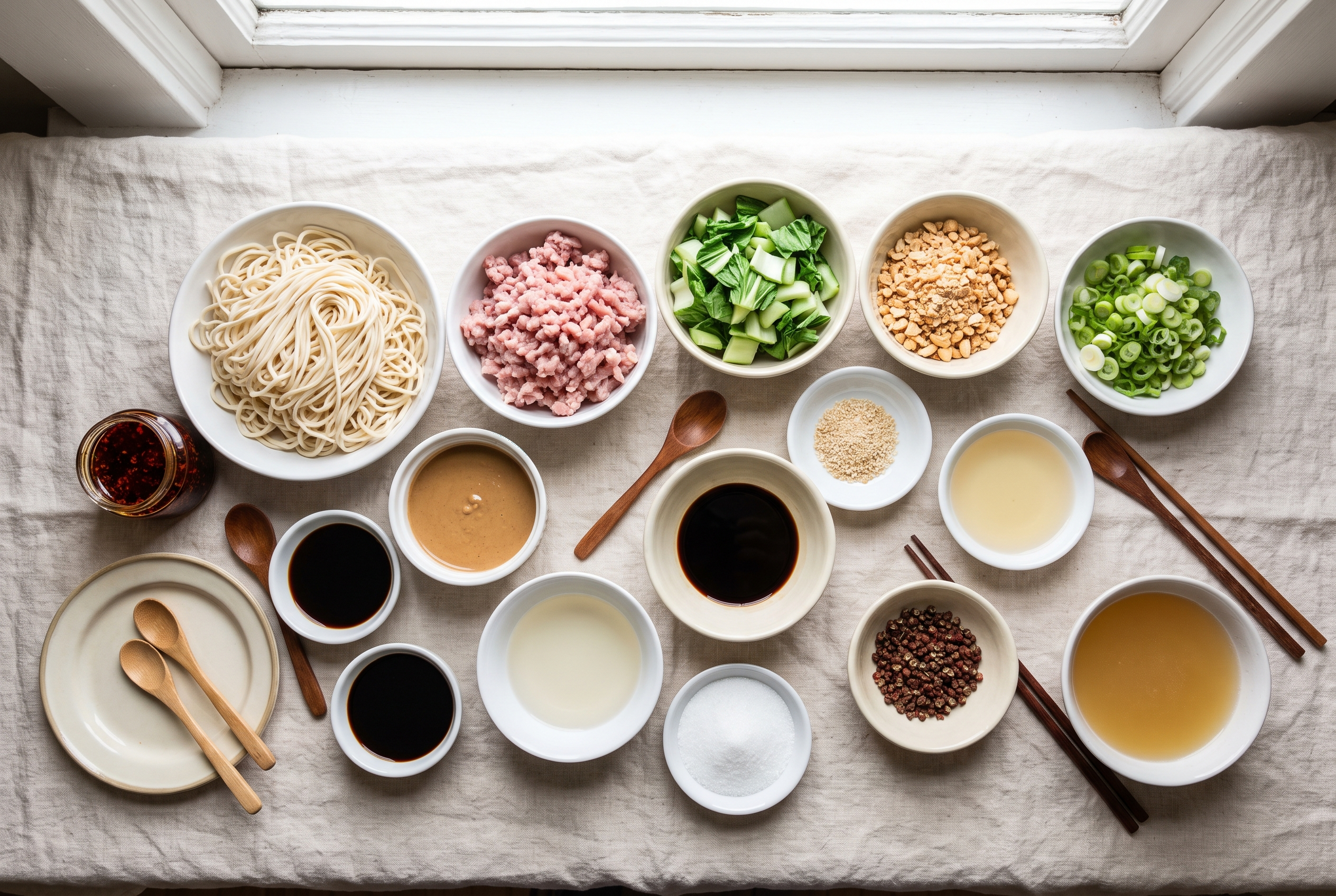
Here's how it all comes together.
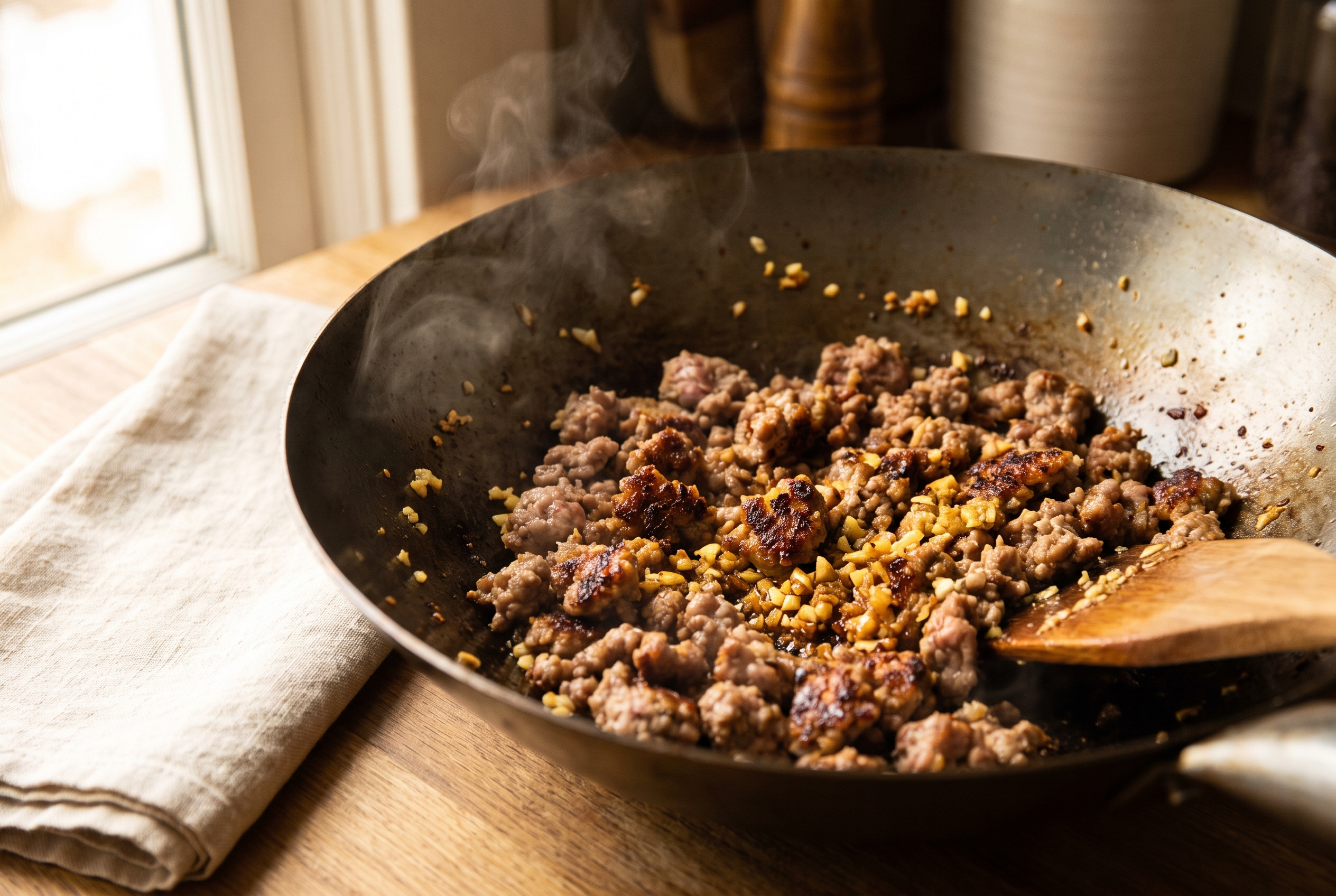
Heat a tablespoon of oil in a wok over high heat. Add the ground pork, press it into a flat layer and leave it alone for 2 minutes to brown, then break it up and keep cooking until it is dark and crispy at the edges, about 6 minutes total. Stir in the garlic, ginger and a splash of soy sauce for the last minute, then scoop it out.
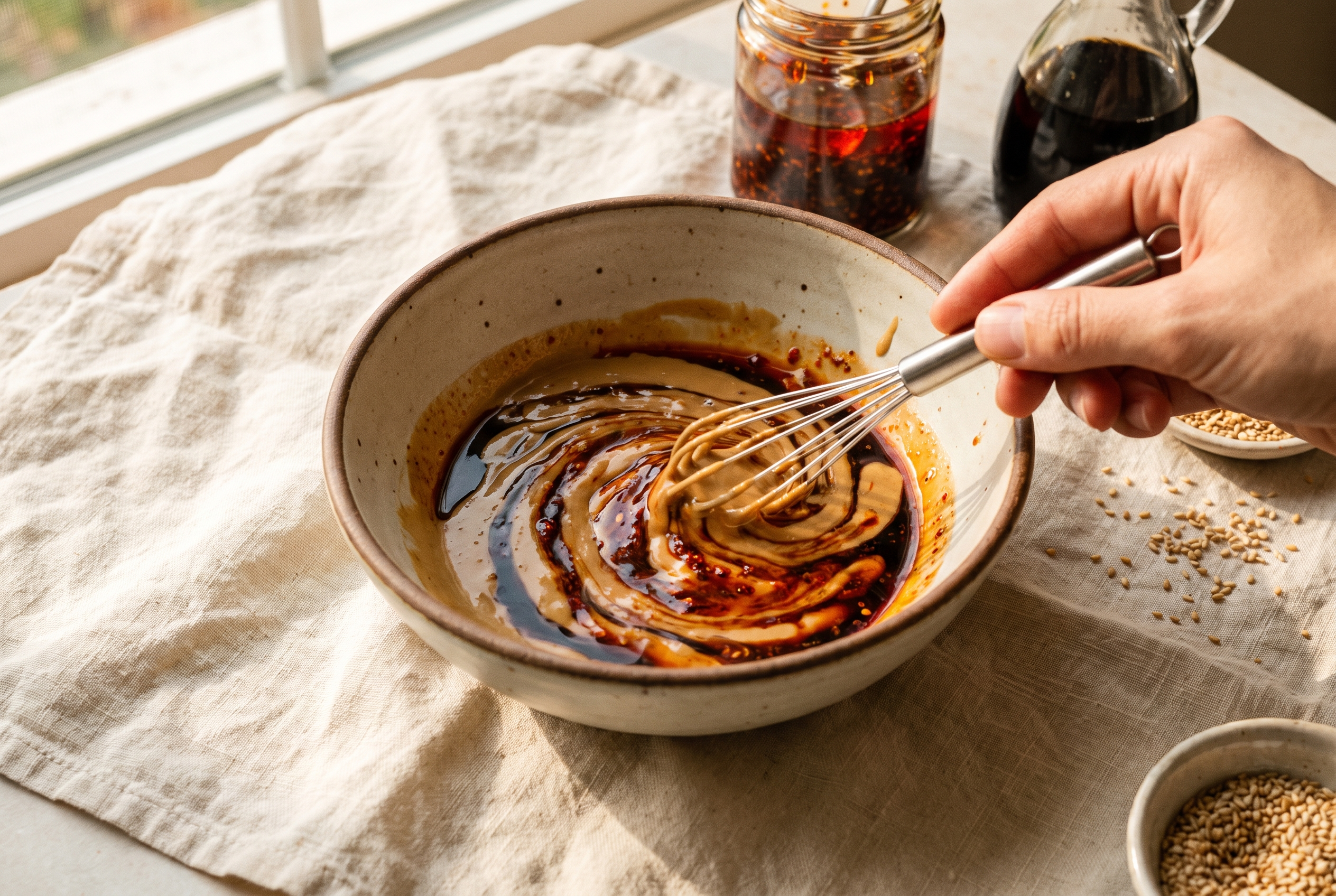
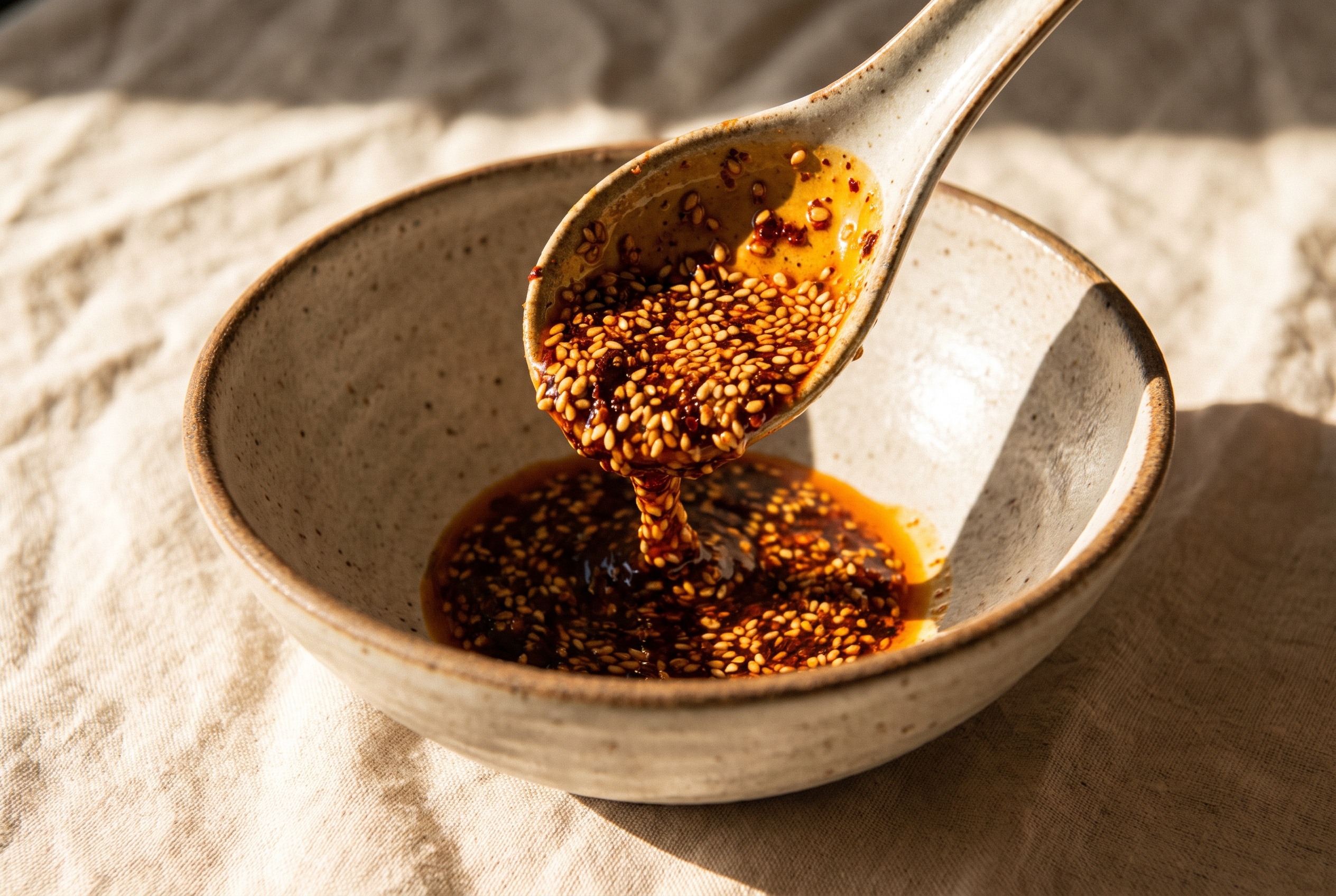
In a small bowl, whisk the sesame paste, soy sauce, chili oil, black vinegar, sugar and ground Sichuan pepper with 2 to 3 tablespoons of hot water until it is smooth and pourable, like thin peanut butter. Taste it — it should be salty, nutty, a little sour and hot enough that you notice.
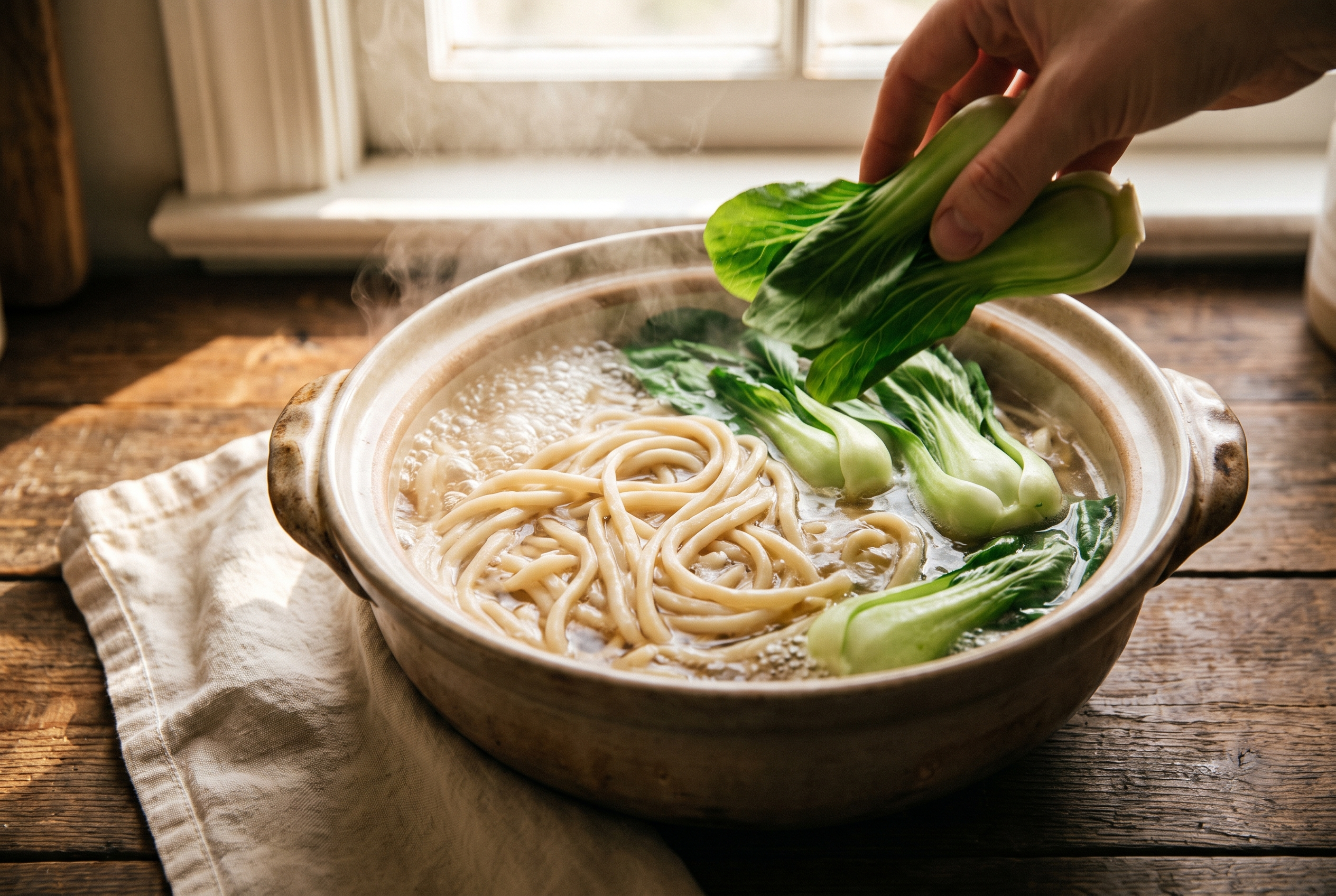
Cook the noodles in a big pot of boiling water according to the package, usually 3 to 4 minutes for fresh wheat noodles. Drop the halved bok choy into the same pot for the last minute so it wilts but stays bright green. Save a mug of the noodle water before you drain.
Divide the sauce between four serving bowls, spreading it across the bottom. If it has thickened while it sat, loosen it with a spoonful of the hot noodle water. This is the traditional way to serve dan dan noodles, and it means the sauce stays concentrated instead of getting watered down.
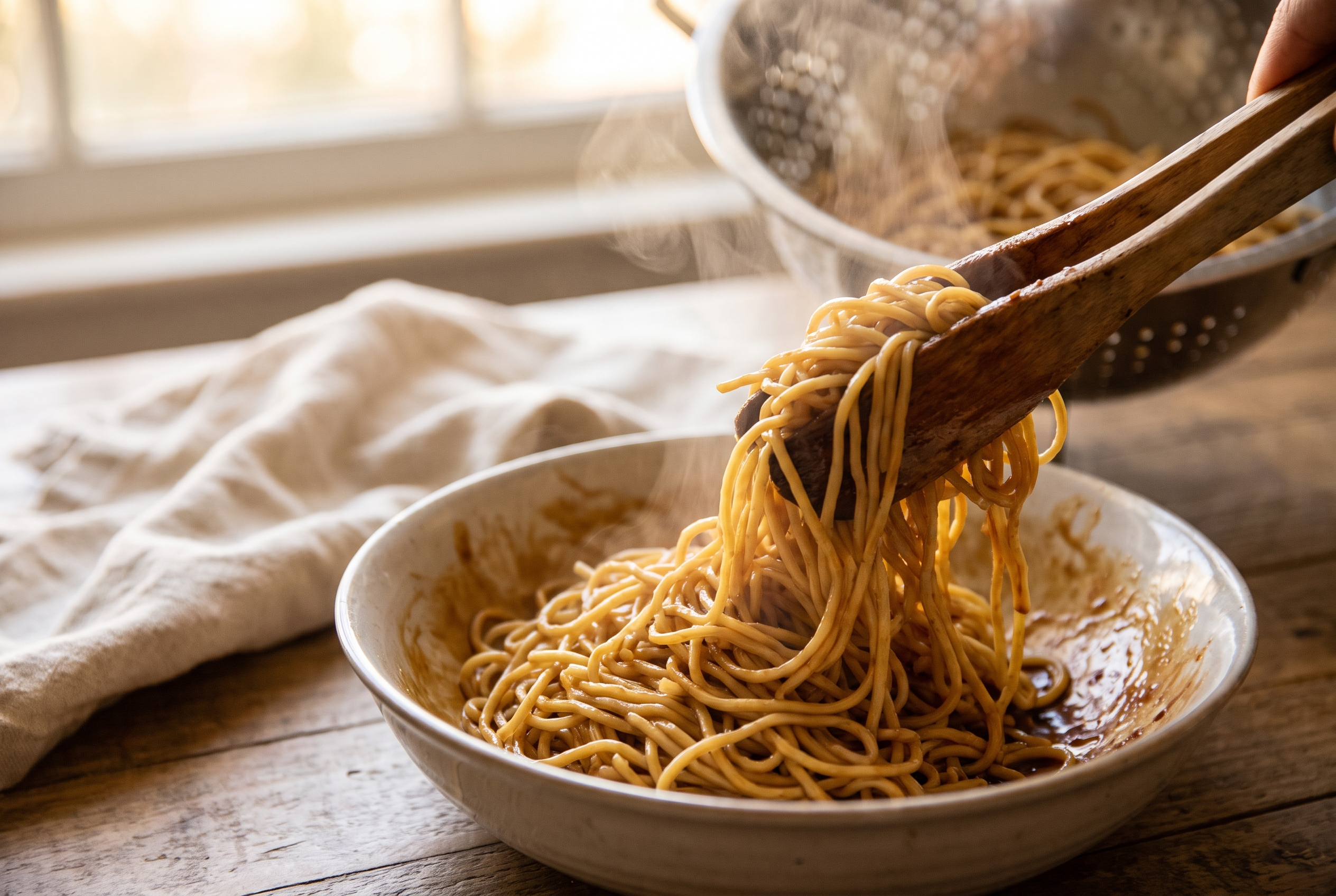
Use tongs to lift the drained noodles and bok choy into the bowls, right on top of the sauce. Work quickly while the noodles are hot so they soak up the sauce when you toss. A little noodle water clinging to them is a good thing.
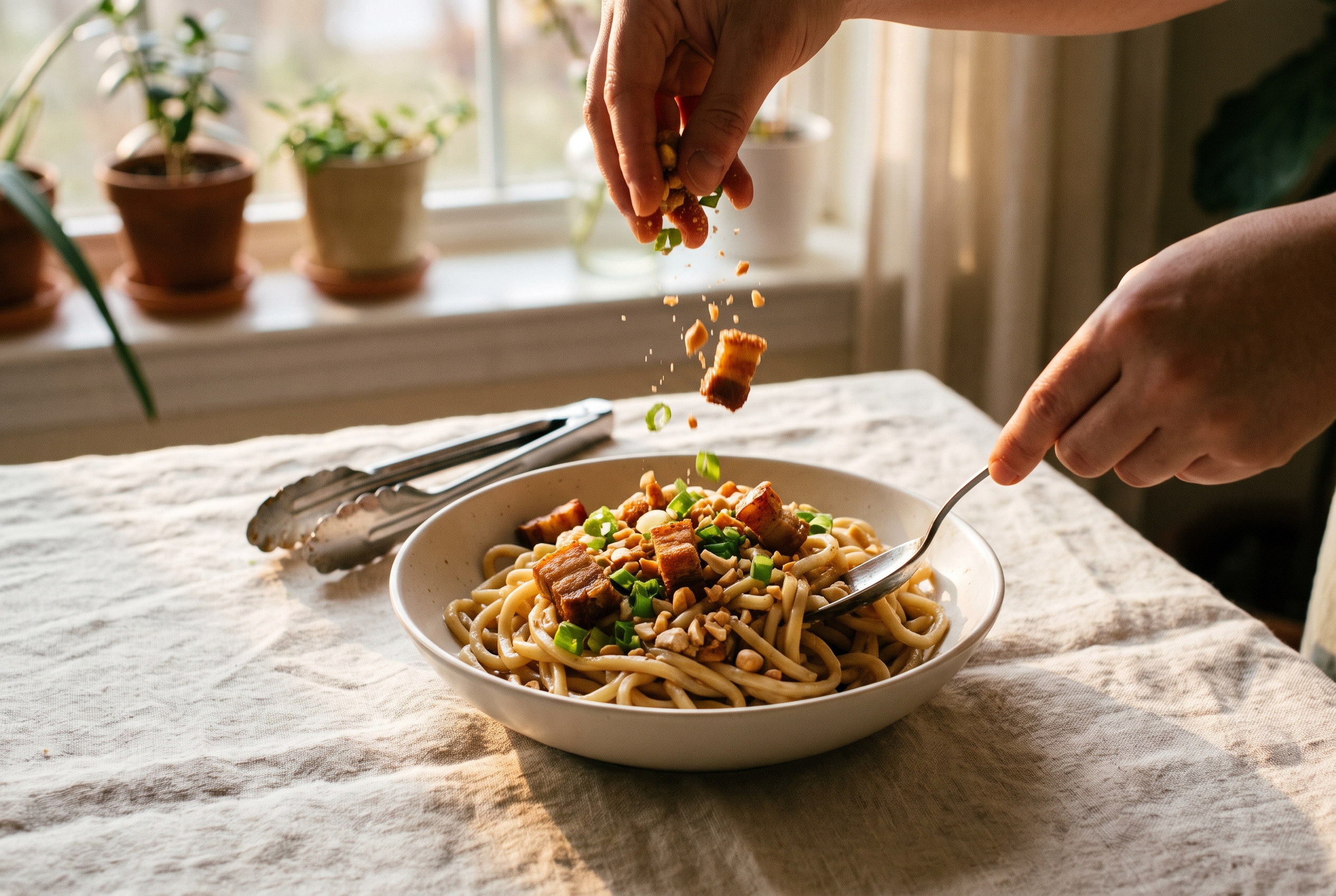
Pile the crispy pork on top of each bowl and scatter over the sliced scallions and crushed peanuts. Add an extra drizzle of chili oil if you like heat. Toss everything together at the table so the sauce coats every noodle and eat right away.
 If you want more fast dinners that land at 30-plus grams of protein and still feel like a treat — takeout-style bowls, noodles and skillets — this is the book I built for exactly that, the Ultimate GLP-1 High Protein High Fiber Cookbook.
Things I learned while testing this recipe.
- Chinese sesame paste is worth finding, but tahini works. Chinese sesame paste is made from toasted seeds and tastes deeper and nuttier. Tahini is made from raw seeds and is milder; if you use it, add ½ teaspoon of toasted sesame oil to the sauce to make up the difference. Stir either one well — the oil separates in the jar.
- Use a chili oil with crunchy bits. Chili crisp or a Sichuan chili oil with the sediment gives texture and flavor, not just heat. I spoon from the bottom of the jar. If yours is very hot, start with 1 tablespoon and add more at the table.
- Toast the Sichuan peppercorns first. Whole peppercorns toasted in a dry pan for a minute and ground in a mortar taste far brighter than pre-ground. That tingly, numbing buzz is what makes dan dan noodles taste like Sichuan and not just spicy peanut noodles.
- Fresh noodles, cooked a minute short. Fresh wheat noodles from the refrigerated section have the best chew. Dried Chinese wheat noodles, lo mein or even spaghetti work in a pinch. Pull them a minute early — they keep softening in the hot sauce.
Why I make dan dan noodles on busy weeknights.
- Twenty-five minutes, start to finish. The pork crisps while the water boils, the sauce is a one-bowl whisk, and the bok choy cooks with the noodles. There is one wok, one pot and one small bowl to wash.
- Thirty-one grams of protein in a bowl that feels like takeout. It is a real, filling dinner, and portioned into four bowls it stays reasonable on calories — it fits a high protein plan without feeling like one.
- The sauce is a pantry staple. I mix a triple batch and keep it in a jar in the fridge for up to two weeks. Then dan dan noodles take 15 minutes, and the sauce also goes on cucumbers, dumplings and cold noodle salads.
Here's what I'd serve with this.
- Air fryer chicken wings — toss them in a spoonful of the dan dan sauce for a takeout-style spread.
- Air fryer honey garlic shrimp — a sweet, sticky side if you are feeding a hungry crowd.
- Air fryer Brussels sprouts — a crispy vegetable that takes a drizzle of the leftover sauce well.
- Roasted cauliflower — roasted with a little sesame oil and soy, it rounds out the bowl.
Just in case you have leftovers.
Storing: Store the noodles, pork and sauce separately in airtight containers in the fridge for up to 3 days. Tossed noodles soak up all the sauce and get soft, so keep leftover sauce in its own jar — it lasts up to 2 weeks refrigerated.
Reheating: Re-crisp the pork in a hot dry skillet for 2 minutes. Dunk the noodles in boiling water for 30 seconds to loosen them, then toss with fresh sauce loosened with a splash of hot water. Dan dan noodles are also very good cold, like a spicy sesame noodle salad.
More easy dinner recipes...
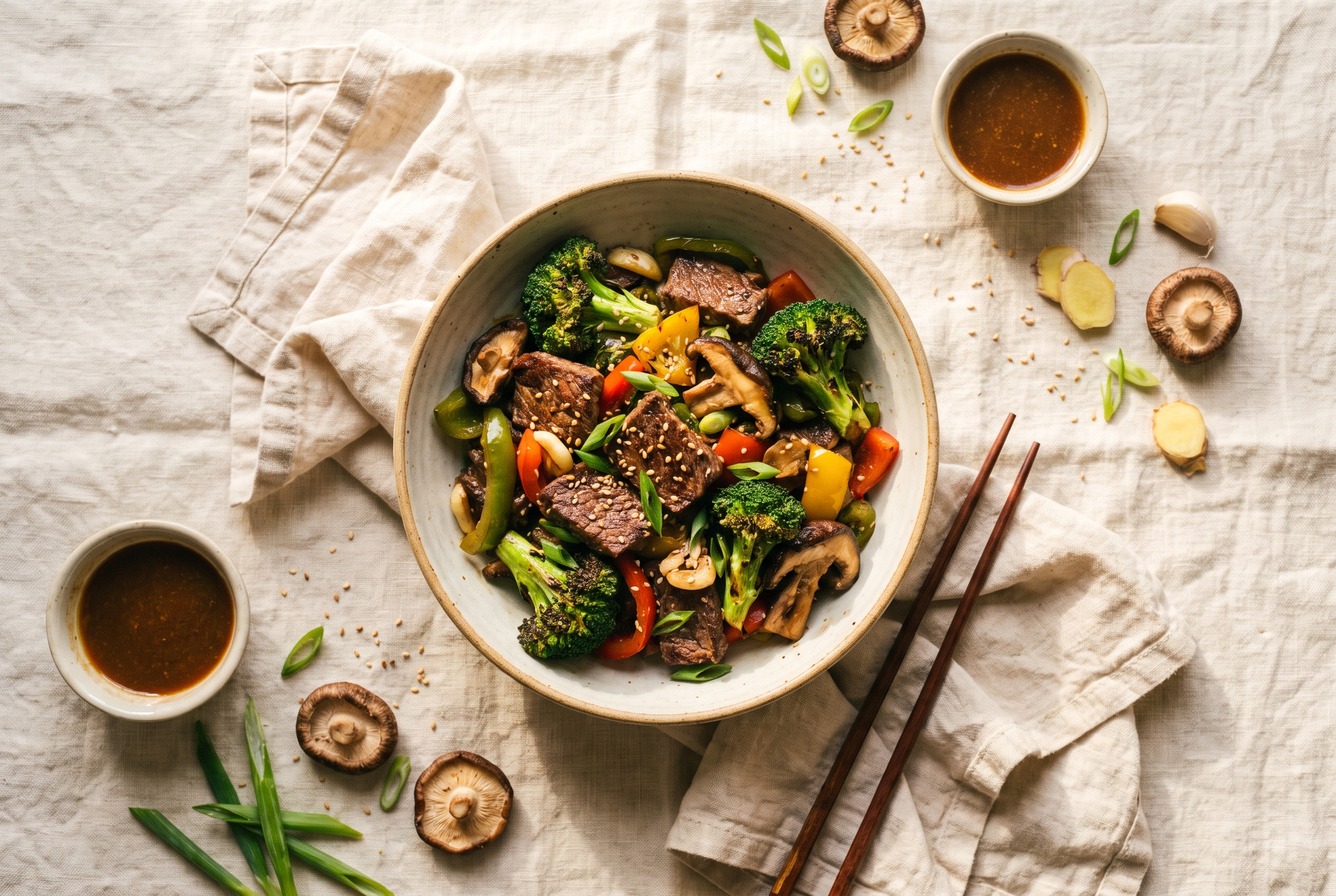
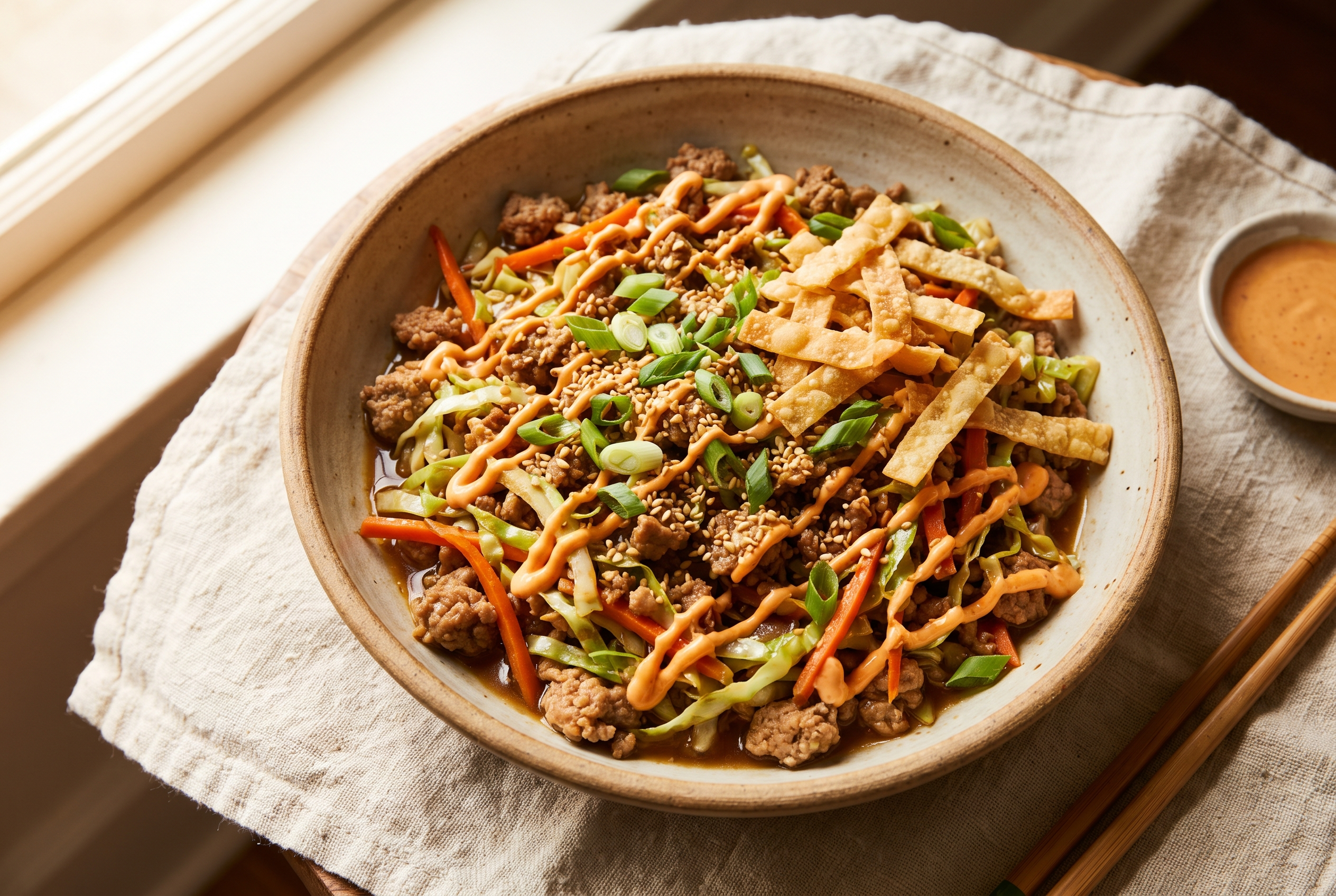
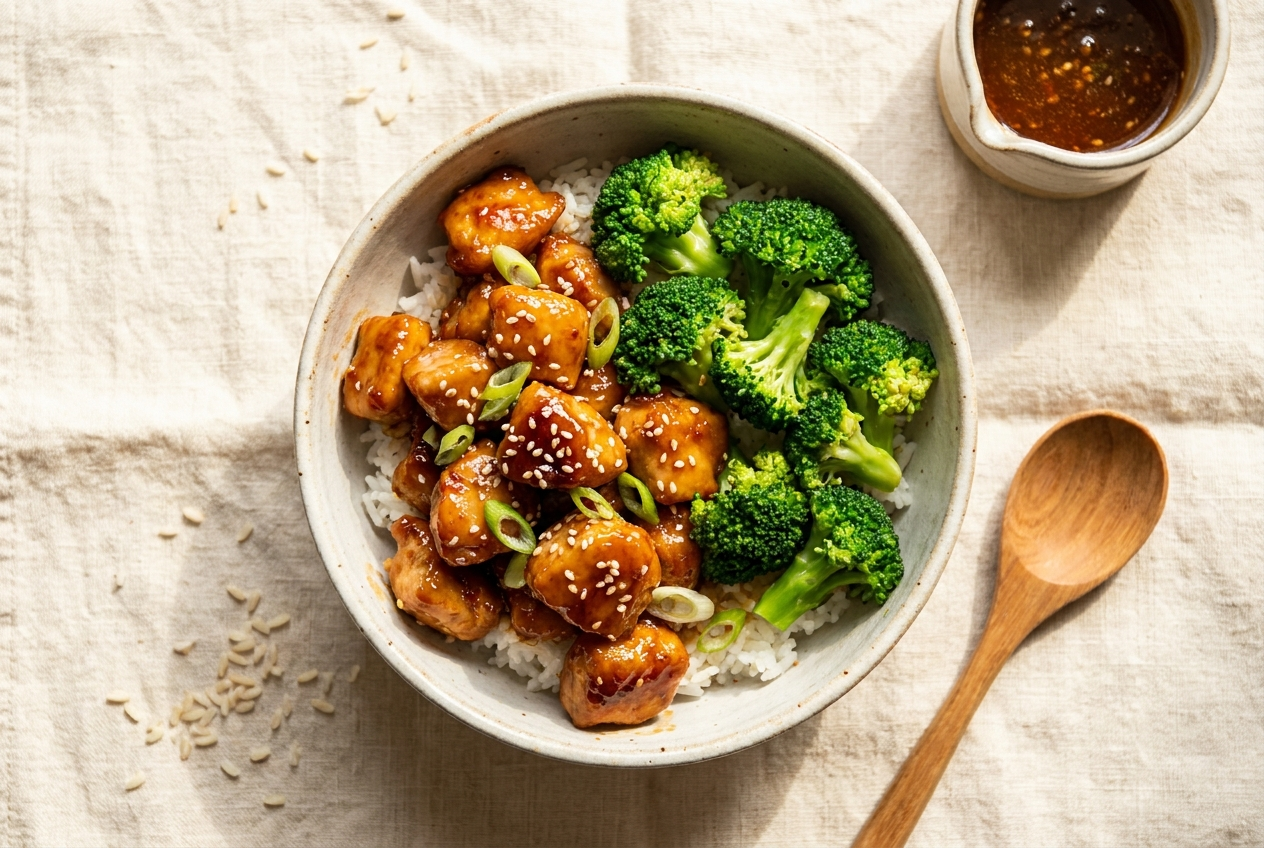
If you like a fast, big-flavor bowl, my bang bang chicken and hot honey chicken are in the same weeknight rotation. And from today's new batch, my Turkish pasta is another 30-minute dinner with spiced meat and a sauce that makes it.
Easy Dan Dan Noodles
Chewy wheat noodles in a spicy sesame and chili oil sauce with crispy ginger-garlic pork, bok choy, scallions and crushed peanuts. A 25-minute, better-than-takeout Sichuan noodle bowl with 31g protein.
Ingredients
- 1 tablespoon neutral oil
- 1 lb ground pork
- 4 cloves garlic, minced
- 1 tablespoon grated fresh ginger
- 1 tablespoon soy sauce (for the pork)
- 3 tablespoons Chinese sesame paste or tahini
- 3 tablespoons soy sauce (for the sauce)
- 2–3 tablespoons chili oil with sediment
- 1 tablespoon Chinkiang black vinegar
- 2 teaspoons sugar
- 1 teaspoon Sichuan peppercorns, toasted and ground
- 2–3 tablespoons hot water
- 12 oz fresh wheat noodles
- 4 baby bok choy, halved
- 3 scallions, thinly sliced
- ⅓ cup roasted peanuts, crushed
Instructions
- Pork: Heat the oil in a wok over high heat. Add the pork, press flat and brown 2 minutes, then break up and cook until crispy, about 6 minutes total. Stir in the garlic, ginger and 1 tablespoon soy sauce for 1 minute. Remove.
- Sauce: Whisk the sesame paste, 3 tablespoons soy sauce, chili oil, black vinegar, sugar, Sichuan pepper and 2–3 tablespoons hot water until smooth.
- Noodles: Boil the noodles according to the package, adding the bok choy for the last minute. Reserve a mug of noodle water, then drain.
- Bowls: Divide the sauce between 4 bowls, loosening with noodle water if thick.
- Assemble: Add the noodles and bok choy to the bowls.
- Top: Top with the pork, scallions and peanuts. Toss at the table and serve.
Notes
Tahini can replace Chinese sesame paste; add ½ teaspoon toasted sesame oil if you use it. Rice vinegar with a pinch of sugar can stand in for black vinegar. Adjust the chili oil to taste — 2 tablespoons is medium-hot. Ground chicken or turkey work in place of pork; cook them a little longer to get them crispy. Leftover sauce keeps 2 weeks refrigerated.
High protein dinners that still feel like a treat.
The Ultimate GLP-1 High Protein High Fiber Cookbook is full of bowls and noodle dinners like this one — portioned to fill you up, heavy on protein and flavor, and quick enough for a weeknight.
Meal-plan the whole week around recipes like this with RecipeLoop — save recipes from anywhere, get a grocery list automatically.Dan dan noodles FAQ
What is dan dan noodles sauce made of?
The core is sesame paste, soy sauce, chili oil and black vinegar, with a little sugar and ground Sichuan peppercorns for the numbing tingle. It is whisked with a splash of hot water until smooth and spooned into the bowl before the noodles go in.
What noodles are best for dan dan noodles?
Fresh thin wheat noodles have the best chewy texture and hold the sauce well. Dried Chinese wheat noodles or lo mein noodles are good alternatives, and in a pinch spaghetti or ramen noodles work. Avoid rice noodles — they are too slippery for the thick sauce.
Are dan dan noodles spicy?
They are meant to be spicy and slightly numbing from the Sichuan peppercorns. You control the heat with the chili oil: 1 tablespoon for mild, 2 for medium and 3 or more for the real Sichuan experience. The sesame paste softens the heat a lot.
Can I use peanut butter instead of sesame paste?
Yes. Smooth natural peanut butter makes a tasty, slightly sweeter sauce, closer to a peanut noodle than classic dan dan noodles. Thin it with a little extra hot water. A half-and-half mix of peanut butter and tahini gets closest to the original if you cannot find sesame paste.
What is the difference between dan dan noodles and lo mein?
Lo mein noodles are tossed in a wok with a soy-based sauce and vegetables. Dan dan noodles are boiled and served on top of a rich, spicy sesame chili sauce with crispy minced pork, and you toss them in the bowl. They are saucier, spicier and nuttier than lo mein.