Pumpkin Protein Muffins (Moist, Oat Flour, 12g Protein Each)
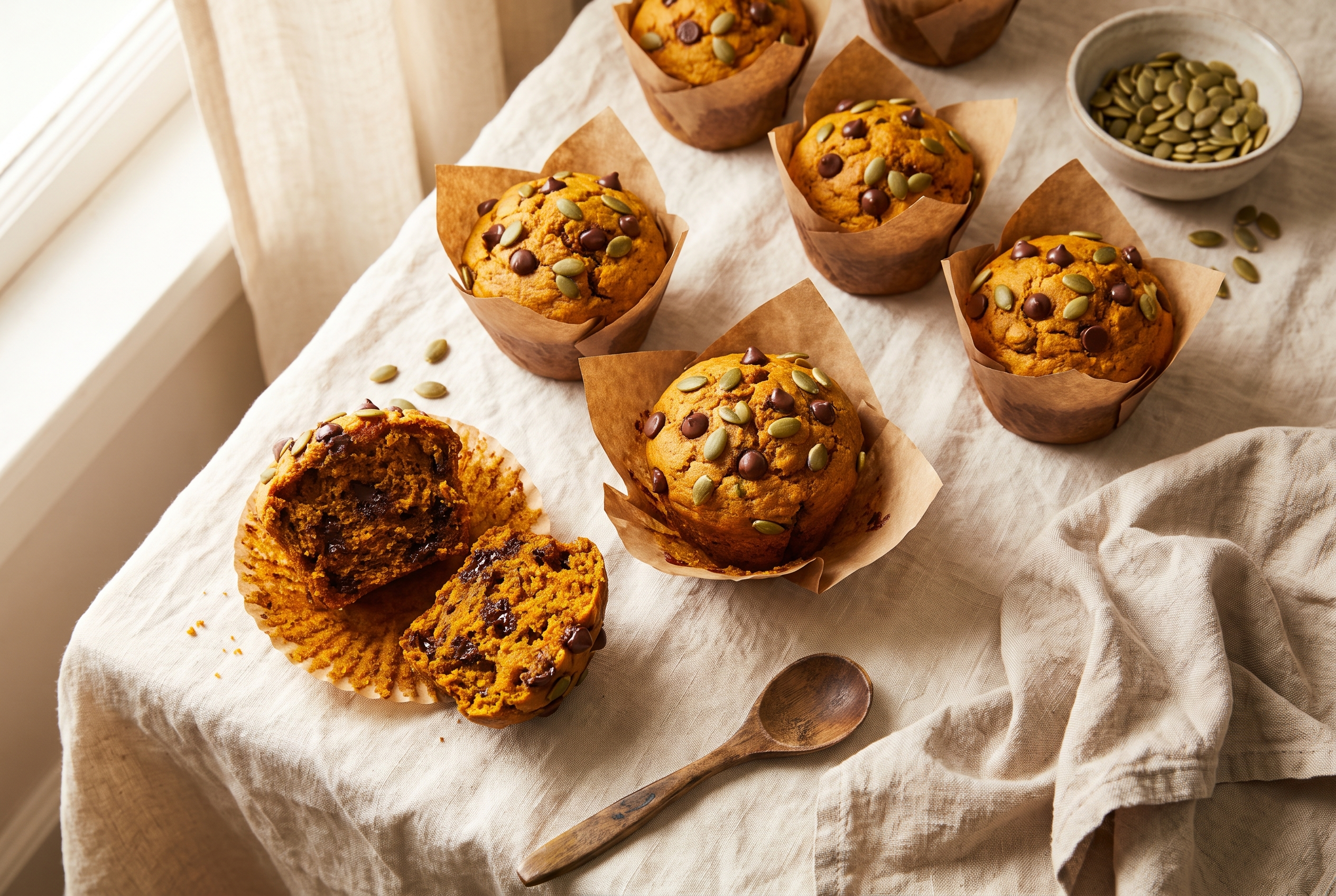
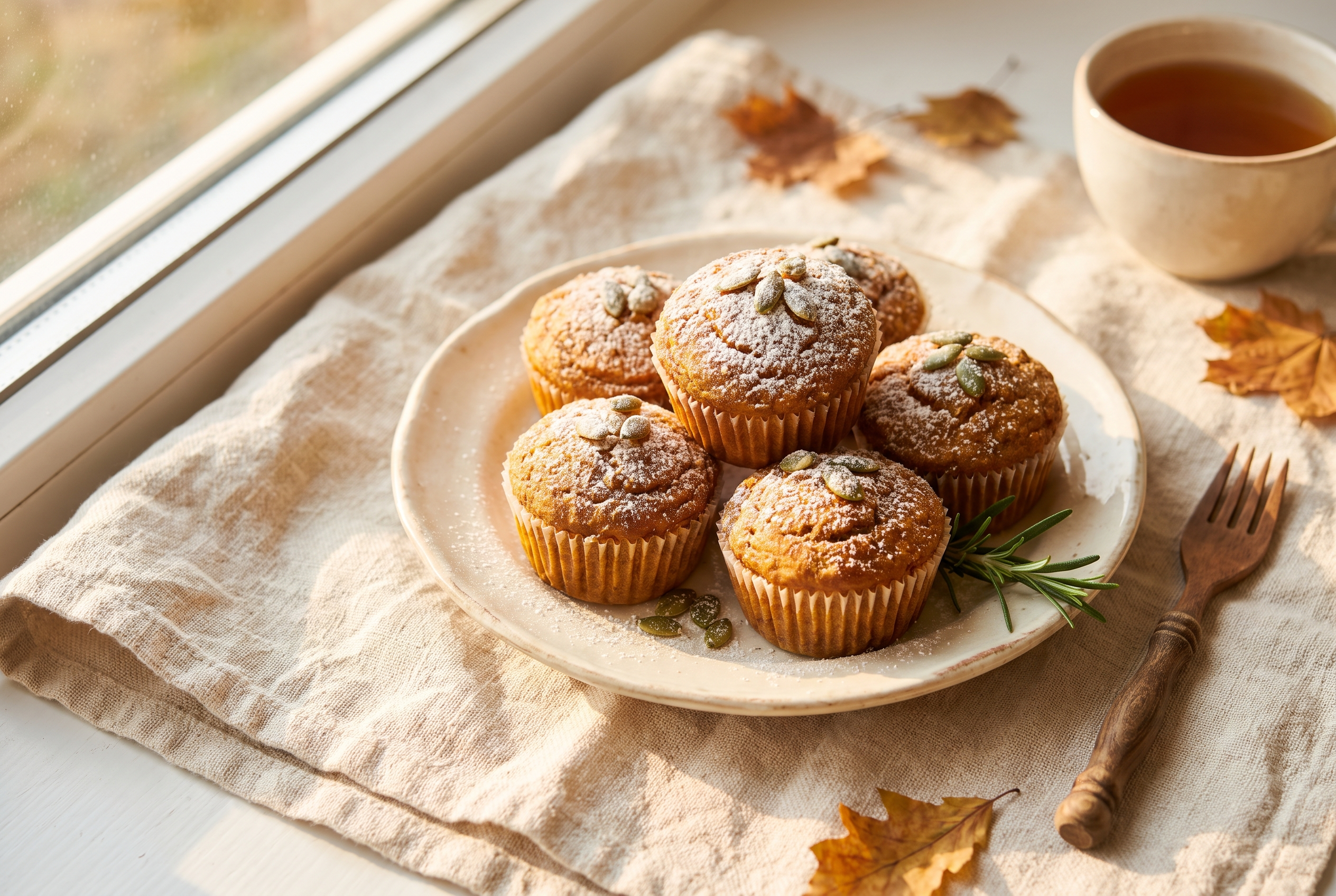
Pumpkin protein muffins were my fall project this year, because every protein muffin I had eaten was either dry as a sponge or tasted like the inside of a protein tub — these are moist, domed, warmly spiced pumpkin chocolate chip muffins with 12 grams of protein each, made with oat flour, vanilla protein powder and Greek yogurt.
It took me seven batches. The breakthroughs were Greek yogurt instead of oil for moisture, a whey-casein blend instead of pure whey (pure whey bakes rubbery), and pulling them from the oven a couple of minutes before they look done. They are built exactly like my blueberry protein muffins, just with a full cup of pumpkin and a lot more cinnamon.
 Save recipes like this straight from TikTok and plan your week in minutes with RecipeLoop, the free AI meal planner.
Why these pumpkin protein muffins stay moist.
- Greek yogurt and pumpkin do the job of oil. Between a cup of pumpkin puree and a cup of Greek yogurt, the batter has plenty of moisture without a half cup of oil. The yogurt also adds 23 grams of protein to the batch and a slight tang that makes the pumpkin taste brighter.
- Oat flour, not all protein powder. Muffins made mostly from protein powder bake up bouncy and dry. Oat flour gives a tender, whole-grain crumb and fiber, and the protein powder is there for the boost, not the structure. You can blend your own from rolled oats in 30 seconds, the same oats I use in my banana baked oatmeal.
- Grab-and-go breakfast that actually holds you. Two muffins and a coffee is 24 grams of protein before 8 a.m. with no cooking on a weekday. When I want a spoon breakfast instead, I make high protein overnight oats, but these are what goes in the bag on busy mornings.
Here's what you'll need.
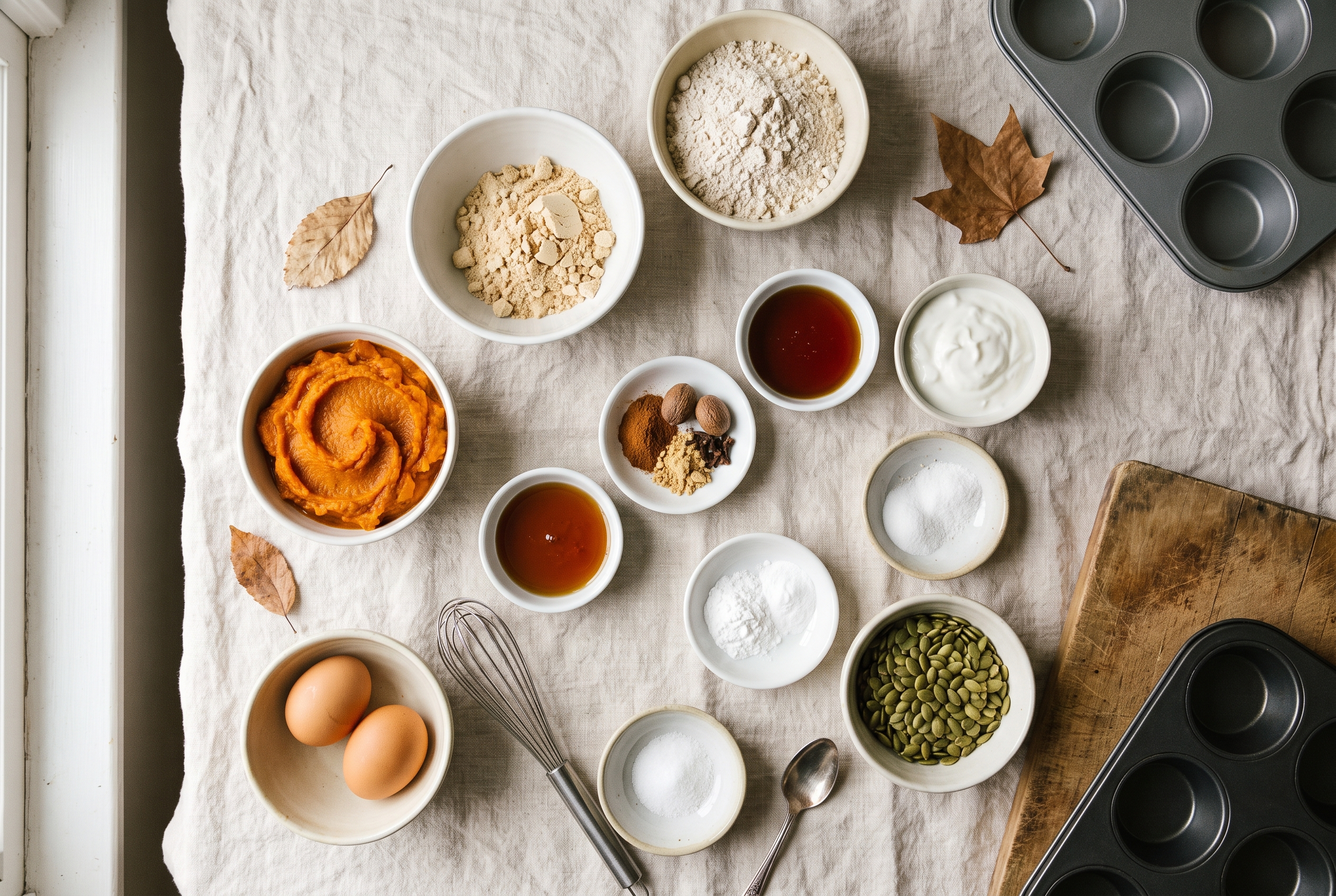
Pumpkin puree, plain Greek yogurt, eggs, maple syrup, vanilla, a little melted coconut oil, oat flour, vanilla protein powder (a whey-casein blend bakes best), pumpkin pie spice, baking soda, baking powder, salt, mini chocolate chips, and pumpkin seeds for the tops.
Here's how it all comes together.
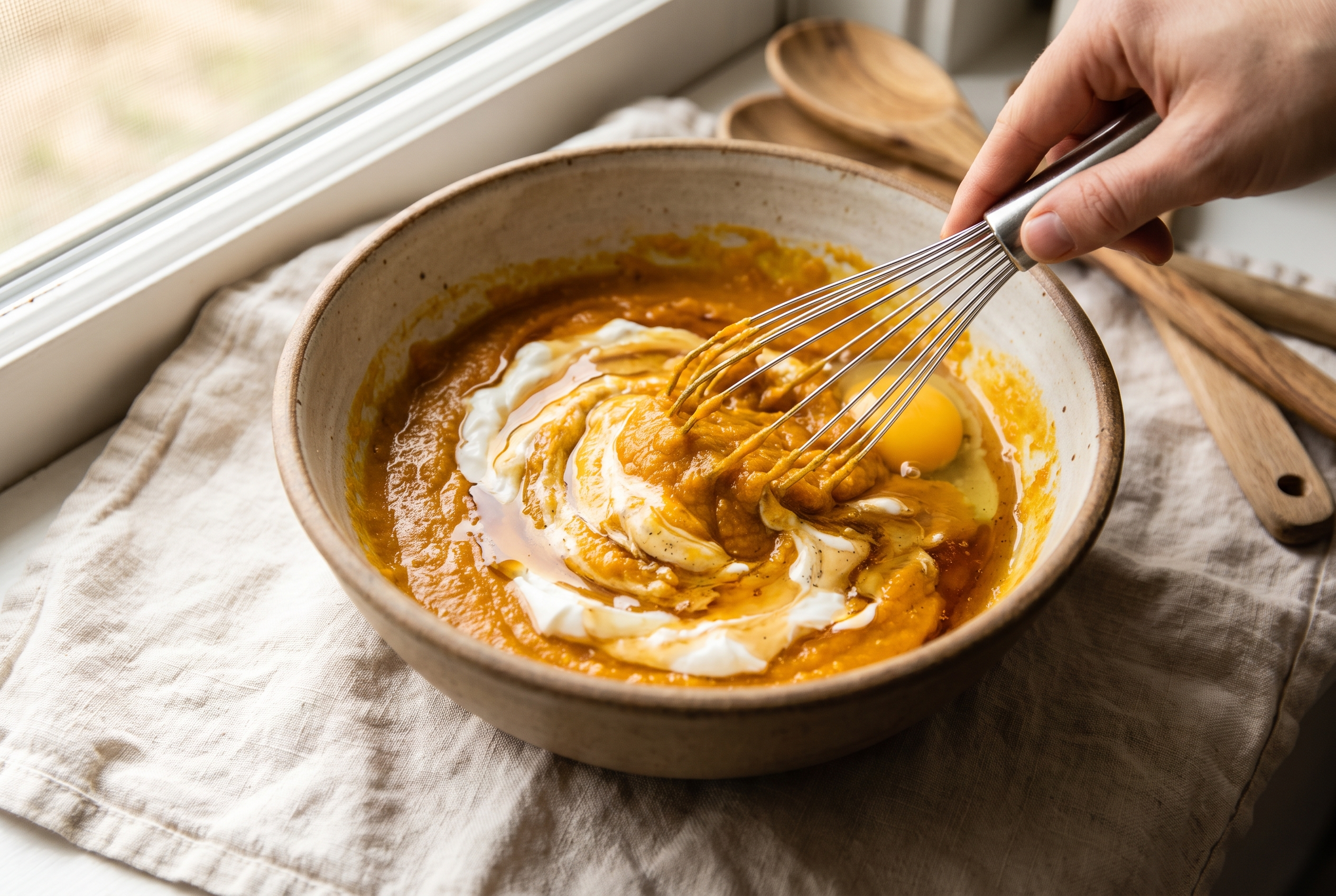
Heat the oven to 350°F and line a 12-cup muffin tin with paper liners (spray the liners lightly; protein muffins love to stick to paper). In a large bowl, whisk the pumpkin, Greek yogurt, eggs, maple syrup, melted coconut oil and vanilla until completely smooth and glossy.
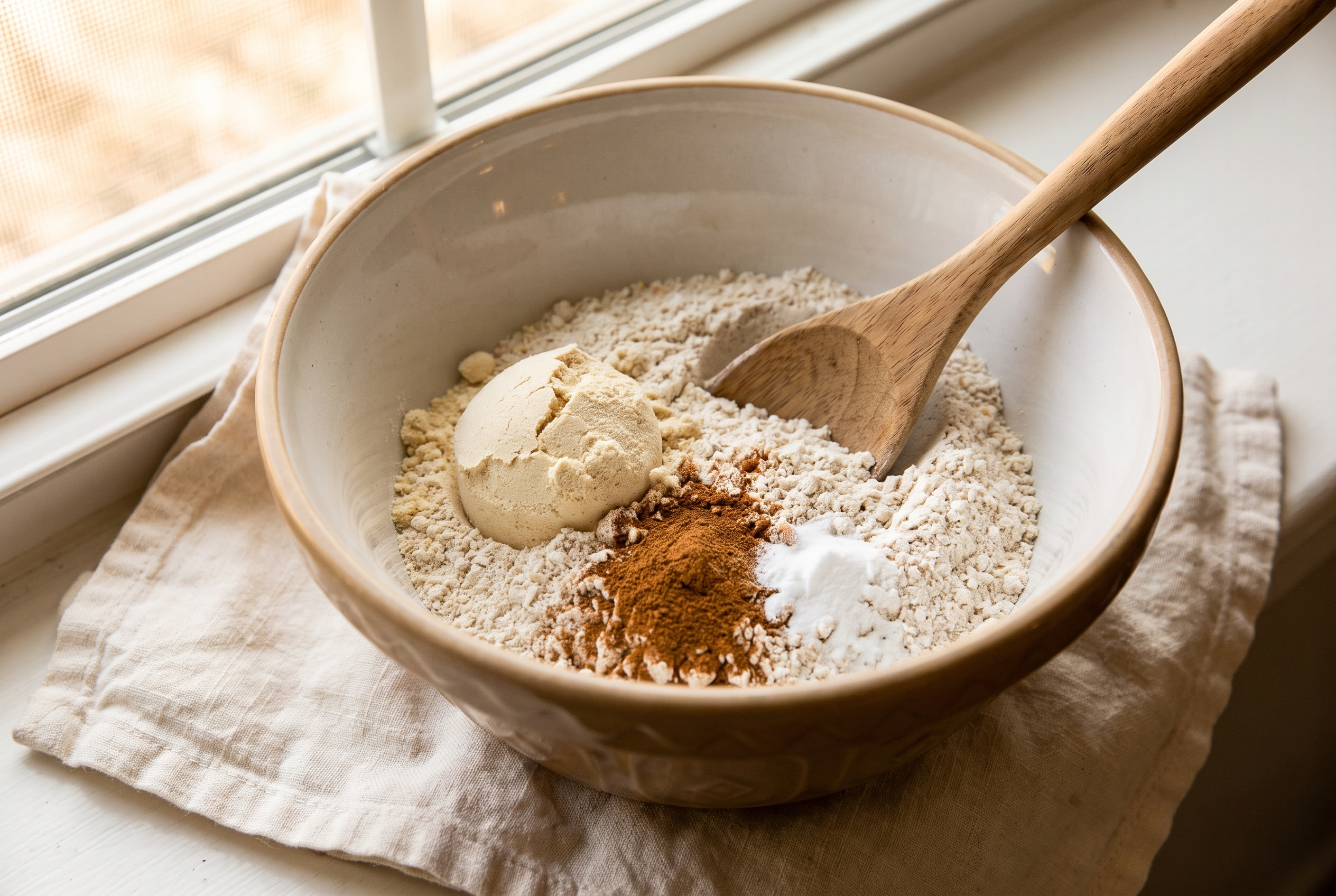
In a separate bowl, whisk the oat flour, protein powder, pumpkin pie spice, baking soda, baking powder and salt. Break up any clumps of protein powder with the whisk — those clumps turn into chalky pockets in the baked muffins if you leave them.
Add the dry ingredients to the pumpkin mixture and fold with a spatula just until no dry streaks remain. The batter will be thick, closer to a soft cookie dough than a pancake batter. Stop as soon as it comes together; overmixing a protein batter is what makes muffins tough and tunneled.
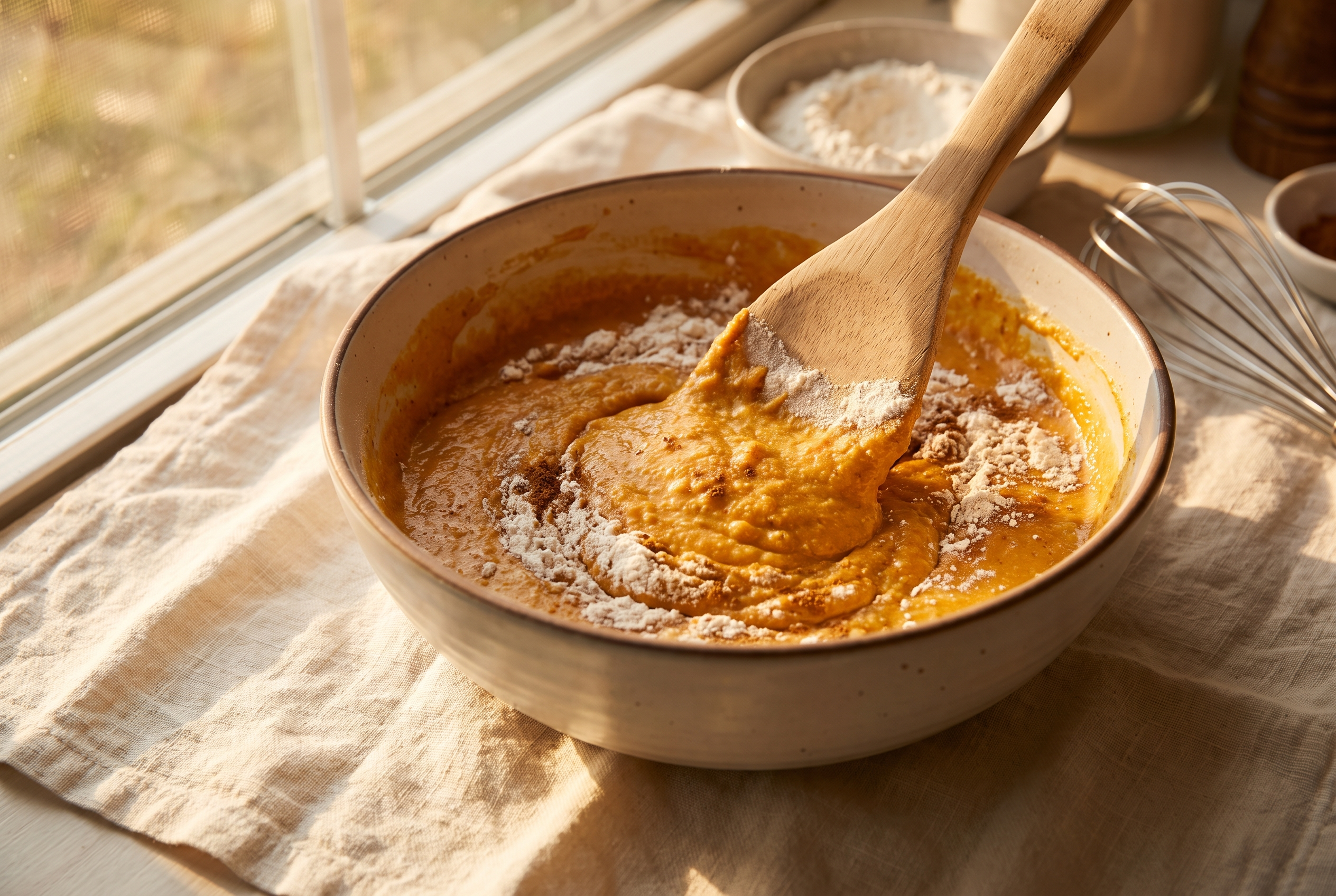
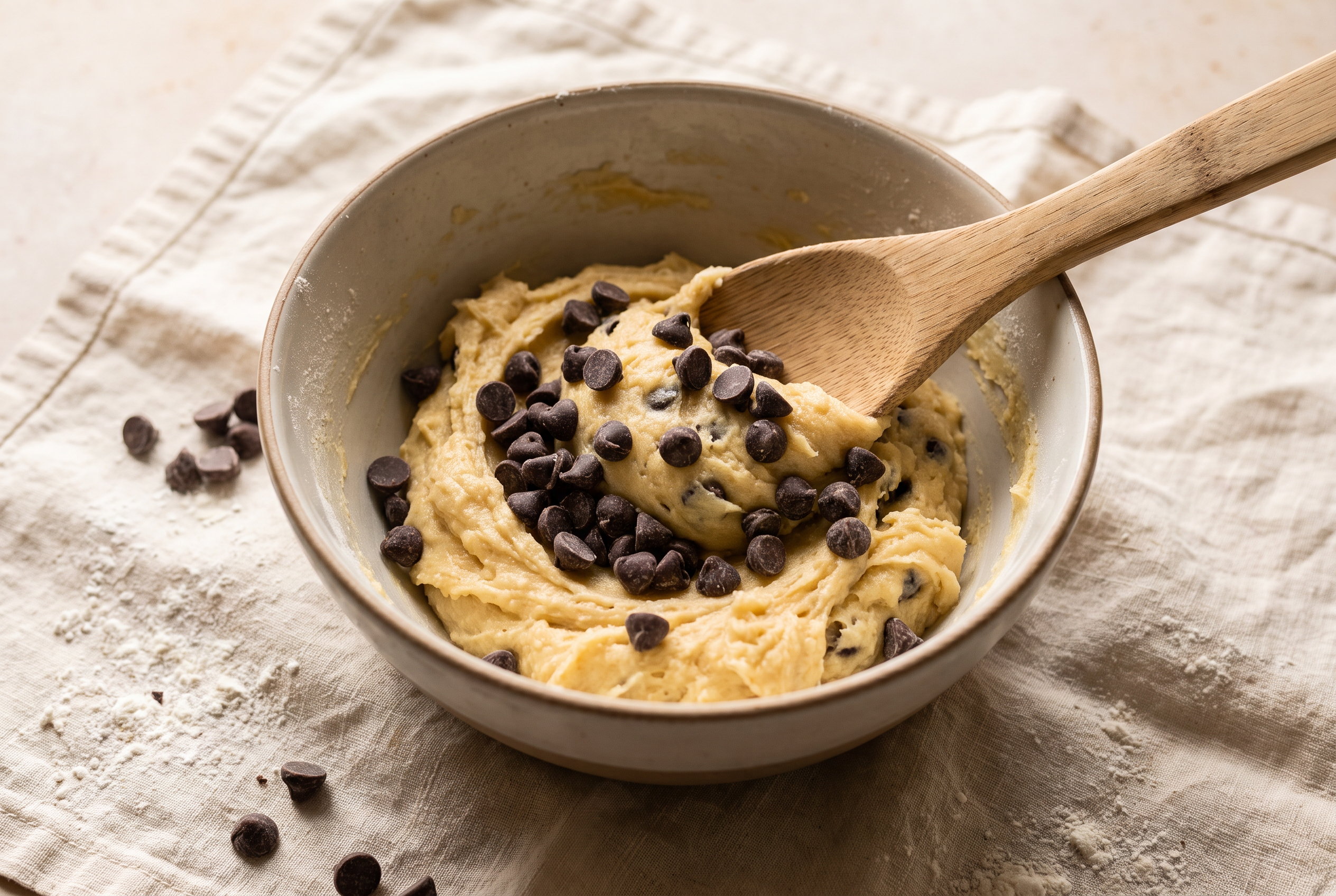
Fold in most of the mini chocolate chips, saving a tablespoon for the tops. Mini chips distribute better than regular ones in a thick batter and do not sink. Let the batter sit for 5 minutes while you get the tin ready; the oat flour hydrates and the muffins dome higher.
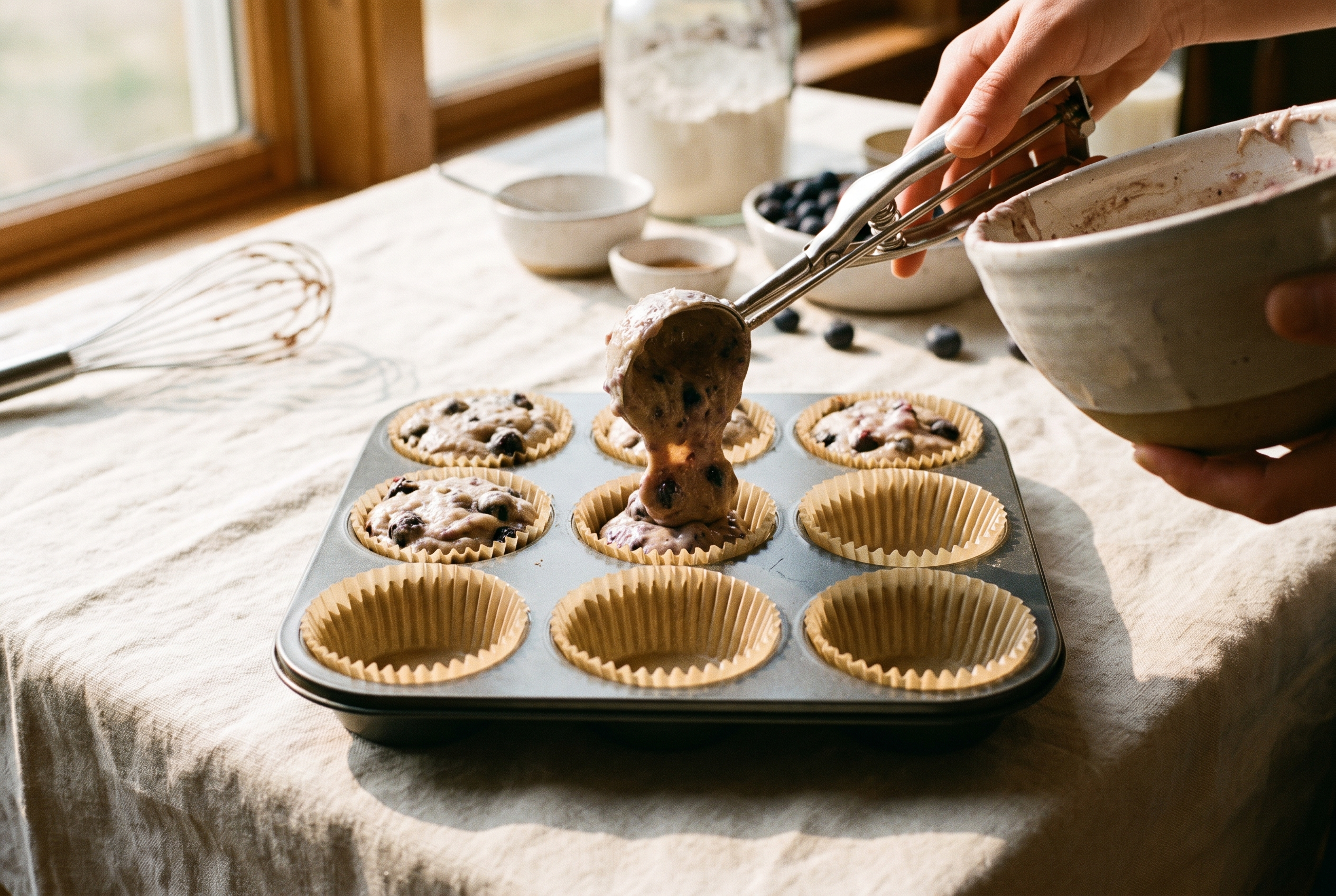
Divide the batter among the 12 cups with a large cookie scoop, filling each one right to the top. That full scoop is what gives you a real domed muffin instead of a flat one. Scatter the reserved chocolate chips and the pumpkin seeds over the tops and press them in gently.
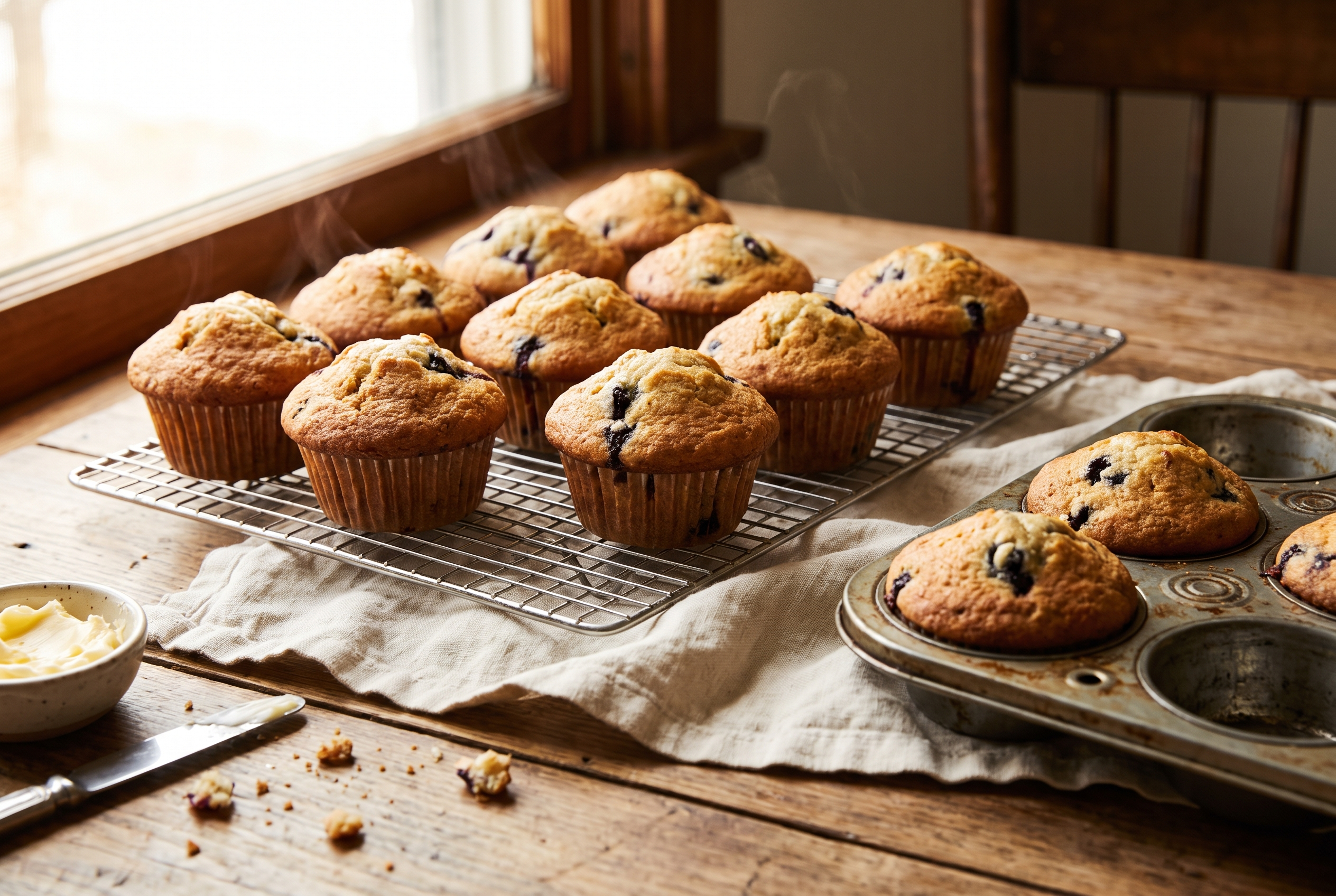
Bake for 18 to 20 minutes, until the tops are domed and spring back when pressed and a toothpick in the center comes out with a few moist crumbs. Do not wait for a perfectly clean toothpick; protein muffins dry out fast in the last two minutes. Cool 5 minutes in the tin, then move them to a rack.
 If you want more breakfasts and snacks built this way — protein and fiber first, easy to portion, satisfying on a smaller appetite — this is the book I bake from, the Ultimate GLP-1 High Protein High Fiber Cookbook.
Things I learned while testing this recipe.
- The protein powder matters more than anything else. I tested pure whey, a whey-casein blend and a plant protein. Pure whey made rubbery, dry muffins; the plant protein made dense, gritty ones. A whey-casein blend (most "baking" protein powders) came out soft and moist. If you only have whey, cut it to ½ cup and add ¼ cup more oat flour.
- Measure oat flour by weight if you can. Homemade oat flour is fluffier than store-bought, so a cup can weigh anywhere from 90 to 120 grams. I use 150 grams total. Too much flour is the most common reason these come out dry.
- Underbake by a minute or two. Protein bakes set fast and keep cooking from carryover heat. Pull them when a toothpick still shows a few moist crumbs. At 22 minutes, my test batch was noticeably drier than the 19-minute batch.
- Spray the paper liners. Low-fat muffins weld themselves to paper. A light mist of cooking spray inside each liner, or silicone liners, and they peel away cleanly instead of taking half the muffin with them.
Why pumpkin protein muffins are my weekday breakfast this fall.
- Twelve grams of protein for about 185 calories. That ratio is hard to find in anything that tastes like a bakery muffin. Two of them with a latte gets most people to 30 grams of protein at breakfast.
- Thirty minutes, twelve breakfasts. One bowl for wet, one for dry, one tin. They freeze perfectly, so I bake a double batch on a Sunday in October and eat them through November.
- Easy to eat when you are not hungry. A muffin is small, soft and familiar, which is exactly what you want on a morning with no appetite but a long day ahead. Pair one with a boiled egg or Greek yogurt for a fuller breakfast.
Here's what I'd serve with this.
- Cottage cheese egg bites — a muffin plus two egg bites is a 30g protein breakfast.
- High protein overnight oats — for the mornings you want something to eat with a spoon.
- Egg white breakfast wraps — a savory make-ahead that pairs well with a sweet muffin.
- High protein breakfast burritos — freeze both on the same Sunday for a month of breakfasts.
- Cottage cheese protein pancakes — the weekend breakfast when there is time to stand at the stove.
Just in case you have leftovers.
Storing: Cool the muffins completely, then store them in an airtight container at room temperature for 2 days or in the fridge for up to 5 days (put a paper towel in the container to catch moisture). To freeze, put them in a freezer bag for up to 3 months.
Reheating: Microwave a refrigerated muffin for 15 to 20 seconds; from frozen, 35 to 45 seconds. For a crisp top, 3 minutes in the air fryer or toaster oven at 325°F. Split it and add a thin swipe of nut butter while it is warm.
More easy breakfast recipes...
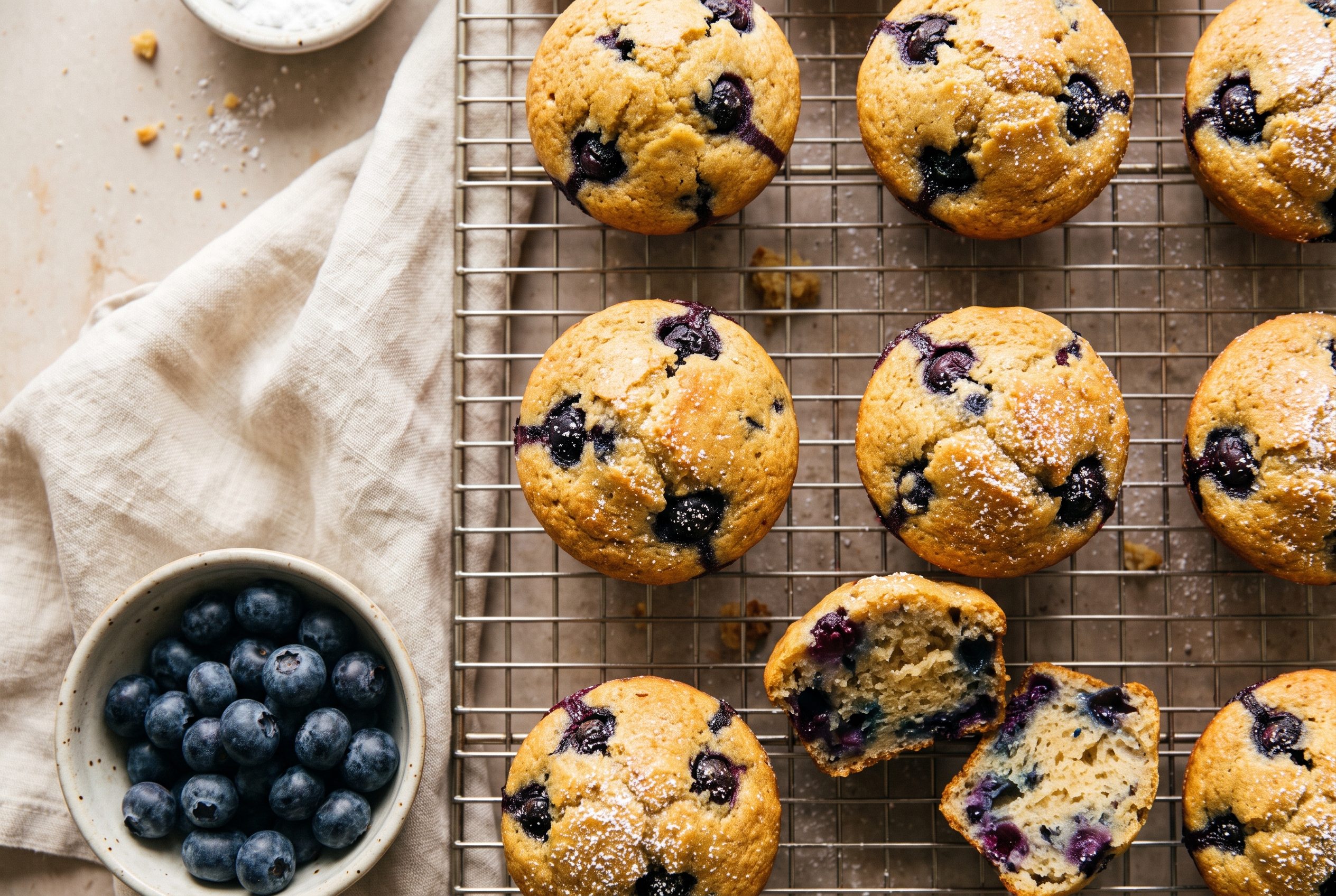 Blueberry protein muffins
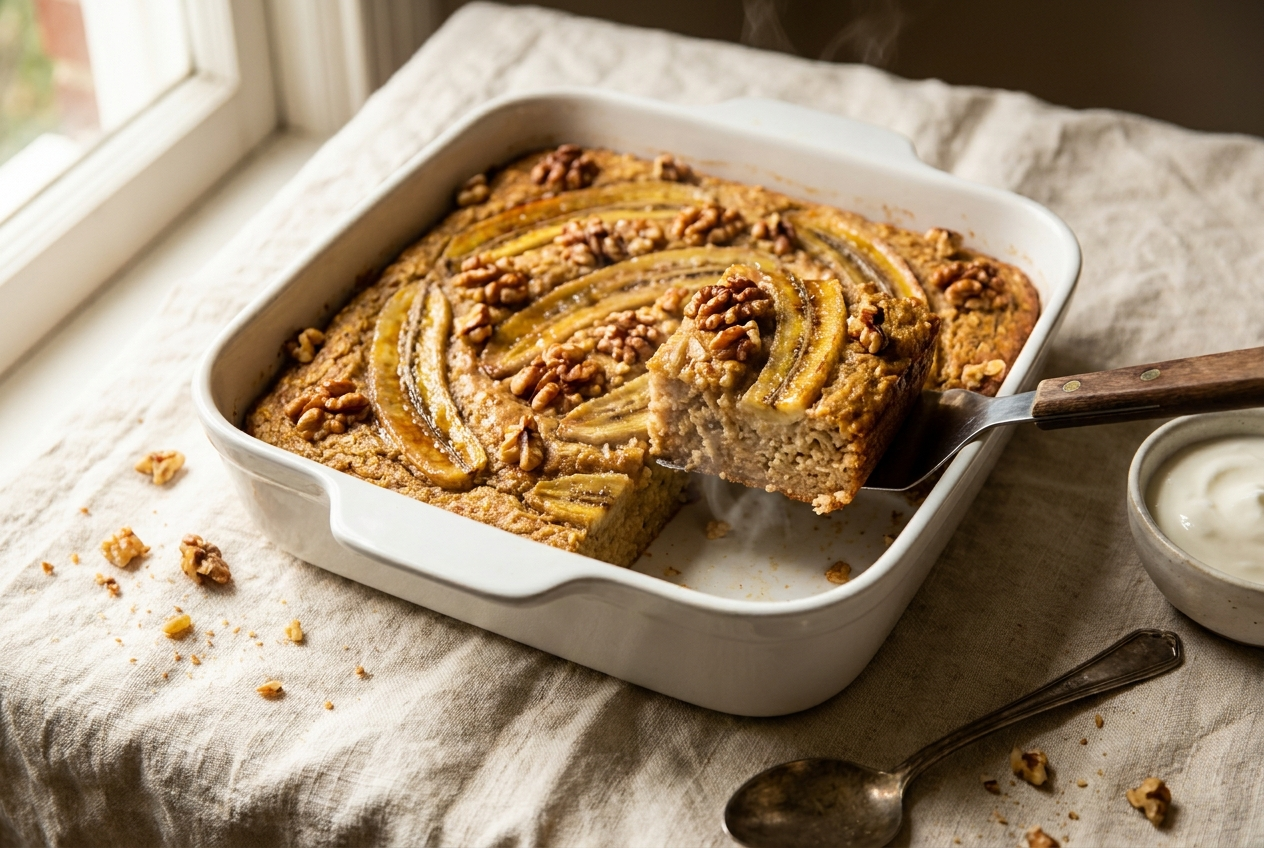 High protein banana baked oatmeal
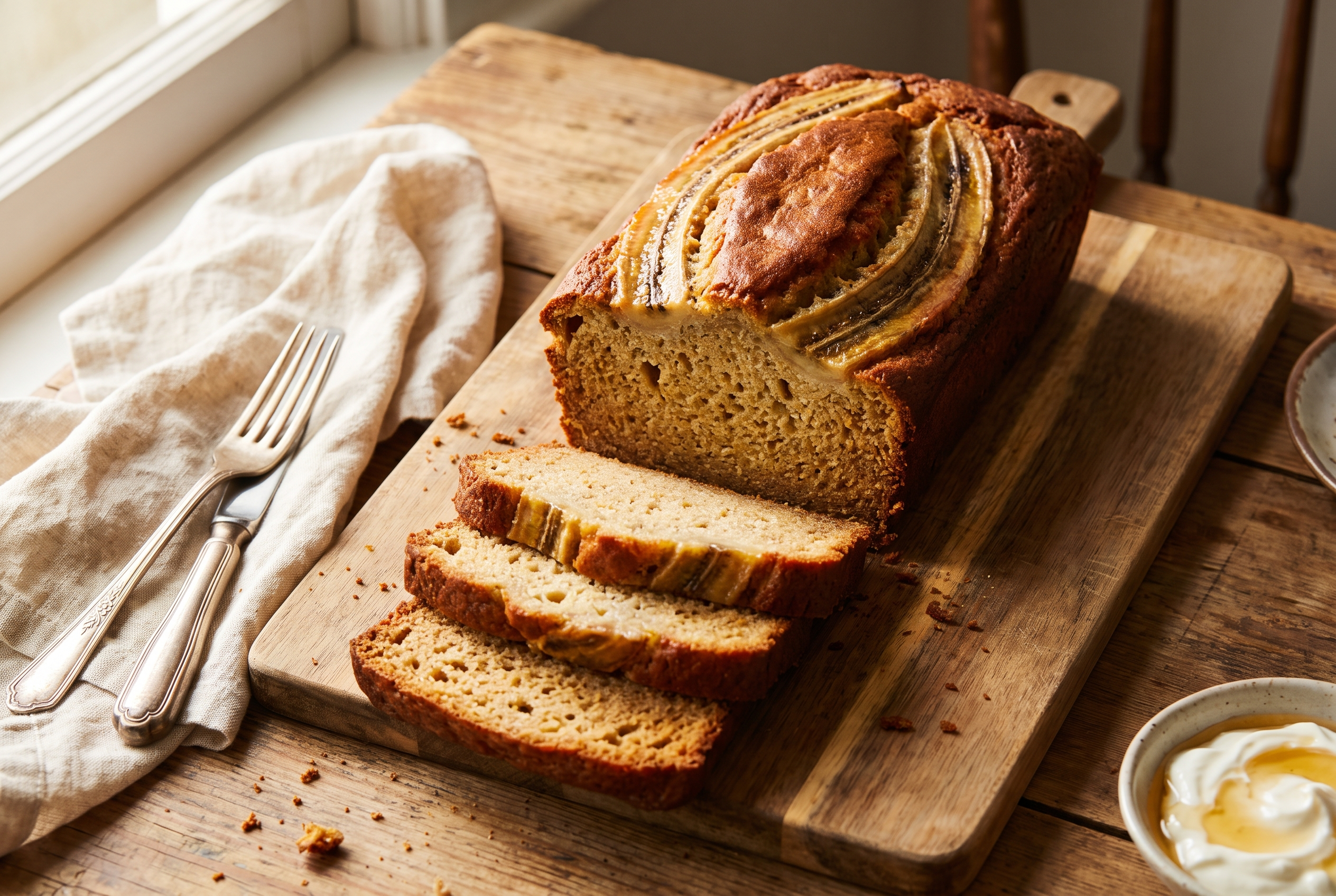 Greek yogurt banana bread
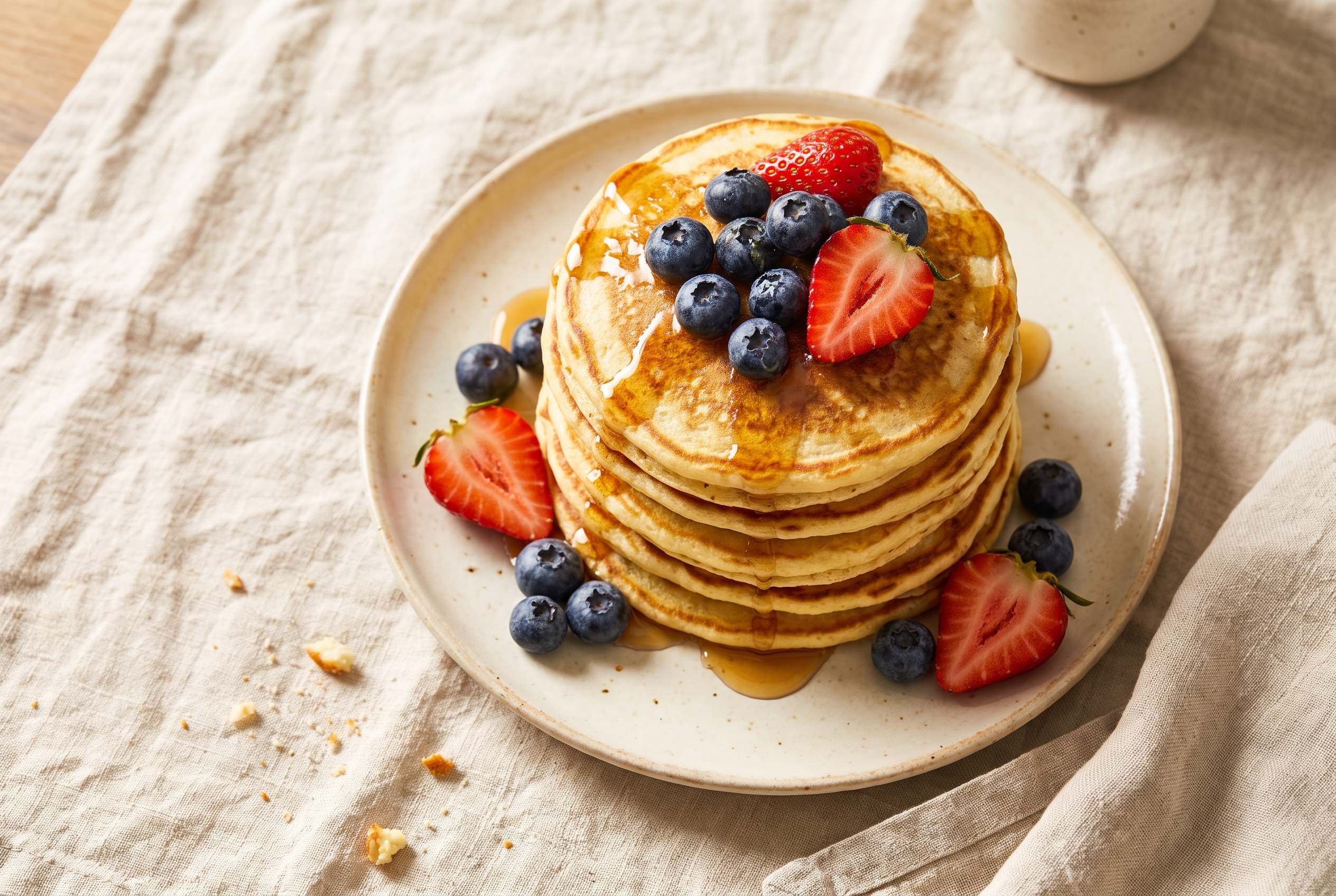 Cottage cheese protein pancakes
If you like a sweet breakfast with protein built in, my fudgy protein brownies use the same yogurt-for-oil swap. And today's other new pumpkin recipes are my pumpkin baked oatmeal and pumpkin bars with cream cheese frosting for dessert.
Pumpkin Protein Muffins
Moist pumpkin protein muffins made with oat flour, vanilla protein powder, Greek yogurt and pumpkin puree, with chocolate chips and pumpkin seeds on top. 30 minutes, about 185 calories and 12g protein each.
Ingredients
- 1 cup pumpkin puree
- 1 cup plain Greek yogurt (2% or nonfat)
- 3 large eggs
- ⅓ cup pure maple syrup
- 2 tablespoons coconut oil, melted and cooled
- 2 teaspoons vanilla extract
- 1¼ cups (150 g) oat flour
- ¾ cup (about 90 g, 3 scoops) vanilla whey-casein protein powder
- 2 teaspoons pumpkin pie spice
- 1 teaspoon baking soda
- 1 teaspoon baking powder
- ¼ teaspoon kosher salt
- ⅓ cup mini chocolate chips, divided
- 2 tablespoons pumpkin seeds (pepitas)
Instructions
- Prep: Heat the oven to 350°F. Line a 12-cup muffin tin with paper liners and spray them lightly.
- Wet: Whisk the pumpkin, Greek yogurt, eggs, maple syrup, coconut oil and vanilla until smooth.
- Dry: In another bowl, whisk the oat flour, protein powder, pumpkin pie spice, baking soda, baking powder and salt.
- Fold: Fold the dry ingredients into the wet just until combined, then fold in all but 1 tablespoon of the chocolate chips. Rest the batter 5 minutes.
- Scoop: Divide among the 12 cups, filling them to the top. Sprinkle with the remaining chocolate chips and the pumpkin seeds.
- Bake: Bake 18–20 minutes, until domed and a toothpick shows a few moist crumbs. Cool 5 minutes in the tin, then on a rack.
Notes
A whey-casein blend protein powder gives the softest muffins; with pure whey, use ½ cup and add ¼ cup more oat flour. Make oat flour by blending rolled oats until fine. Do not overbake — protein muffins dry out quickly. Swap the chocolate chips for chopped walnuts or dried cranberries. Nutrition is per muffin and will vary with the protein powder you use.
High protein, high fiber, and built for a GLP-1 appetite.
The Ultimate GLP-1 High Protein High Fiber Cookbook is full of breakfasts and snacks like these muffins — small, satisfying and heavy on protein and fiber, for the days you need to eat well without eating a lot.
Meal-plan the whole week around recipes like this with RecipeLoop — save recipes from anywhere, get a grocery list automatically.Pumpkin protein muffins FAQ
Why are my protein muffins dry or rubbery?
Usually one of three things: pure whey protein (it bakes rubbery), too much flour or protein powder, or overbaking. Use a whey-casein blend, measure the oat flour by weight, and pull the muffins when a toothpick still shows a few moist crumbs.
What protein powder is best for pumpkin protein muffins?
A whey-casein blend gives the softest, moistest texture. Pure whey works if you reduce it to ½ cup and add a little more oat flour. Plant proteins absorb more liquid, so add 2 to 3 tablespoons of milk to the batter if you use one.
Can I make these pumpkin muffins without protein powder?
Yes. Replace the protein powder with ¾ cup more oat flour. They will be lighter and more like a classic healthy pumpkin muffin, with about 6g of protein each instead of 12g.
How much protein is in each pumpkin protein muffin?
About 12g per muffin with 3 scoops of vanilla protein powder, Greek yogurt and 3 eggs, at around 185 calories. The exact number depends on your protein powder, so check its label.
Can you freeze pumpkin protein muffins?
Yes, they freeze very well. Cool them completely, then freeze in a zip-top bag for up to 3 months. Microwave a frozen muffin for 35 to 45 seconds, or let it thaw on the counter for an hour.