Home › Easy Dinners › Teriyaki chicken bowls
Teriyaki chicken bowls
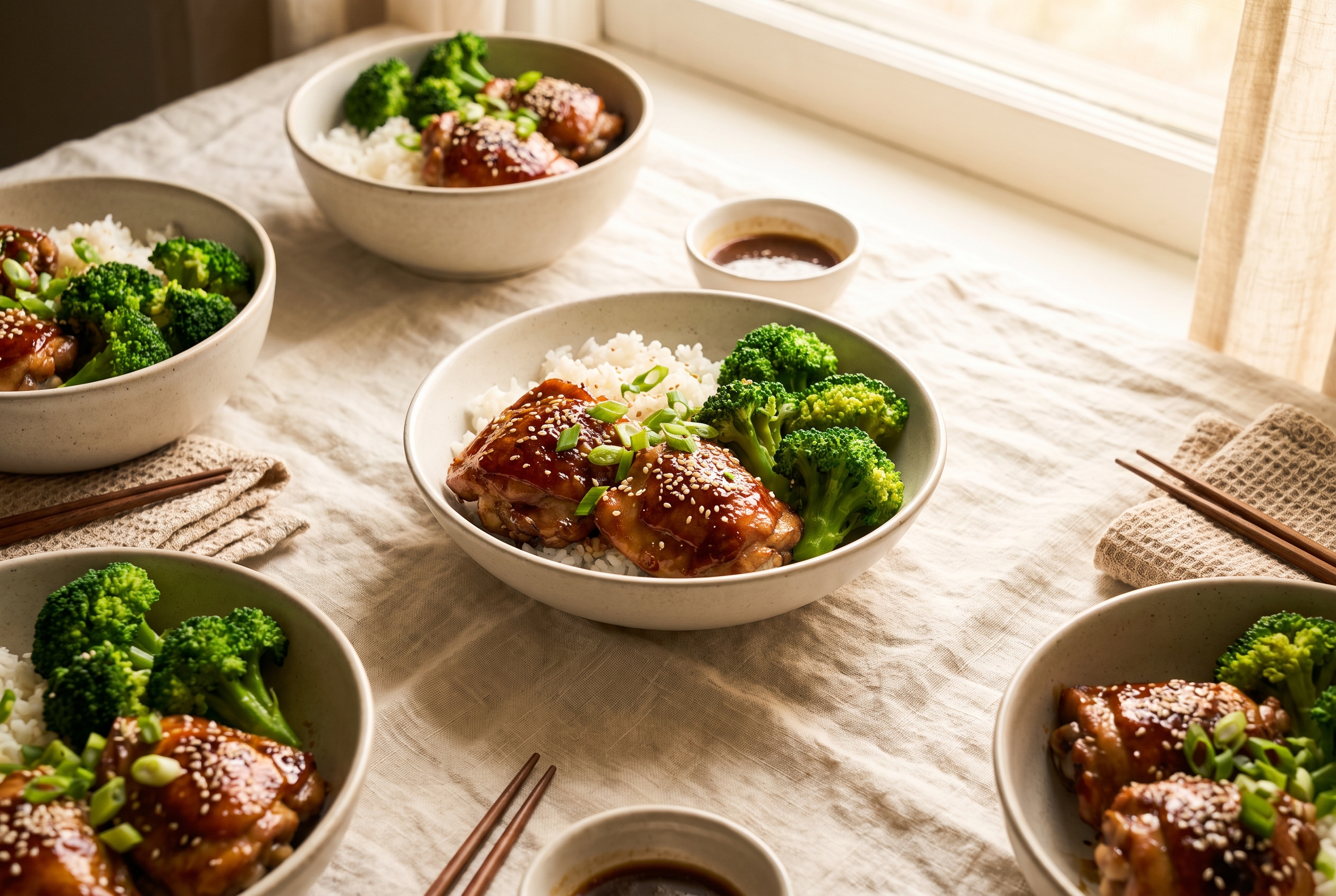
Teriyaki chicken bowls are the easy dinner recipe that finally got me to stop buying the bottled stuff — real teriyaki sauce is four ingredients and thickens in the pan in about ninety seconds. Juicy chicken thighs, a glossy glaze, rice and broccoli, 25 minutes, 44g of protein.
 Save recipes like this straight from TikTok and plan your week in minutes with RecipeLoop, the free AI meal planner.
Homemade teriyaki sauce takes ninety seconds and it isn't close.
- Four ingredients beat the bottle outright. Soy sauce, mirin, brown sugar and a cornstarch slurry. Bottled teriyaki is mostly corn syrup and tastes like it — this tastes like the glaze at a good Japanese counter.
- Thighs make it forgiving. Chicken thighs stay juicy even if you walk away, which matters when you're also cooking rice and broccoli. Same reason air fryer chicken thighs are so hard to ruin.
- It's built for meal prep. Chicken, rice and broccoli hold separately for four days and reheat without turning sad. A solid rotation partner for honey garlic chicken bowls.
Here's what you'll need.
Mirin is the one thing worth buying — it's a sweet rice wine that gives teriyaki its particular roundness, and a bottle lasts forever in the pantry. If you can't find it, use 2 tablespoons of dry sherry plus an extra teaspoon of sugar. Boneless skinless thighs are ideal; breasts work if you cut them thin and pull them at 160°F.
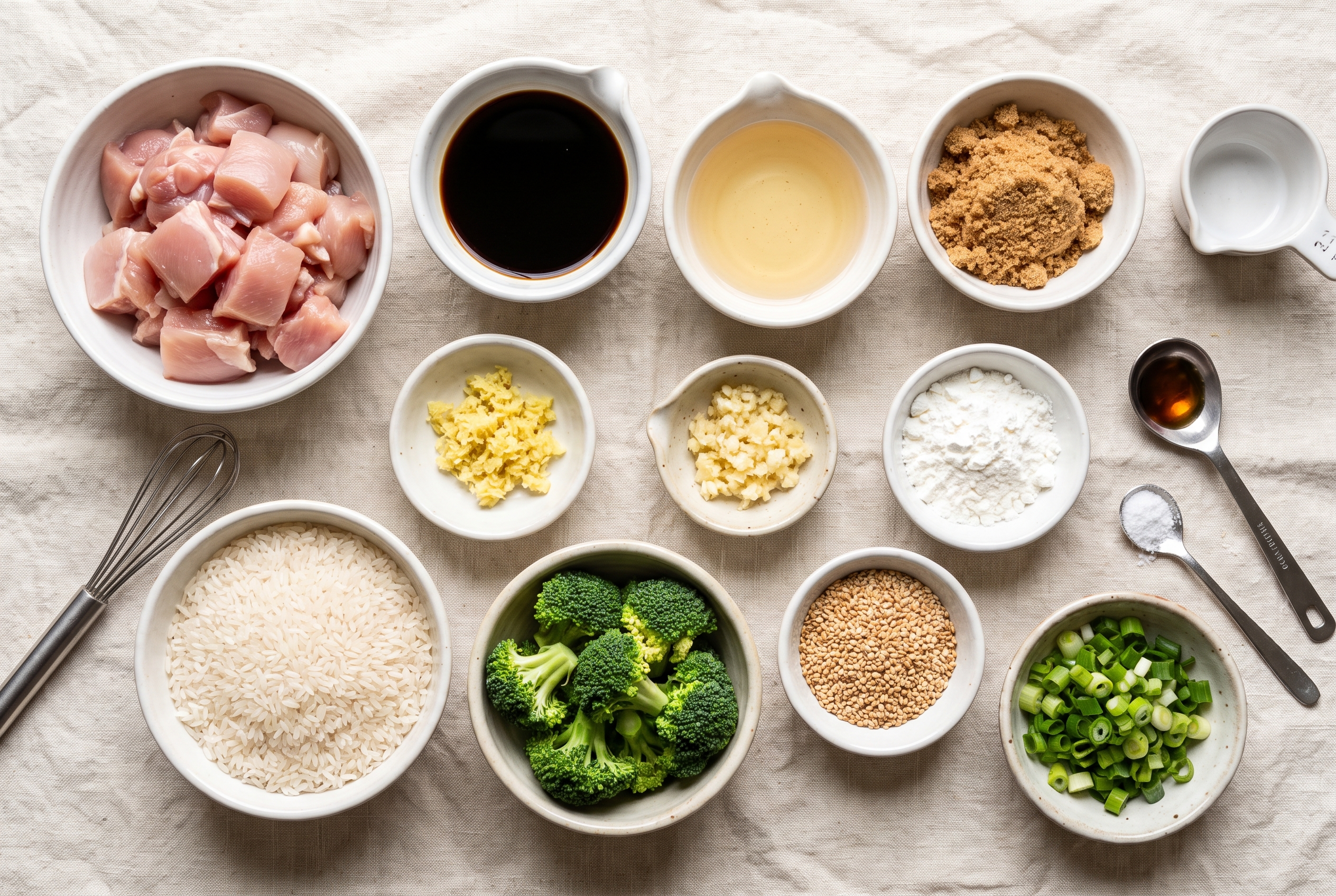
Here's how it all comes together.
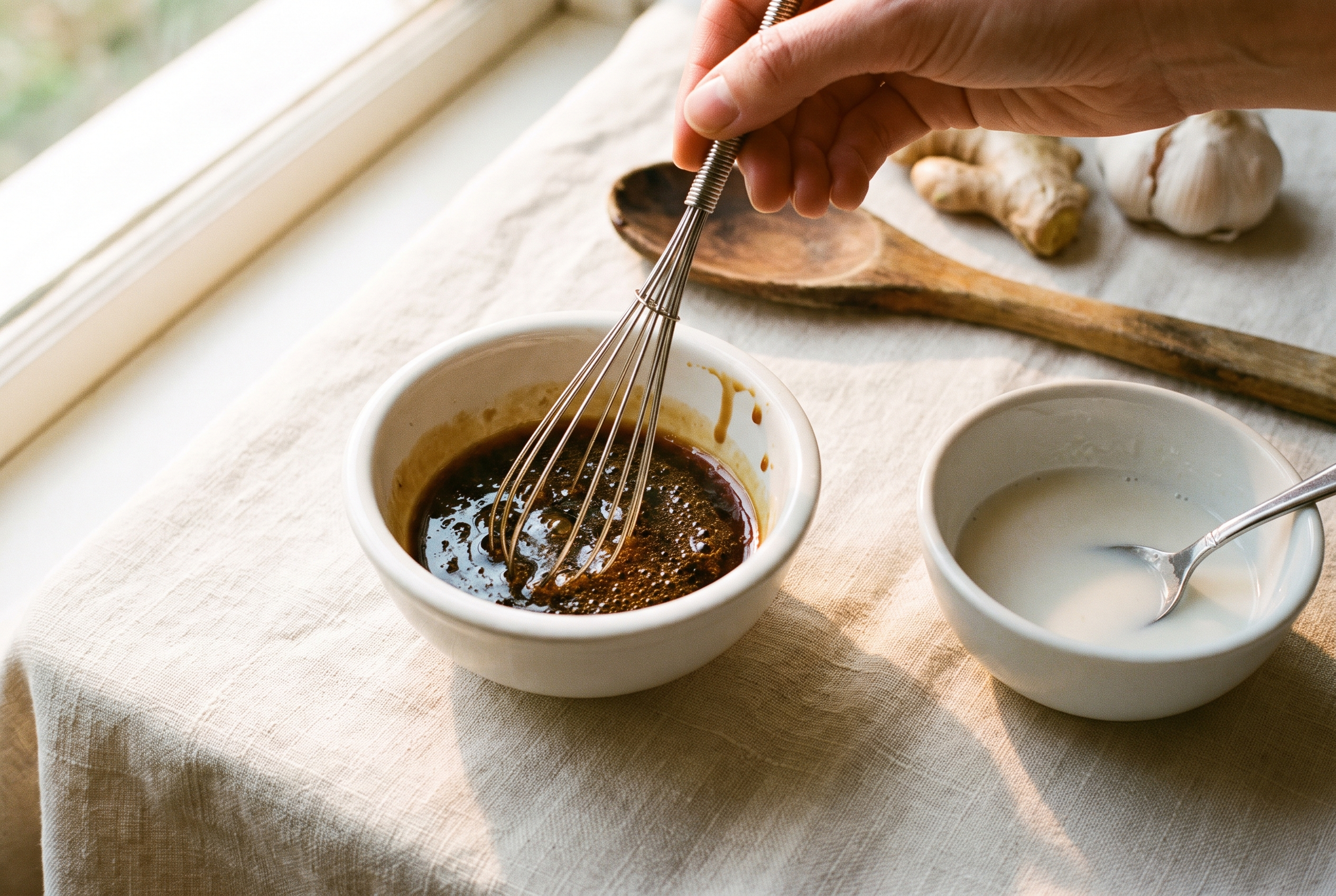
Whisk the soy sauce, mirin, brown sugar, grated ginger and garlic in one bowl, and the cornstarch with two tablespoons of cold water in another. Keeping the slurry separate is the whole trick — cornstarch added to hot liquid straight from the box clumps every time.
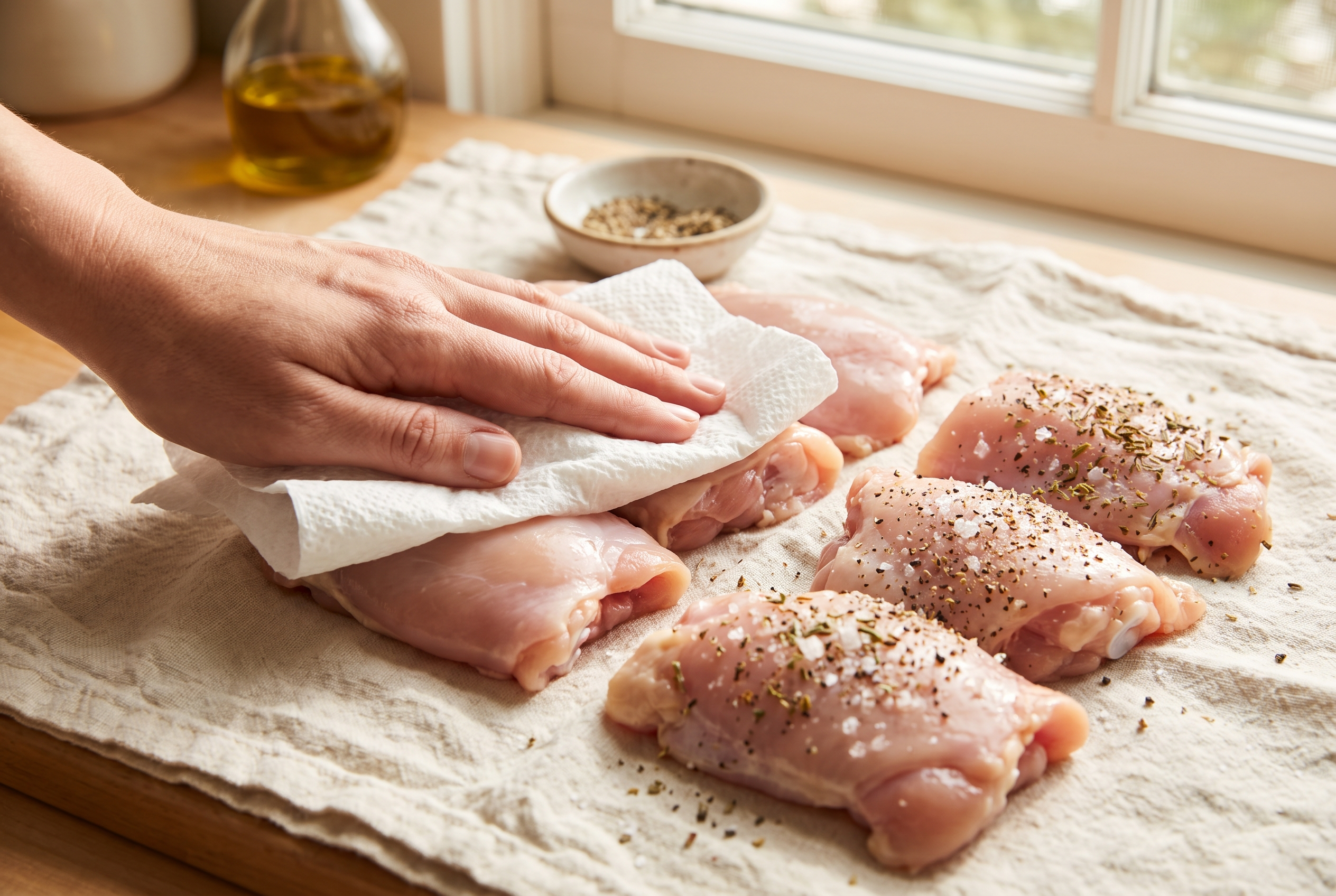
Blot the thighs thoroughly with paper towel and season both sides with salt and pepper. Dry surface is non-negotiable for browning — wet chicken steams in its own moisture and never takes on color.
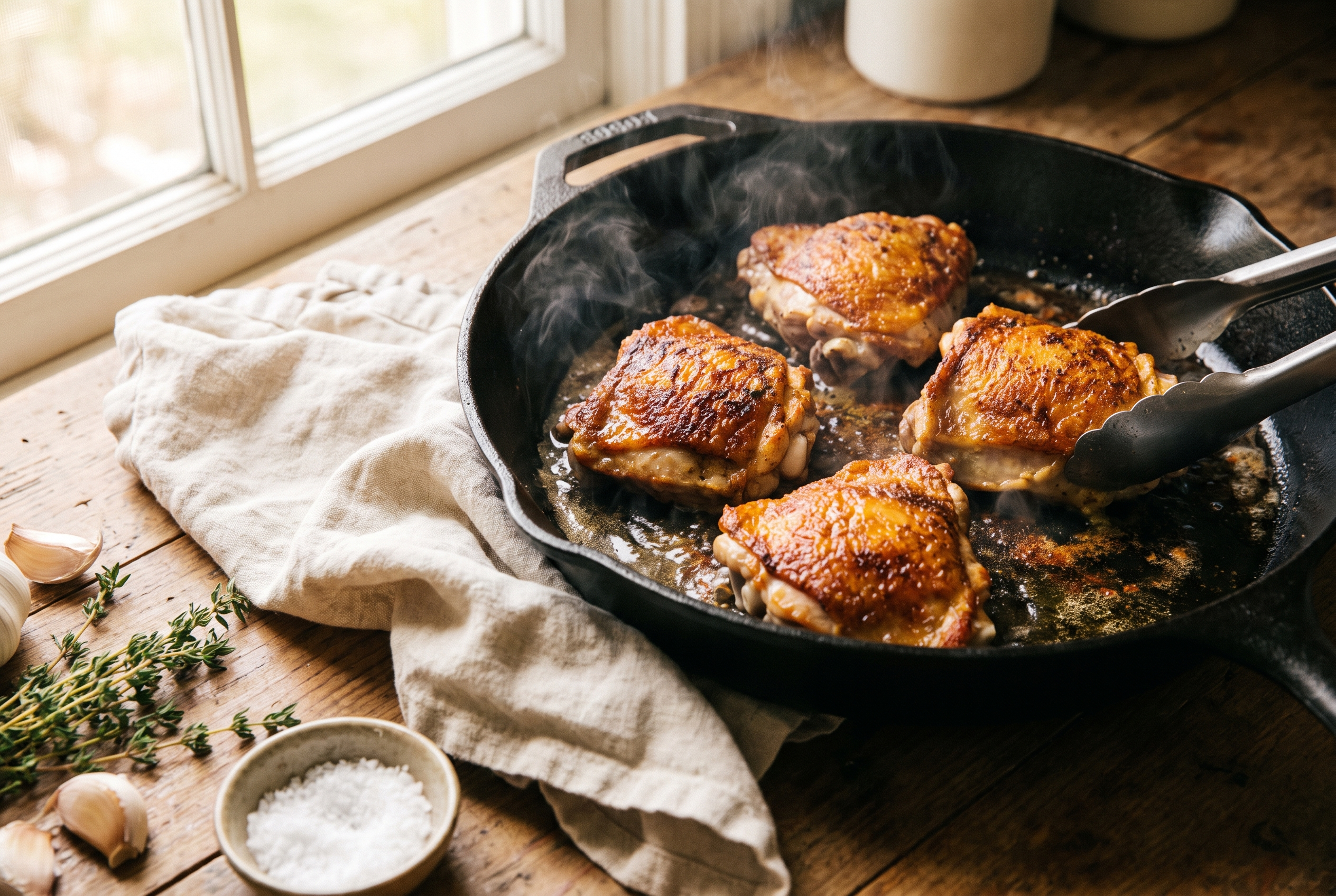
Heat oil in a large skillet over medium-high and lay the thighs in smooth side down. Sear 5 to 6 minutes without moving them until deeply golden, then flip and cook 4 to 5 minutes more until they reach 175°F.
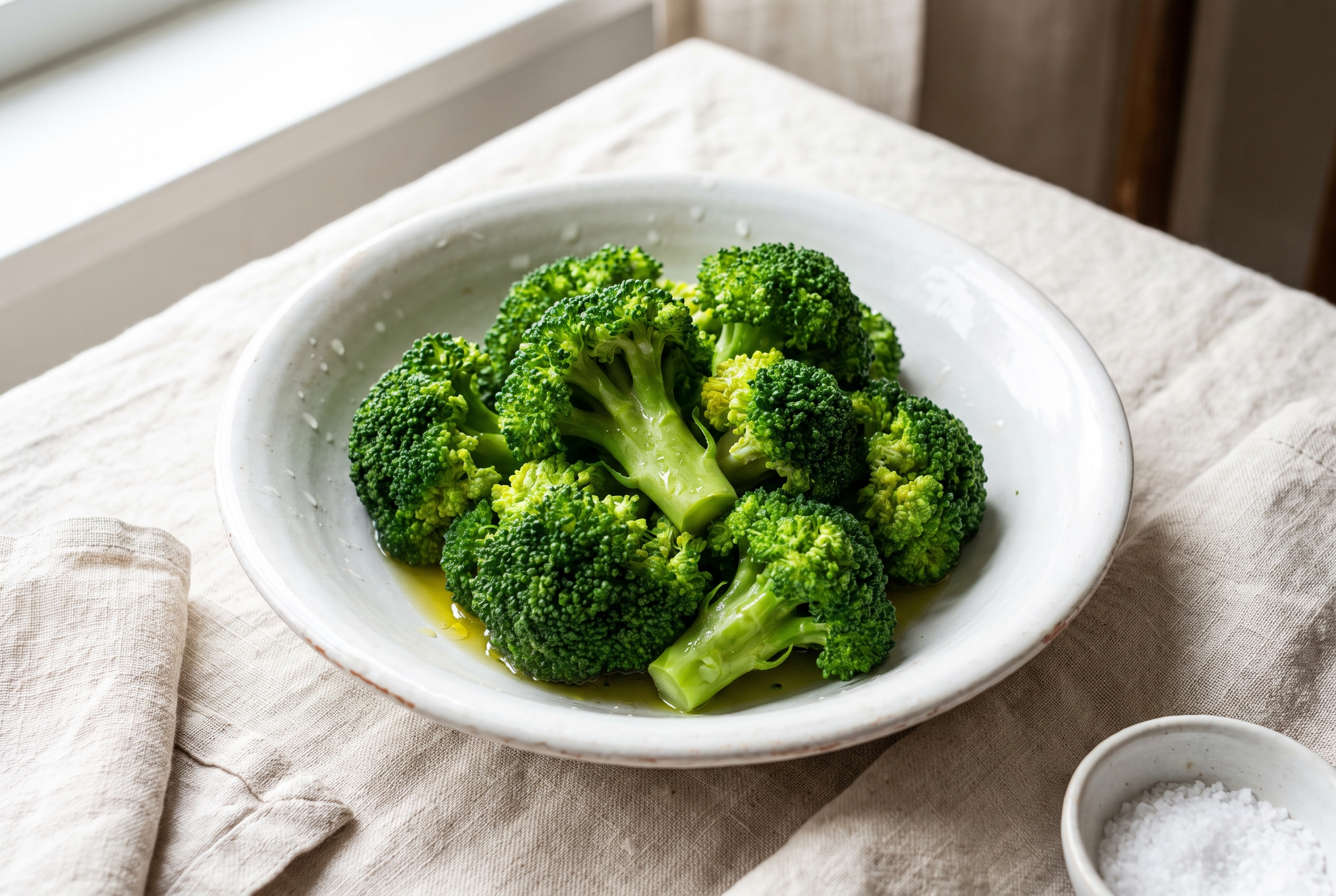
While the chicken cooks, put the broccoli florets in a bowl with a splash of water, cover, and microwave 3 minutes until bright green and just tender. Bright green is the target — olive-drab broccoli has gone two minutes too far.
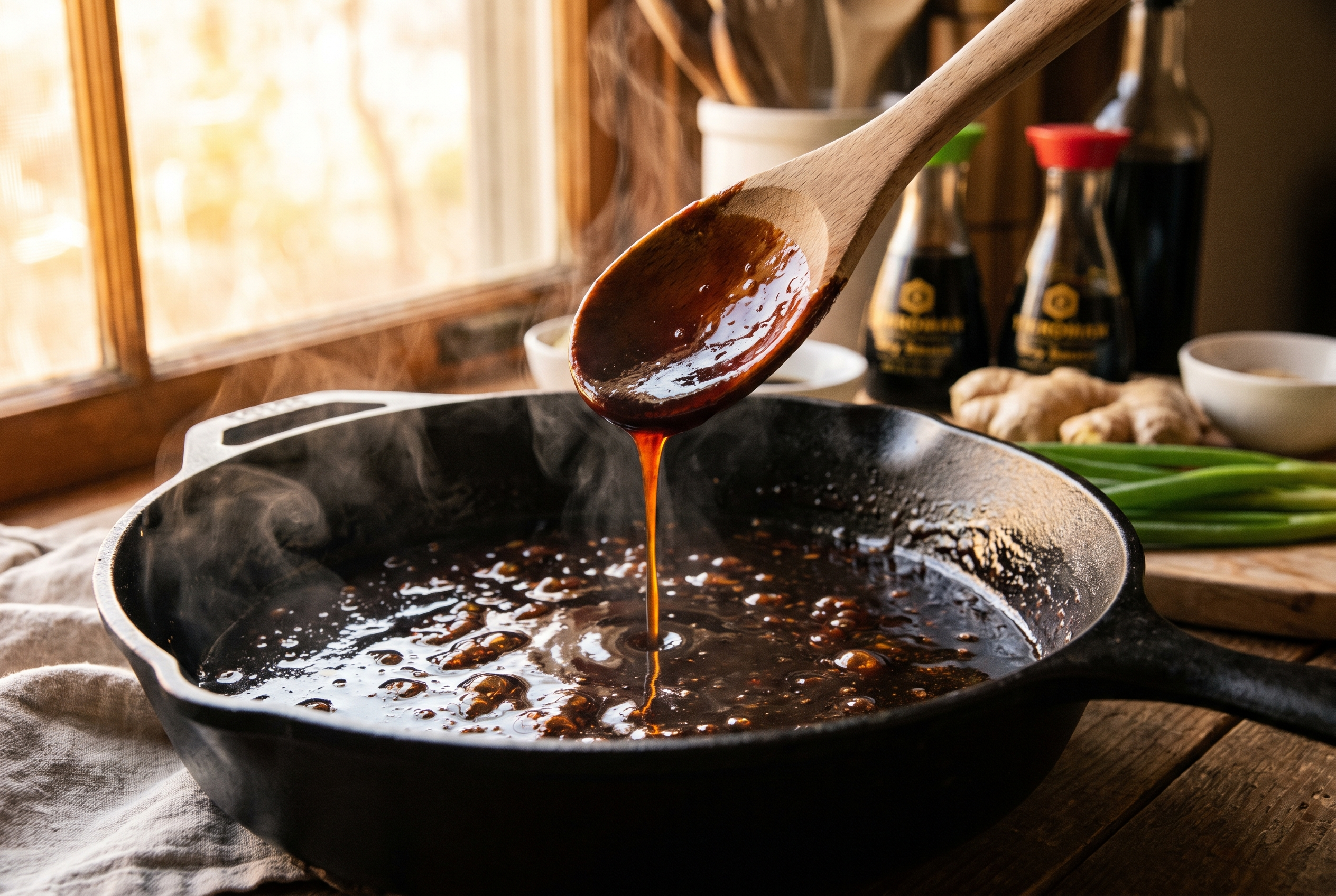
Move the chicken to a board, pour the sauce into the hot pan and let it bubble 30 seconds, scraping up the browned bits. Whisk in the slurry and stir 60 to 90 seconds until it turns thick and shiny enough to coat a spoon.
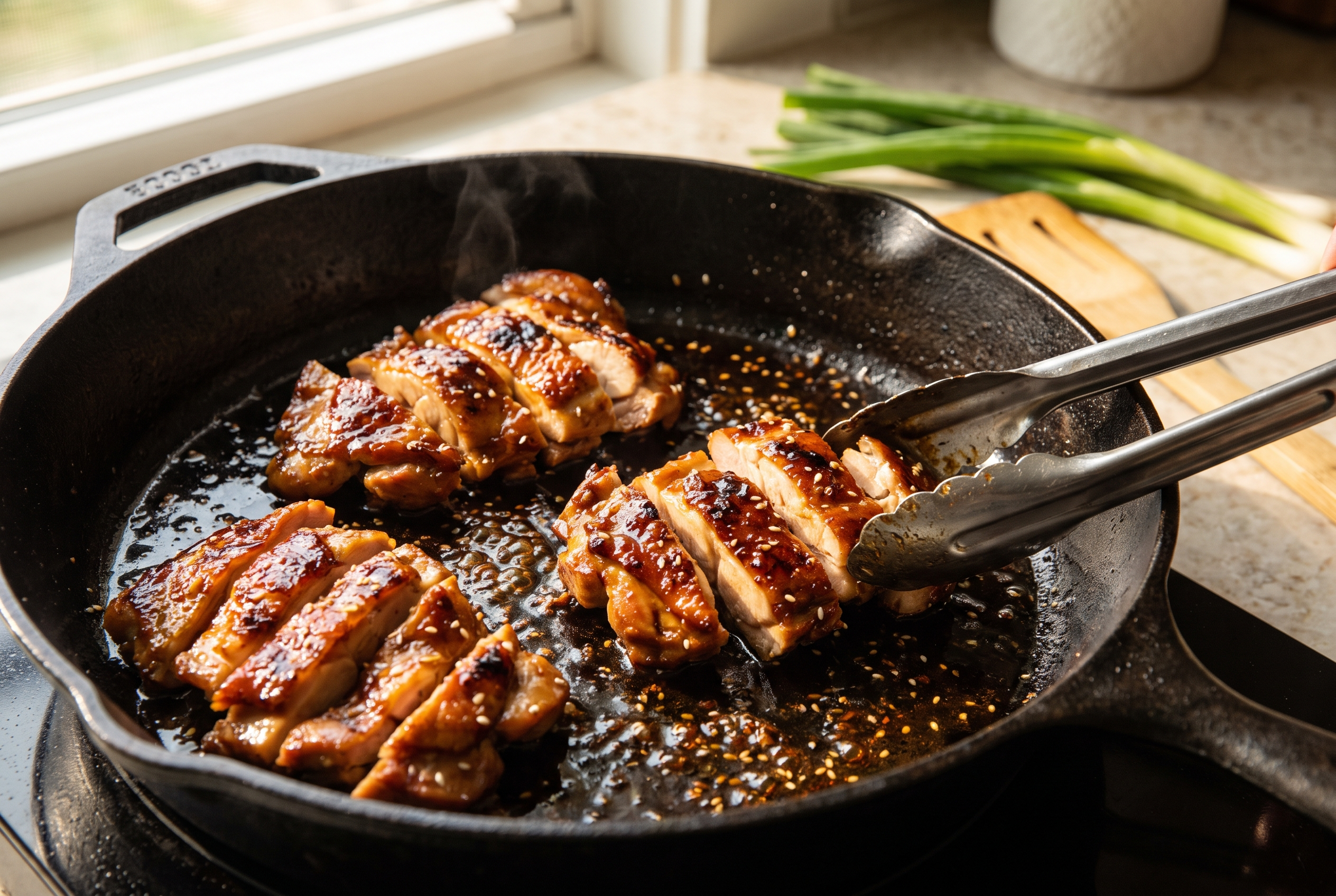
Slice the chicken against the grain, return it to the pan and turn it through the glaze until every piece shines. Resting it first, then slicing, then saucing, keeps the juices in the meat instead of on the board.
 Eating higher-protein on purpose? The Ultimate GLP-1 High Protein High Fiber Cookbook is full of meals like this one.
Things I learned while testing this recipe.
- Keep the cornstarch slurry separate until the end. Mixed into the cold sauce it settles; dumped in dry it clumps. Two tablespoons of cold water, whisked, added to bubbling sauce — that's the sequence.
- Don't let the glaze boil hard. Cornstarch thickens and then, if you keep boiling it, thins back out again. Pull it as soon as it coats the spoon.
- Thighs want 175°F, not 165°F. Unlike breast, thigh meat gets more tender the further past 165 you take it, because the connective tissue breaks down. 175 to 180 is the sweet spot.
- Sear in two batches if the pan looks crowded. Six thighs in a ten-inch skillet will steam rather than sear. Give each piece an inch of space and you'll get actual browning.
Make it ahead, or make it lighter.
- The sauce keeps for two weeks. Double it and refrigerate the extra in a jar. It's excellent on salmon, tofu or a rice bowl with nothing else in it.
- Four days of lunches, properly packed. Chicken and rice in the container, broccoli on top, glaze in a little pot on the side so the rice doesn't absorb it all by Wednesday.
- Lighten it without losing the glaze. Cut the brown sugar to two tablespoons and serve over cauliflower rice. You keep the gloss and drop most of the carbs.
Here's what I'd serve with this.
- Steamed jasmine rice, or brown rice if you want the extra fiber.
- Quick-pickled cucumber for something sharp against the sweet glaze.
- Air fryer honey garlic shrimp if you're feeding a crowd and want two proteins.
- Roasted cauliflower in the oven while the chicken sears.
- Greek yogurt chocolate bark from the freezer for dessert.
Just in case you have leftovers.
Storing: keep the chicken, rice and broccoli in separate airtight containers in the fridge for up to 4 days. Store any extra glaze in a small jar rather than poured over the top — rice drinks it up and the chicken goes dry.
Reheating: microwave at 70% power for 2 minutes with a damp paper towel over the bowl, or warm the chicken in a skillet with a tablespoon of water to re-loosen the glaze. Add the broccoli only in the last 30 seconds so it stays green.
More easy dinner recipes...
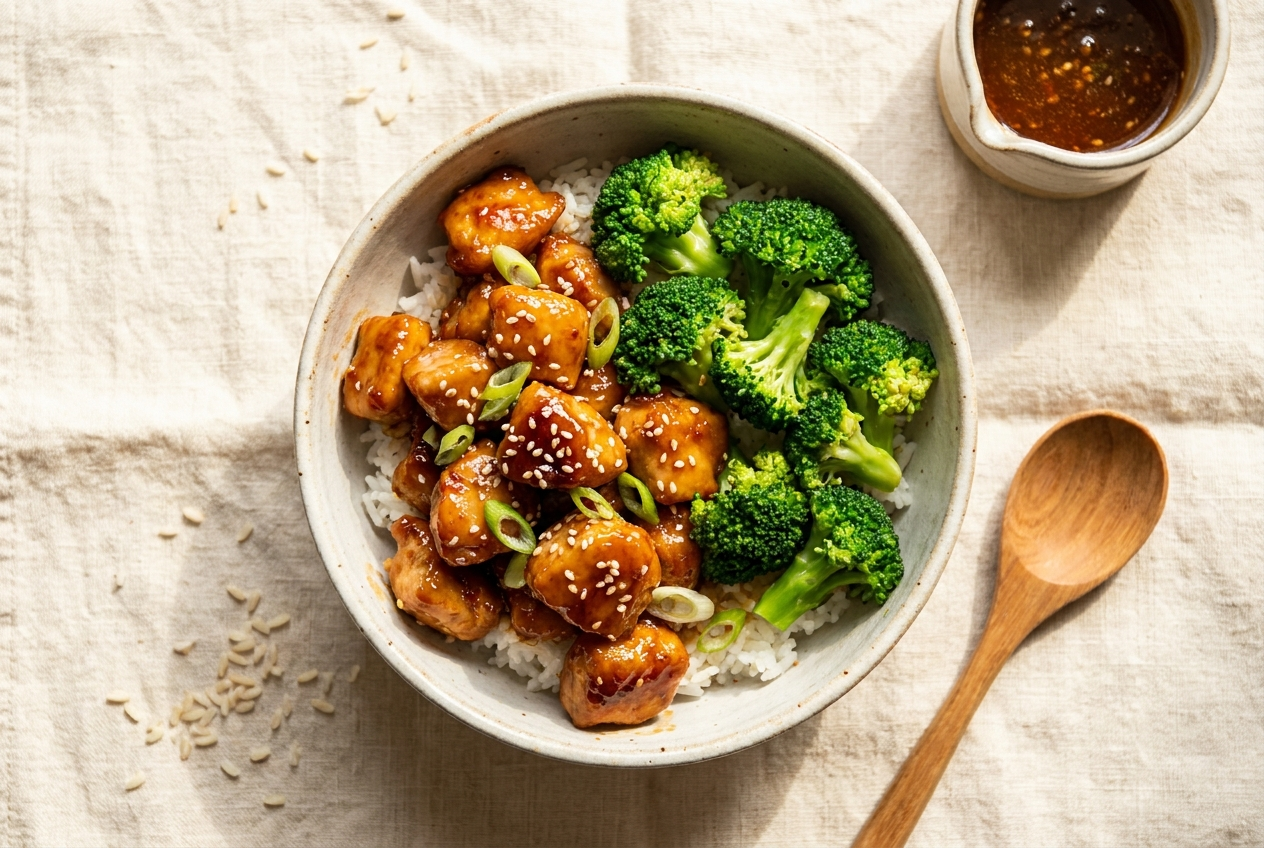
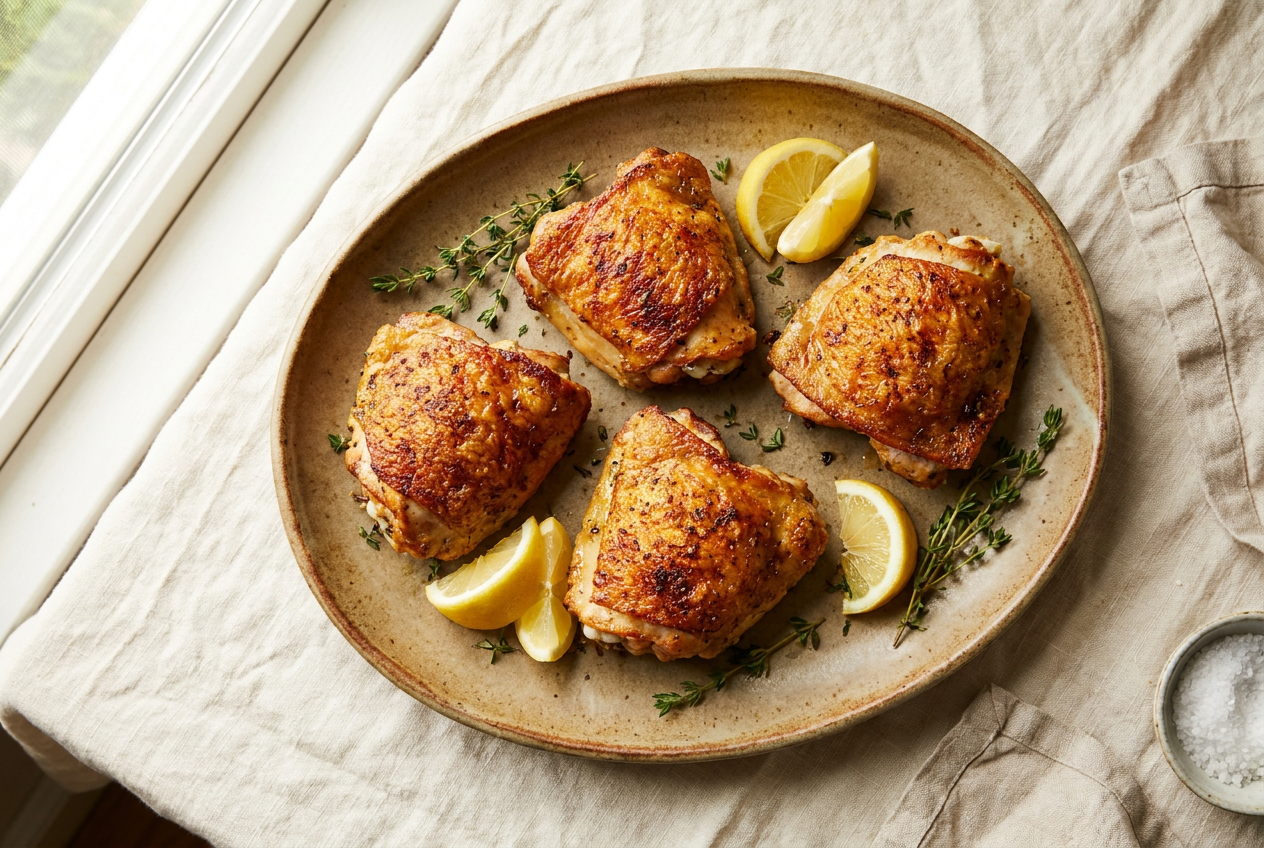
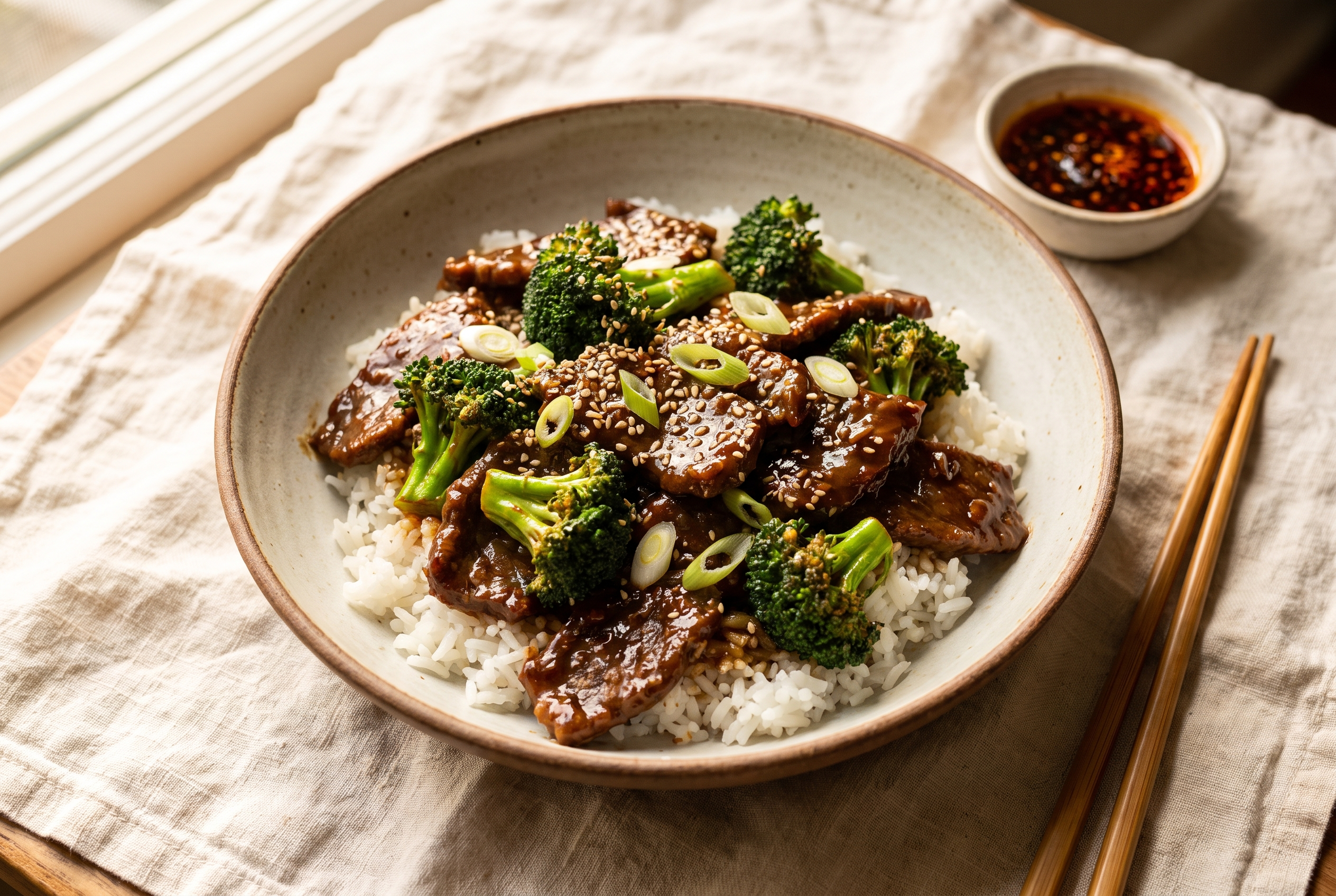
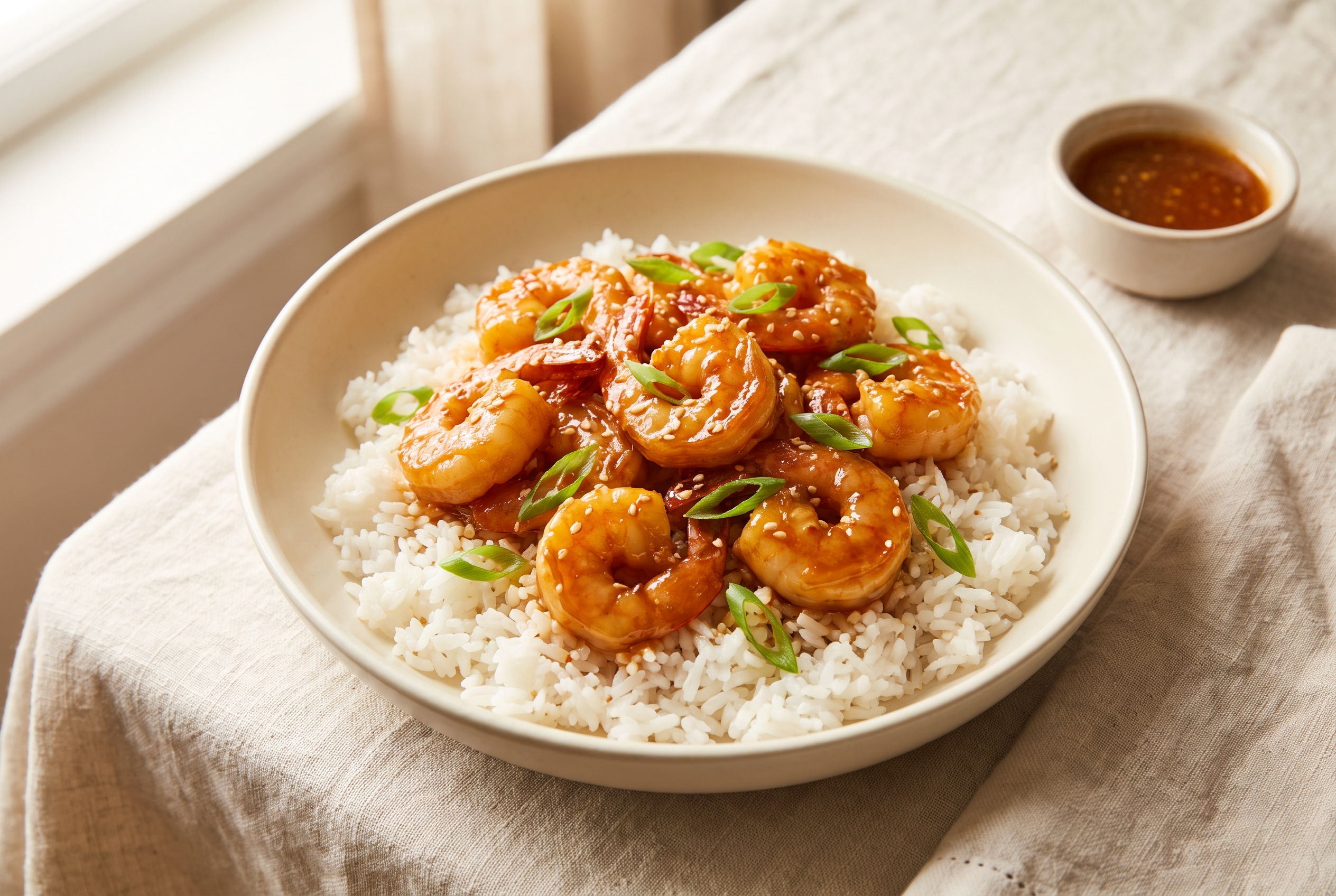
Teriyaki chicken bowls
★★★★★ 4.9 from 213 reviews — teriyaki chicken bowls with a real four-ingredient homemade teriyaki glaze, juicy seared thighs, rice and broccoli. 25 minutes and 44g protein.
Ingredients
- 2 lb boneless skinless chicken thighs
- 1 tbsp neutral oil
- 1 tsp kosher salt
- 1/2 tsp black pepper
- 1/3 cup low-sodium soy sauce
- 1/4 cup mirin
- 3 tbsp light brown sugar
- 1 tbsp fresh ginger, grated
- 3 garlic cloves, grated
- 1 tbsp cornstarch
- 2 tbsp cold water
- 1 lb broccoli florets
- 4 cups cooked jasmine rice
- 1 tbsp sesame seeds
- 3 scallions, sliced
Instructions
- Mix. Whisk the soy sauce, mirin, brown sugar, ginger and garlic in one bowl. In a second, whisk the cornstarch with 2 tbsp cold water.
- Prep the chicken. Pat the thighs very dry and season both sides with salt and pepper.
- Sear. Heat oil in a large skillet over medium-high. Sear the thighs smooth side down 5-6 minutes without moving, flip and cook 4-5 minutes to 175°F. Transfer to a board.
- Broccoli. Microwave the florets with a splash of water, covered, 3 minutes until bright green.
- Glaze. Pour the sauce into the hot pan, bubble 30 seconds, then whisk in the slurry and stir 60-90 seconds until glossy and thick.
- Finish. Slice the chicken against the grain, return to the pan and turn through the glaze. Serve over rice with broccoli, sesame seeds and scallions.
Notes: Mirin is worth buying; substitute 2 tbsp dry sherry plus 1 tsp sugar. Keep the cornstarch slurry separate until the sauce is bubbling or it will clump. Don't boil the glaze hard after it thickens — cornstarch thins back out. Thighs are best at 175-180°F, not 165°F. Sauce doubles and keeps 2 weeks refrigerated.
Nutrition (per serving, estimated): 540 calories · 44g protein · 52g carbs · 15g fat · 4g fiber
If this is how you want to eat every day, this cookbook makes it easy.
The Ultimate GLP-1 High Protein High Fiber Cookbook for Weight Loss is built on the same idea as this recipe — lean protein, plenty of fiber, real food and portions big enough to keep you full. Simple, tested recipes for anyone eating higher-protein on purpose, on a GLP-1 medication or not.
Get the cookbook on AmazonMeal-plan the whole week around recipes like this with RecipeLoop — save recipes from anywhere, get a grocery list automatically.FAQ
- Can I use chicken breast instead of thighs?
- Yes, but cut the breasts horizontally into thinner cutlets first so they cook through before the outside overcooks, and pull them at 160°F rather than 175°F. Thighs are more forgiving because their extra fat and collagen keep them juicy over a wider temperature range.
- What can I use instead of mirin?
- Two tablespoons of dry sherry or dry white wine plus an extra teaspoon of sugar is the closest easy swap. In a pinch, use rice vinegar plus a tablespoon of sugar, though you lose some of the roundness that makes teriyaki taste like teriyaki.
- Why is my teriyaki sauce not thickening?
- Almost always one of two things: the cornstarch went in dry and clumped rather than dispersing, or the sauce never actually came to a bubble. Cornstarch needs to reach a simmer to activate. Whisk it with cold water first, then add it to genuinely bubbling sauce.
- Is this good for meal prep?
- It's one of the best. Pack the chicken and rice together with broccoli on top and the extra glaze in a separate small container, and it holds four days. Adding the glaze fresh on reheating is what keeps it from tasting like leftovers.