Cottage Cheese Flatbread (2 Ingredients, High Protein, 26g a Wrap)
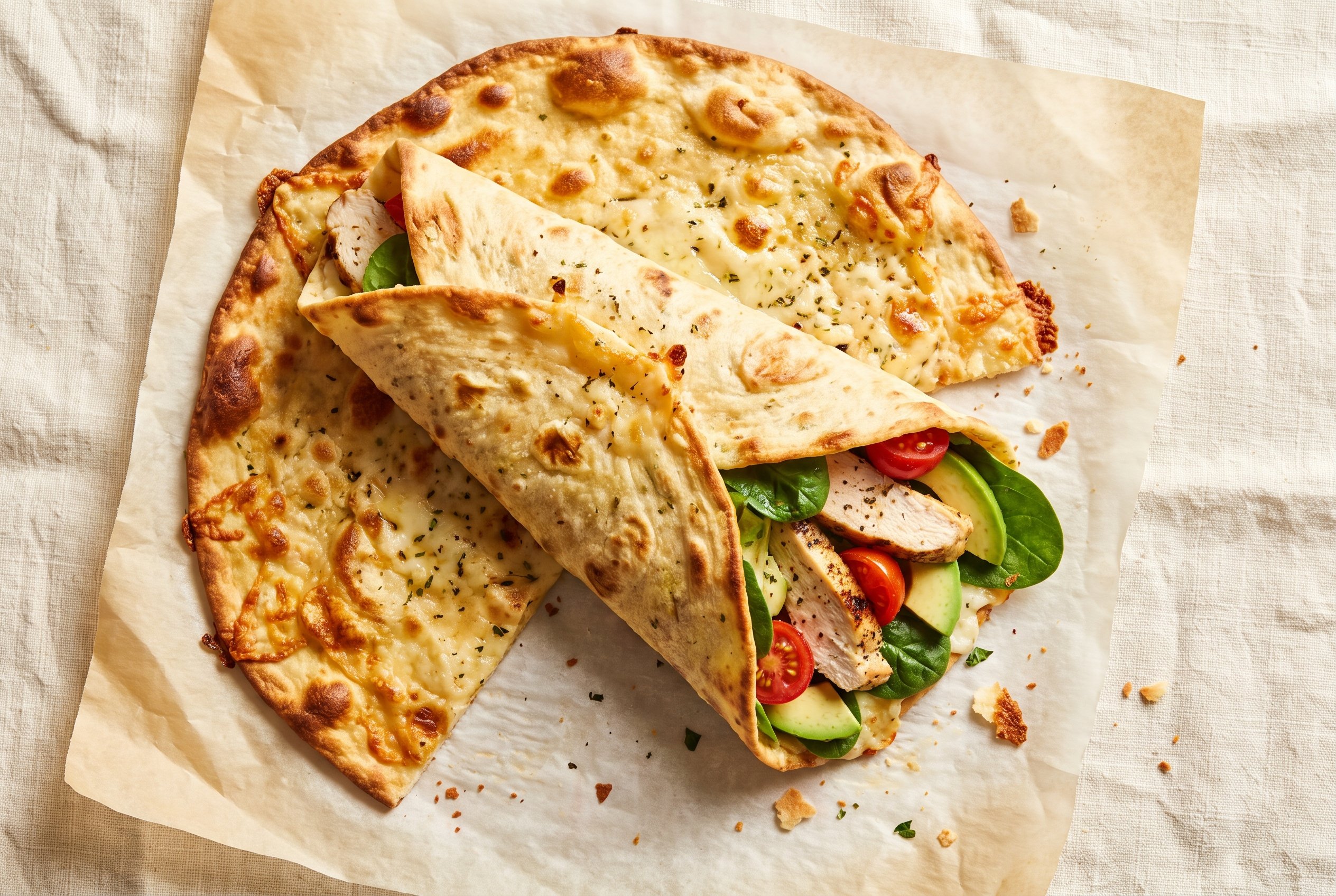
Cottage cheese flatbread is the viral recipe that I was sure would be a gimmick and turned out to be the best high protein wrap I have made — cottage cheese and eggs blended smooth, poured thin, and baked into a flexible golden flatbread with 26 grams of protein and 3 grams of carbs.
It does not taste like cottage cheese. It tastes like a savory, eggy crepe with crisp edges, and it holds a full lunch of chicken, avocado and greens without cracking. I have made it a dozen times now, and the notes below are for the two things that go wrong: a soggy center and a flatbread that sticks to the paper.
 Save recipes like this straight from TikTok and plan your week in minutes with RecipeLoop, the free AI meal planner.
Why the viral cottage cheese flatbread actually works.
- Cottage cheese plus eggs sets into a real wrap. Blended smooth, the curds disappear and the egg protein sets the sheet as it bakes, so it bends and rolls like a tortilla. It is the same reason my cottage cheese egg bites come out fluffy and not curdy.
- Twenty-six grams of protein for 3 grams of carbs. A whole flatbread is about 280 calories with the parmesan, which makes it a lunch base that fits a GLP-1 day or a high protein low calorie plan without trying. Plug your fillings into the protein calculator and it is easy to hit 40g.
- It is the base for a week of lunches. Bake two sheets on Sunday, stack them with parchment between, and you have wraps, pizza bases and a sandwich bread that costs about a dollar each. It replaced the Greek yogurt bagels in my lunch rotation.
Here's what you'll need.
Full-fat cottage cheese and eggs are the whole recipe; the garlic powder, Italian seasoning, salt, pepper, parmesan and everything bagel seasoning are there because a plain flatbread is boring and a seasoned one is not.
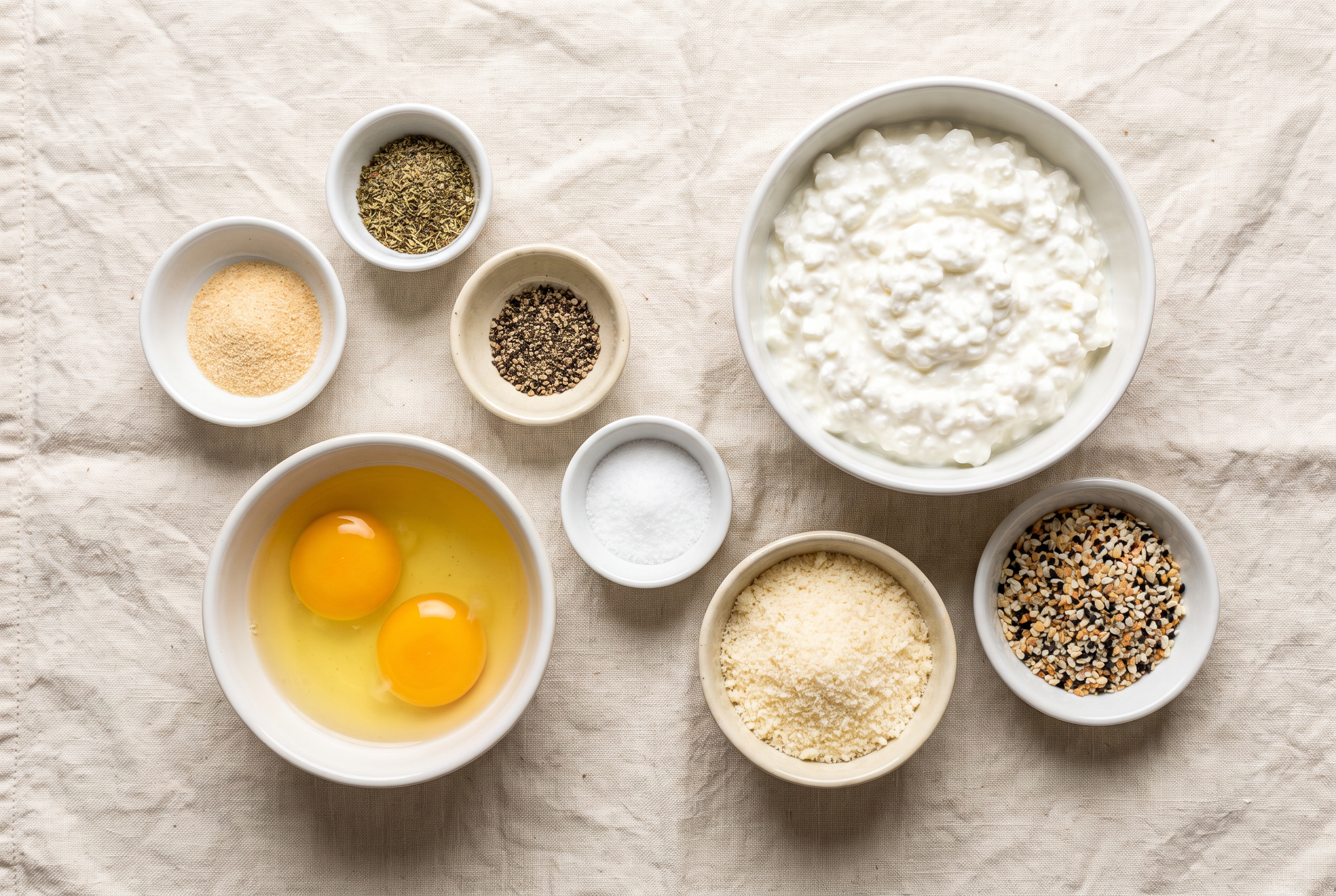
Here's how it all comes together.
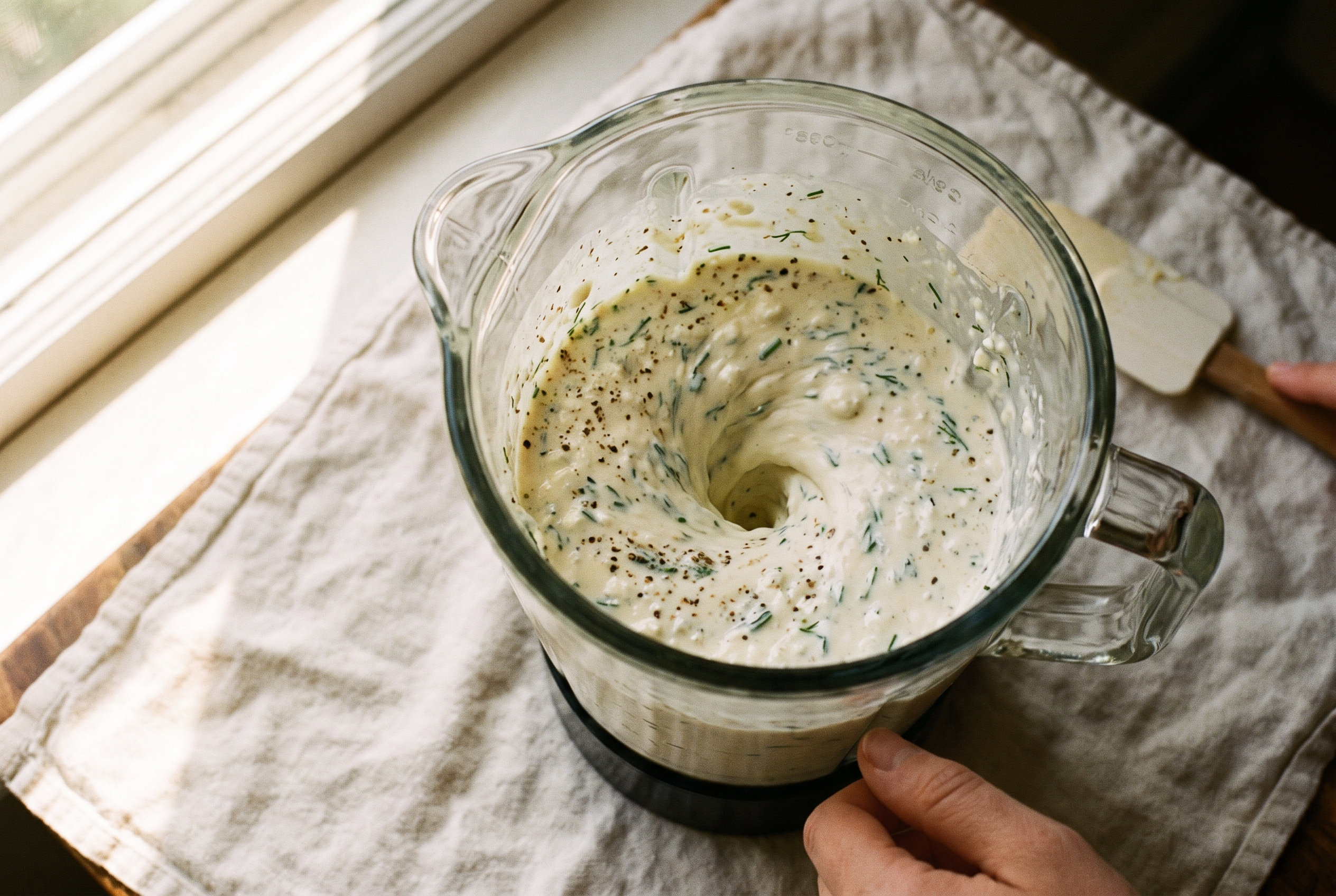
Heat the oven to 350°F. Put the cottage cheese, eggs, garlic powder, Italian seasoning, salt and pepper in a blender and blend on high for 30 to 45 seconds, until there is not a single curd left and the batter looks like thin pancake batter. Lumps of curd hold water and leave wet spots in the finished flatbread, so blend longer than you think.
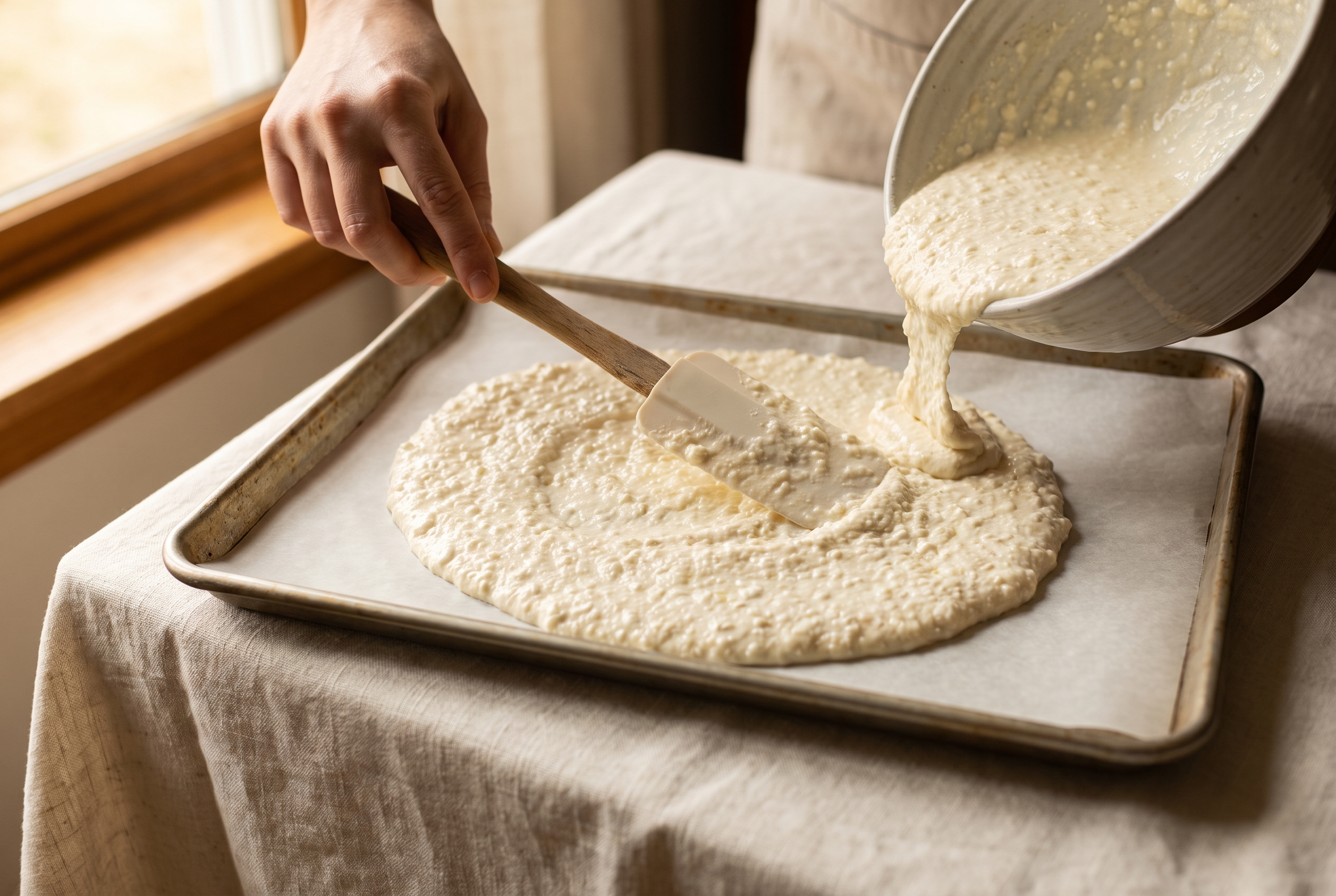
Line a 13×18-inch rimmed sheet pan with parchment (not foil, not wax paper) and mist it lightly with oil — that spray is the difference between a flatbread that peels off in one piece and one glued to the paper. Pour the batter onto the parchment and spread it with a spatula into an even rectangle about ¼ inch thick, nearly to the edges. Even thickness is the whole game: thin edges burn and thick middles stay wet. Sprinkle the parmesan and everything bagel seasoning over the top.
Bake for 30 to 35 minutes, until the top is golden brown all over, the edges are crisp and darker, and the center no longer looks glossy. Underbaking is the number one cause of a soggy flatbread — if the middle still looks shiny at 30 minutes, give it the extra five.
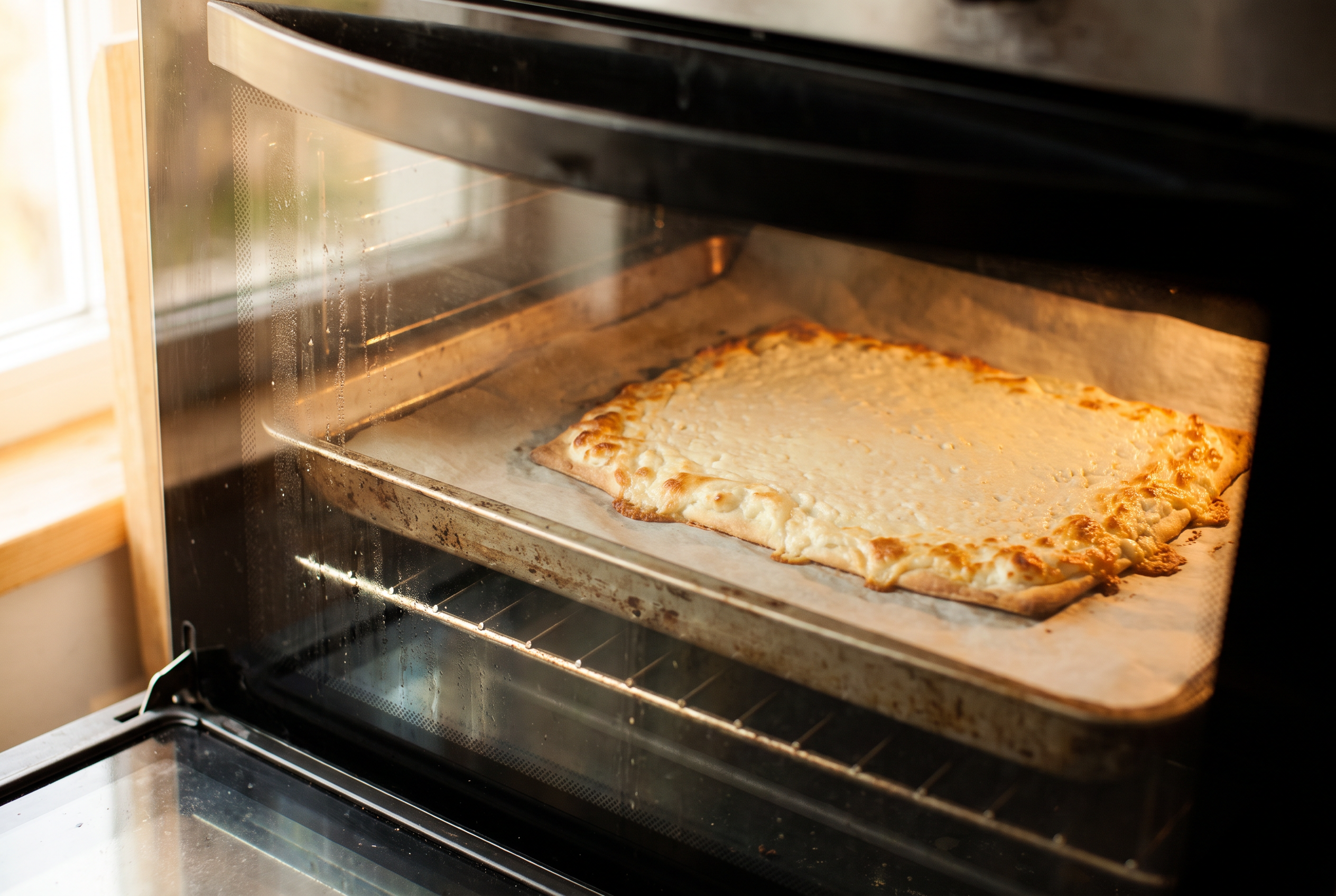
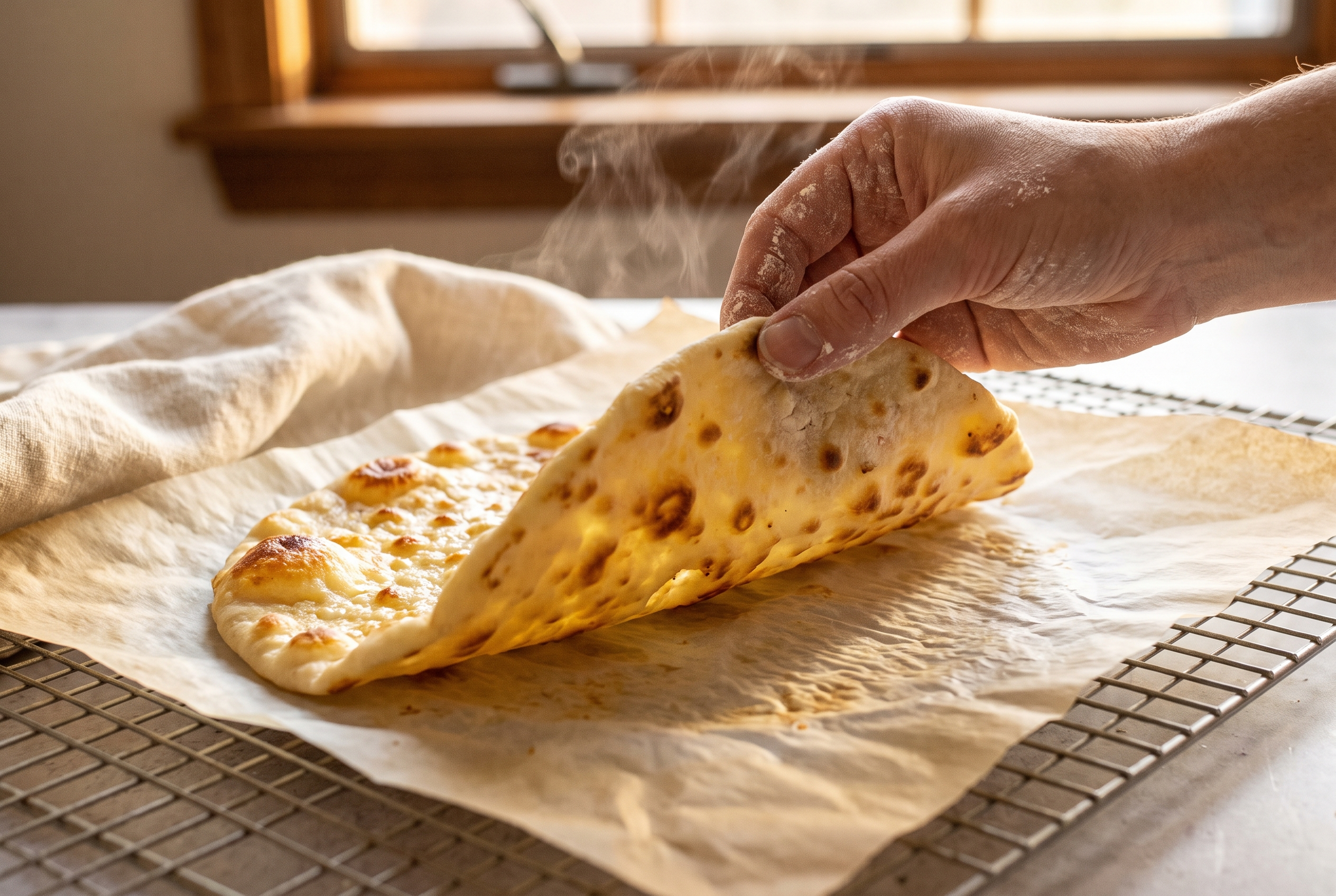
Let the flatbread cool on the pan for 10 minutes, then lift the parchment onto a rack and peel the flatbread away from the paper. It releases cleanly once it has cooled and set; peel it hot and it tears. Cut the sheet in half for two large wraps.
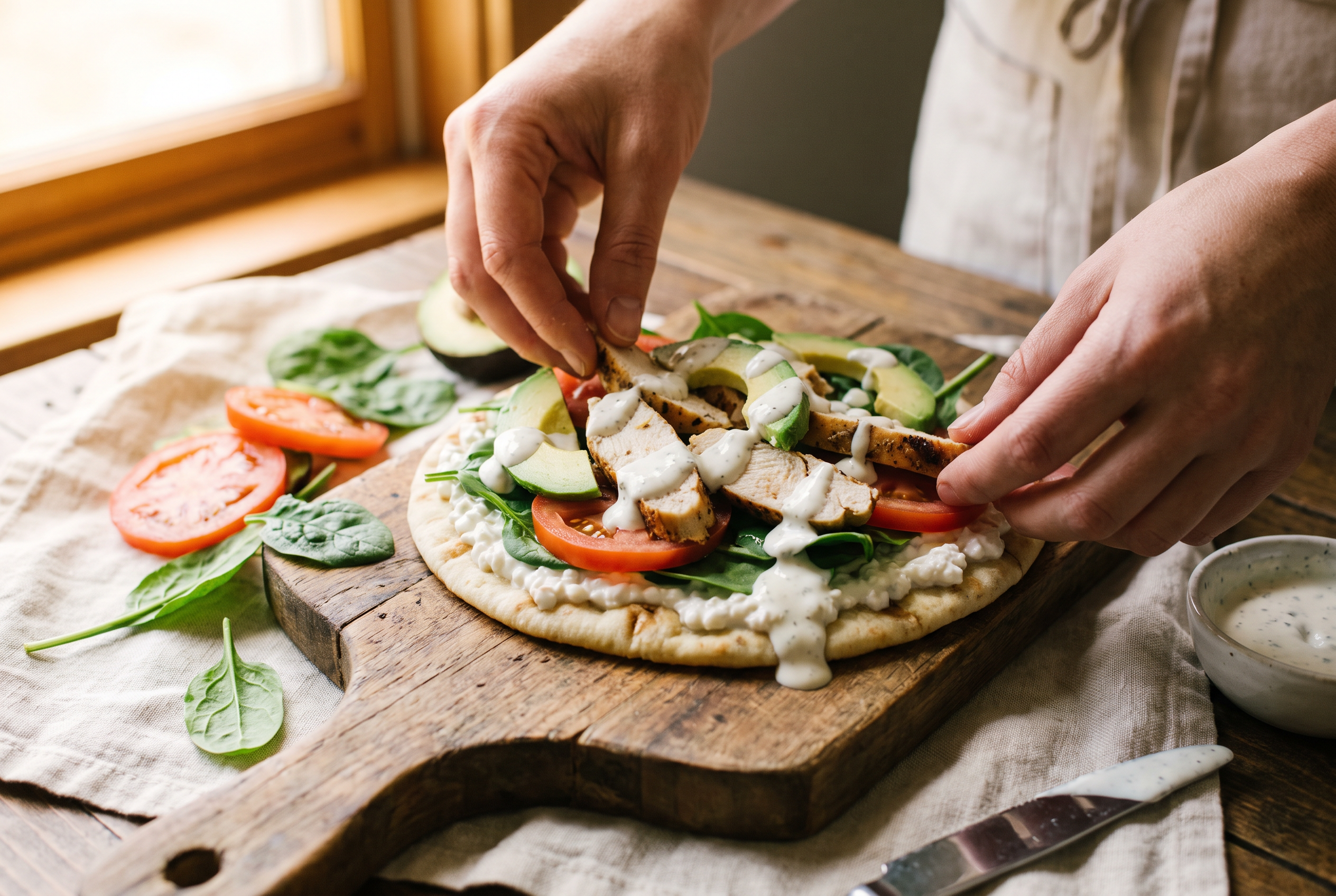
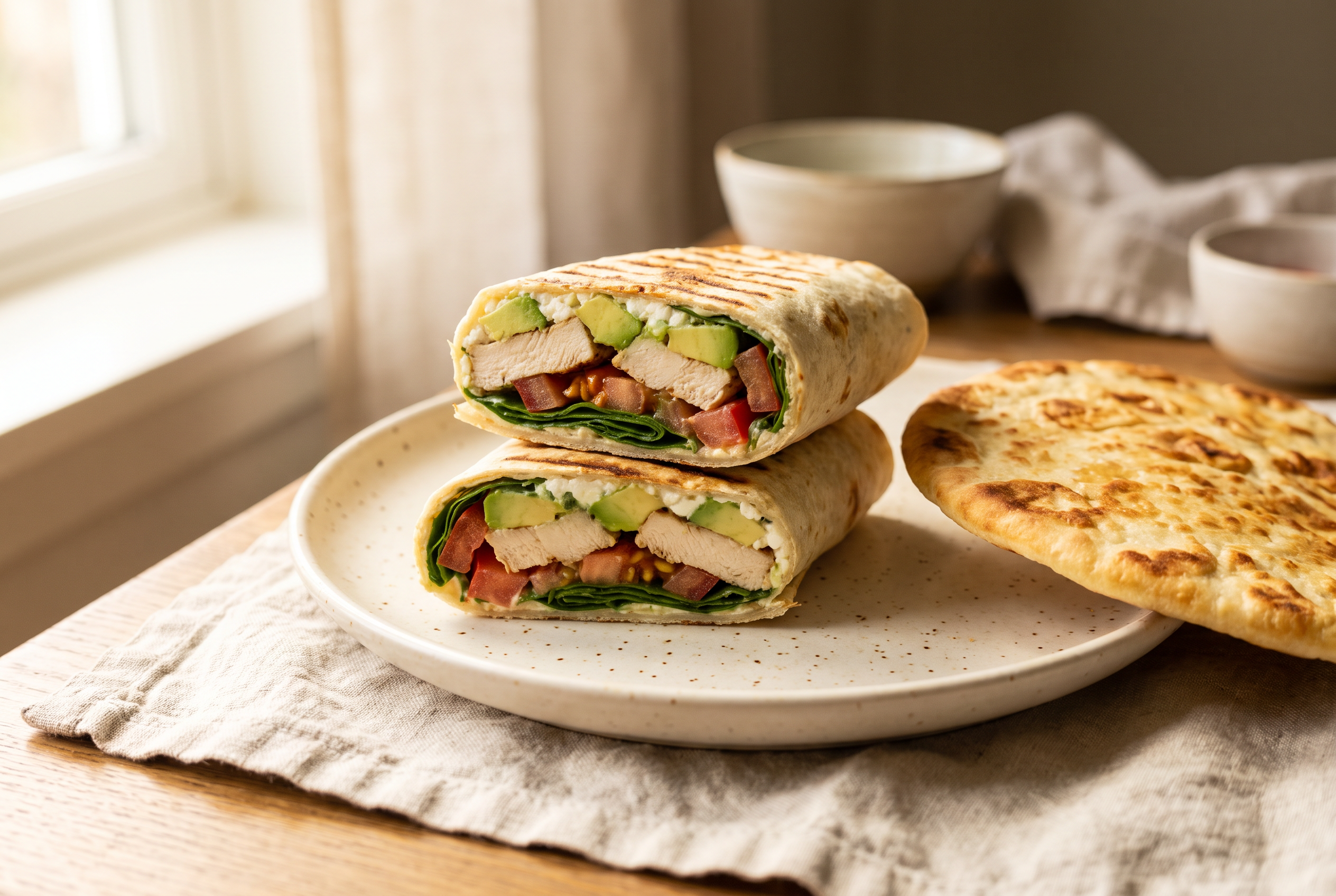
Lay a half flatbread golden-side down and pile grilled chicken, spinach, tomato, avocado and a drizzle of Greek yogurt ranch along the lower third. Keep wet fillings (tomato, dressing) in the middle of the pile, not against the flatbread, so it stays dry.
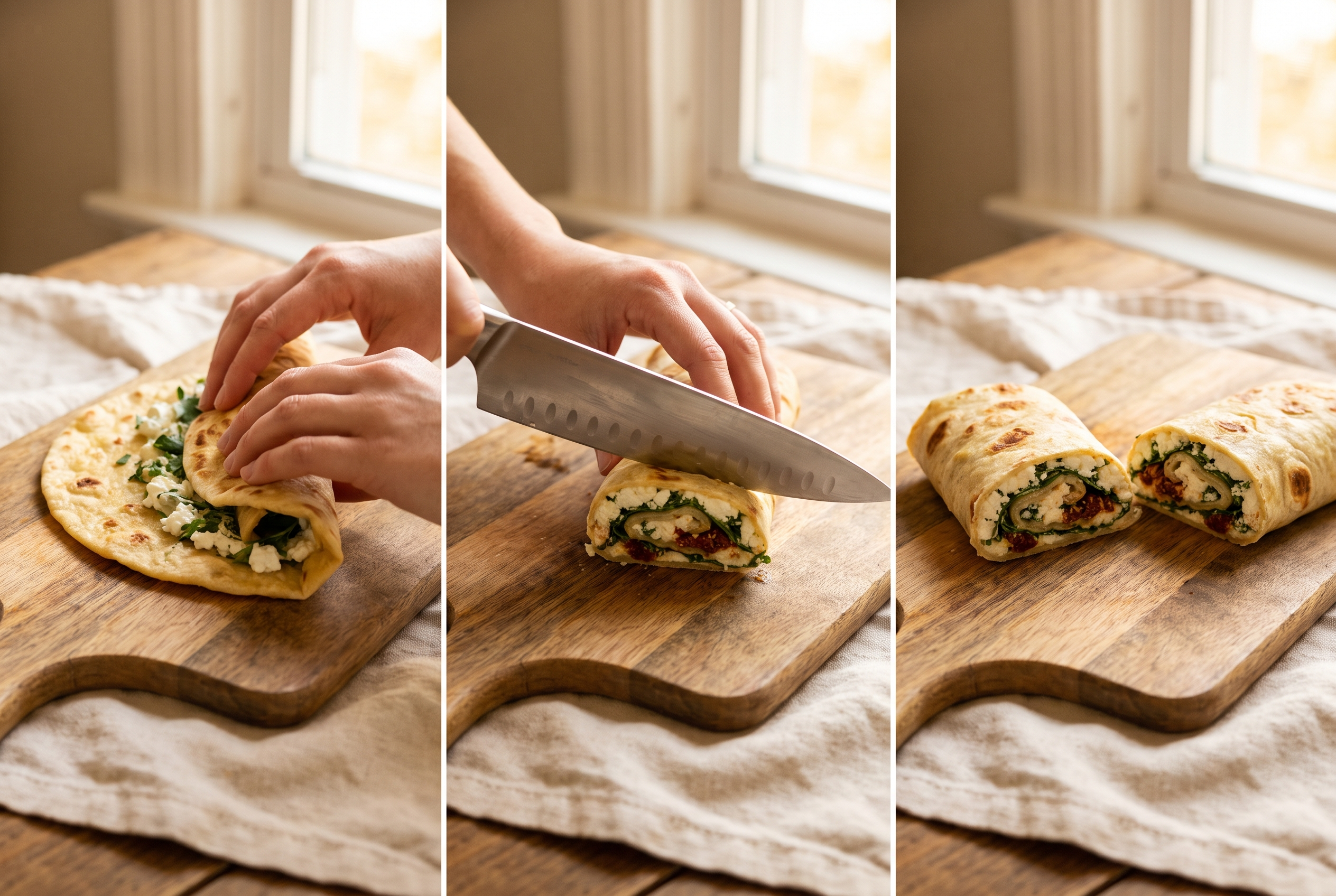
Fold the short edge over the filling and roll it up snugly like a burrito — it bends without cracking. Slice in half on the diagonal. For a crisp version, give the rolled wrap 2 minutes seam-side down in a dry skillet over medium first.
 If you are eating this way on purpose — high protein, high fiber, smaller portions that still fill you up — every lunch in this book is built the same way, the Ultimate GLP-1 High Protein High Fiber Cookbook.
Things I learned while testing this recipe.
- Full-fat cottage cheese, and blend it completely. Low-fat cottage cheese has more water and makes a thinner, wetter flatbread that tears. Full-fat (4%) small curd blends smoothest. Thirty seconds in a blender; a food processor works but takes a minute; a fork does not work at all.
- Soggy flatbread has three causes, and all three are fixable. Curds left in the batter (blend longer), batter spread too thick in the middle (¼ inch, edge to edge), and pulling it out early (the top should be golden, not pale). Fix those and it comes out dry and flexible every time.
- Parchment, oiled, and a full cool before peeling. Foil sticks, wax paper smokes, and unoiled parchment holds on. Ten minutes of cooling lets the bottom set so it lifts cleanly. If it still resists, flip the whole sheet paper-side up and peel the paper off the flatbread instead.
- Season it like bread, not like eggs. Garlic powder, Italian seasoning and parmesan make it taste like a savory flatbread. Everything bagel seasoning on top before baking is my favorite. For a sweet version, skip the savory seasonings and add a teaspoon of cinnamon and a little sweetener.
Why this is the wrap I meal prep every Sunday now.
- Two ingredients and thirty-five minutes, most of it in the oven. Blend, pour, bake. Two sheet pans at once on Sunday makes four big wraps, which is lunch through Thursday for one person.
- Twenty-six grams of protein, three grams of carbs, 280 calories per flatbread. With chicken inside, a wrap lands near 50g protein and stays under 500 calories — the kind of lunch that keeps a GLP-1 appetite or a cut on track without feeling like diet food.
- It is a wrap, a pizza crust and a sandwich bread. Top a whole sheet with sauce and cheese and bake 8 more minutes for a high protein pizza; cut it into squares for a sandwich; roll it around eggs for breakfast. One batter, all week.
Here's what I'd serve with this.
- High protein tuna salad — the Greek yogurt tuna salad is my most-made filling — 34g protein before the wrap.
- Greek chicken bowls — use the chicken, tzatziki and cucumber as a wrap filling.
- Egg roll in a bowl — the cabbage-and-pork filling rolled into a flatbread is better than the takeout version.
- Cowboy caviar — a scoop inside with shredded chicken turns it into a Southwest wrap.
- Hot honey chicken — sliced over greens inside the flatbread, with a little extra hot honey.
Just in case you have leftovers.
Storing: Cool the flatbreads completely, stack them with parchment between each one, and refrigerate in a zip-top bag for up to 5 days. To freeze, wrap the stack tightly and freeze for up to 2 months; thaw in the fridge overnight. Store them unfilled — fill right before eating so the wrap stays dry.
Reheating: They are good cold, but 30 seconds in the microwave makes them more flexible for rolling. For crisp edges, 2 to 3 minutes in a dry skillet over medium, or 3 minutes in the air fryer at 350°F. A filled wrap reheats best seam-side down in a skillet, not the microwave.
More easy high protein recipes...
 Cottage cheese egg bites
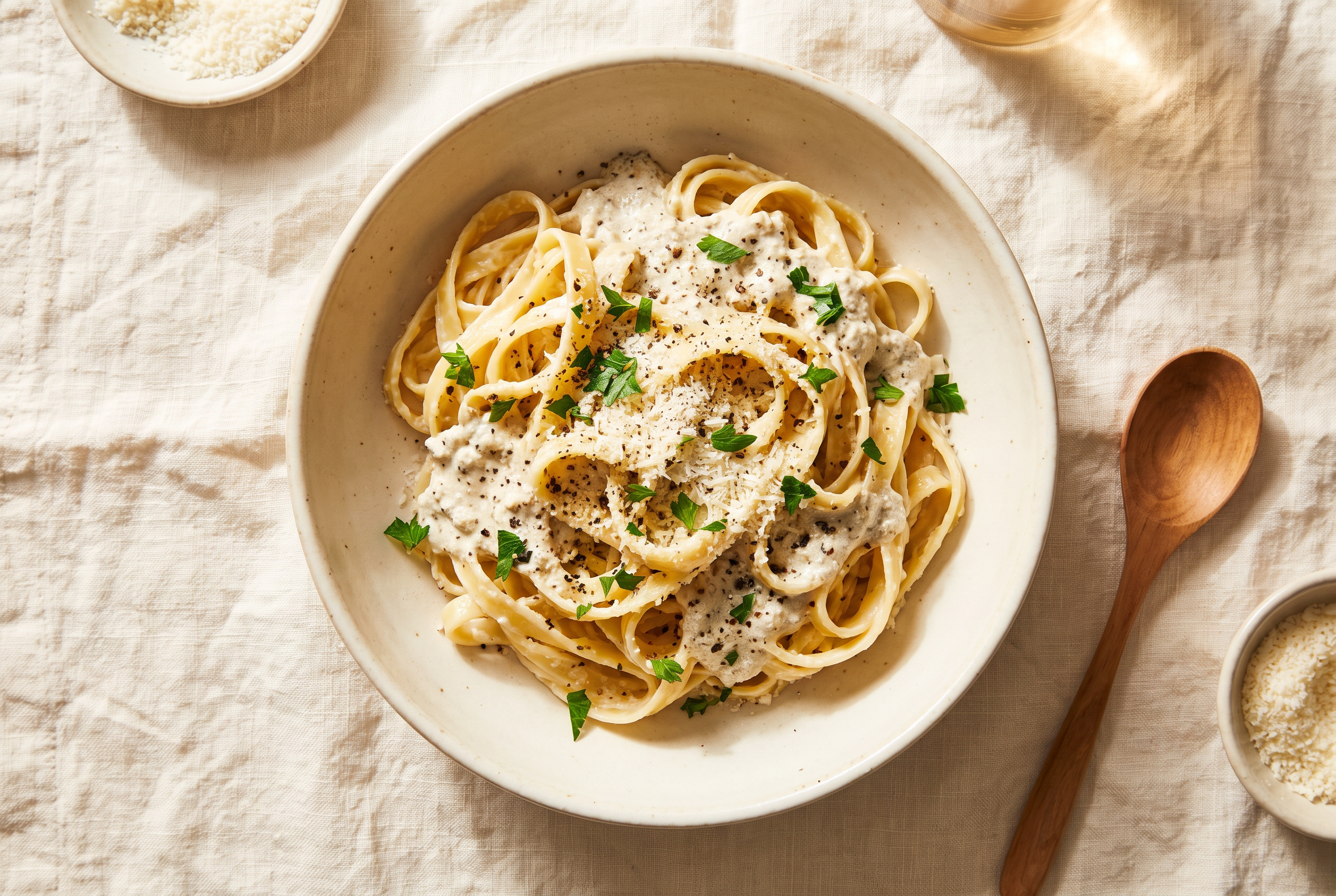 Cottage cheese alfredo pasta
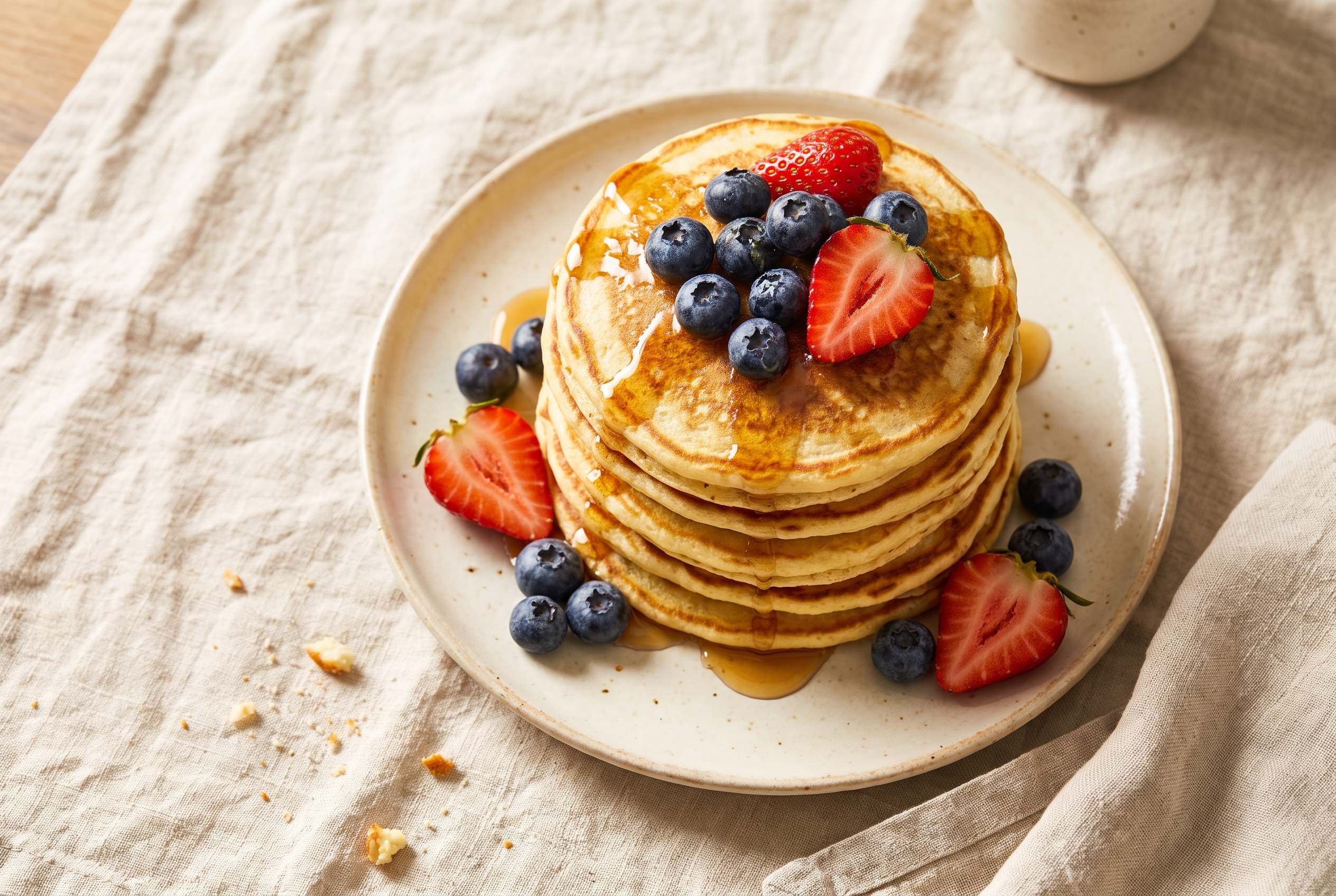 Cottage cheese protein pancakes
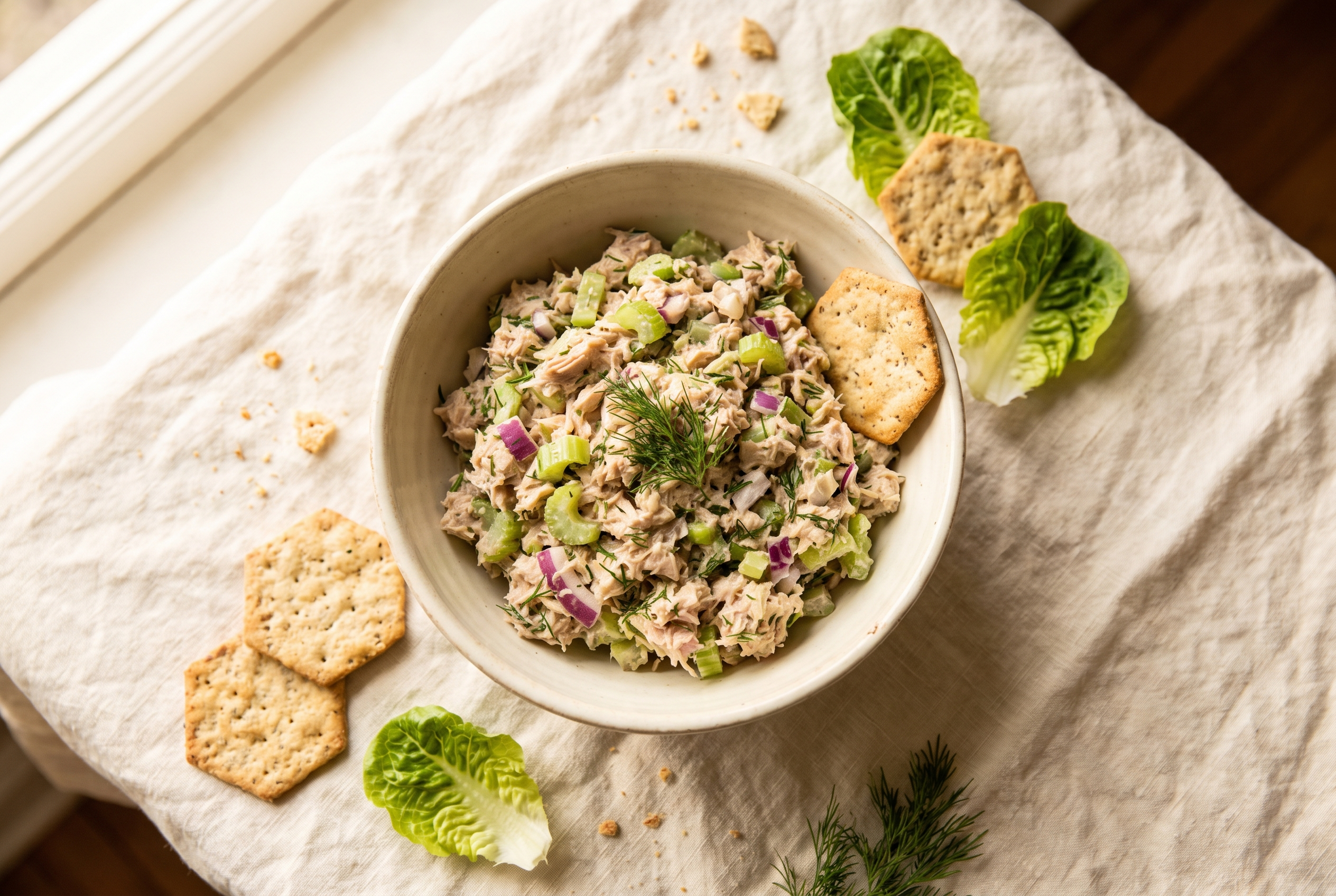 High protein tuna salad
If you are on a cottage cheese kick, my cottage cheese alfredo pasta and chocolate cottage cheese mousse use the same blend-it-smooth trick at dinner and dessert. And today's other new recipe is my crockpot lasagna — uncooked noodles, four hours on low, 34g protein a slice.
Cottage Cheese Flatbread
The viral 2-ingredient cottage cheese flatbread: cottage cheese and eggs blended smooth, seasoned, and baked thin into a flexible high protein wrap with 26g protein and 3g carbs. 35 minutes, and the fixes for a soggy one.
Ingredients
- 1 cup full-fat (4%) small-curd cottage cheese
- 2 large eggs
- ½ teaspoon garlic powder
- ½ teaspoon Italian seasoning
- ¼ teaspoon kosher salt
- ¼ teaspoon black pepper
- 2 tablespoons grated parmesan
- 1 teaspoon everything bagel seasoning (optional)
- Olive oil spray, for the parchment
Instructions
- Prep: Heat the oven to 350°F. Line a 13×18-inch rimmed sheet pan with parchment and mist it lightly with oil.
- Blend: Blend the cottage cheese, eggs, garlic powder, Italian seasoning, salt and pepper on high for 30–45 seconds, until completely smooth with no curds.
- Spread: Pour onto the parchment and spread with a spatula into an even rectangle about ¼ inch thick, nearly to the edges. Sprinkle with the parmesan and everything bagel seasoning.
- Bake: Bake 30–35 minutes, until golden brown all over, the edges are crisp and the center is no longer glossy.
- Cool: Cool on the pan 10 minutes, then move the parchment to a rack and peel the flatbread away from the paper. Cut in half for two wraps.
- Fill: Fill, roll and eat, or cool completely and store for the week.
Notes
Use full-fat cottage cheese; low-fat makes a thinner, wetter flatbread that tears. Blend until no curds remain — curds leave wet spots. Spread the batter evenly; thick centers stay soggy. Do not underbake: golden brown, not pale. For a pizza base, bake the flatbread, top with sauce and cheese, and bake 8 more minutes. Nutrition is per flatbread (half the sheet), unfilled.
High protein, high fiber, and built for a GLP-1 appetite.
The Ultimate GLP-1 High Protein High Fiber Cookbook is full of lunches and meals sized exactly like this one — small, filling and heavy on protein — for the days when you are not that hungry but still need to eat well.
Meal-plan the whole week around recipes like this with RecipeLoop — save recipes from anywhere, get a grocery list automatically.Cottage cheese flatbread FAQ
Does cottage cheese flatbread taste like cottage cheese?
No. Once the cottage cheese is blended smooth and baked with eggs and seasoning, it tastes like a savory, slightly cheesy egg crepe with crisp edges. The curd texture disappears completely. My husband, who will not touch cottage cheese, eats these without knowing.
Why is my cottage cheese flatbread soggy?
Three reasons: the batter still had curds in it (blend 30–45 seconds until completely smooth), it was spread too thick in the middle (aim for ¼ inch, edge to edge), or it came out of the oven too early (the top should be golden brown all over, not pale). Low-fat cottage cheese also adds water — use full-fat.
How much protein is in cottage cheese flatbread?
About 26g of protein per flatbread (half of a 13×18-inch sheet) with 1 cup of full-fat cottage cheese, 2 eggs and 2 tablespoons of parmesan. That is roughly 280 calories and 3g carbs before any filling.
How do you keep cottage cheese flatbread from sticking to the parchment?
Lightly oil the parchment before pouring the batter, use real parchment (not foil or wax paper), and let the flatbread cool on the pan for 10 minutes before peeling. If it still resists, flip the whole sheet over and peel the paper off the flatbread instead of the flatbread off the paper.
How do you store cottage cheese flatbread and how long does it last?
Cool completely, stack with parchment between the flatbreads, and refrigerate in a zip-top bag for up to 5 days, or freeze for up to 2 months. Store them unfilled and fill just before eating; a 30-second microwave or 2 minutes in a dry skillet brings back the flexibility.