Home › High Protein › Cottage cheese ice cream
Cottage cheese ice cream
Cottage cheese ice cream is the viral one that actually works, provided you do two things properly: blend it much longer than feels necessary, and freeze it in a shallow container. Four ingredients, 20g of protein a serving, and no ice cream maker.
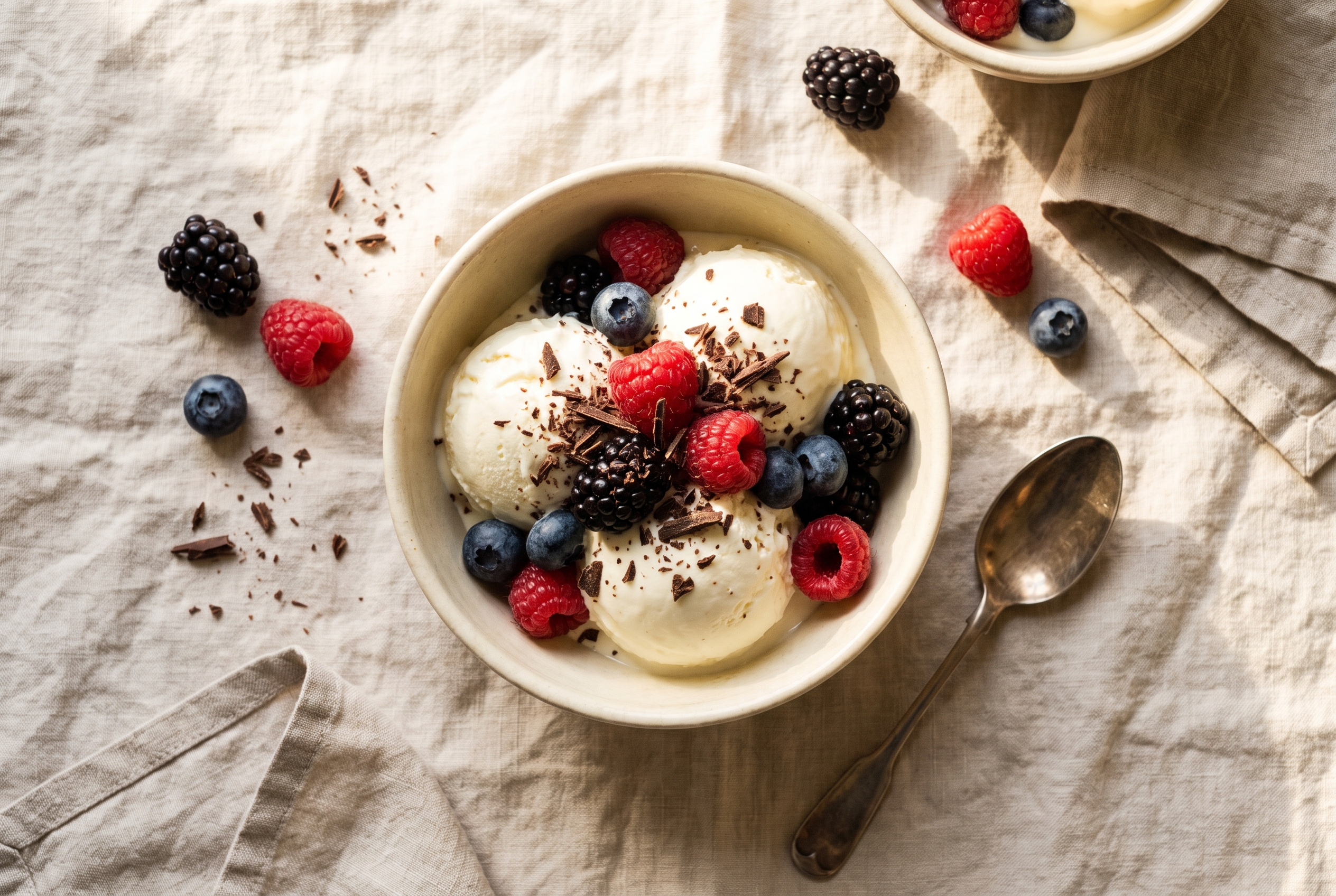
 Save recipes like this straight from TikTok and plan your week in minutes with RecipeLoop, the free AI meal planner.
It works, but only if you blend it far longer than you think.
- Blend for three full minutes, not thirty seconds. Cottage cheese curds have to break down completely or the texture stays grainy. Three minutes in a high-speed blender is the difference between ice cream and cold lumpy cheese.
- 20g of protein in a dessert. Full fat cottage cheese is roughly 12g of protein per half cup, so a serving of this genuinely competes with a protein shake. Check your target on the protein calculator.
- Four ingredients and no machine. Cottage cheese, maple syrup, vanilla, salt. A blender and a loaf pan, and that's the entire equipment list.
Here's what you'll need.
Full fat 4% cottage cheese is essential — low fat versions freeze into something icy and hard because fat is what keeps it scoopable. Maple syrup or honey work better than granulated sugar, since liquid sweeteners lower the freezing point and keep the texture softer. The pinch of salt is not optional; without it the whole thing tastes flatly dairy.
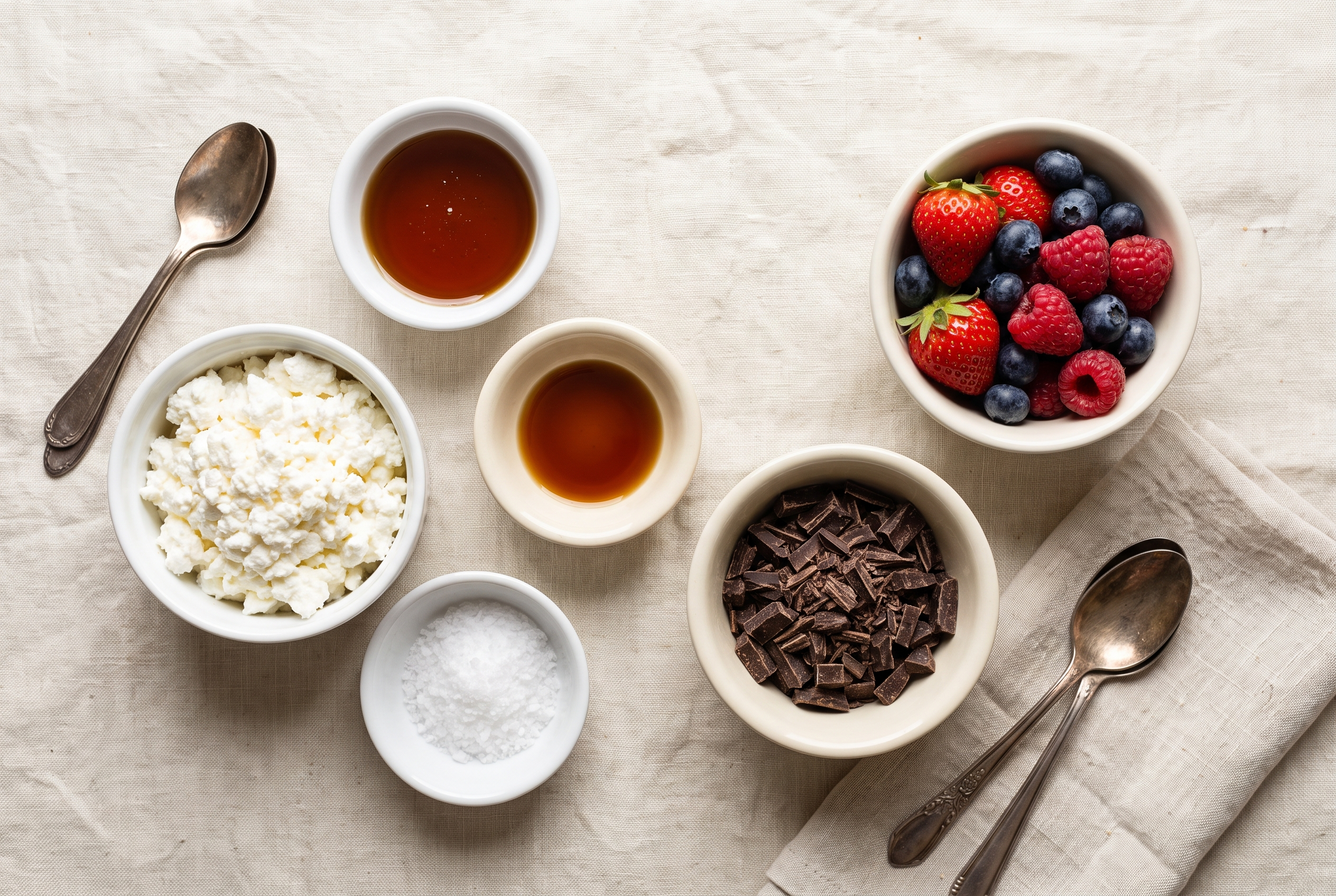
Here's how it all comes together.
Put the cottage cheese, maple syrup, vanilla and salt into a high-speed blender. Starting with everything at once means you only have to scrape down the sides once or twice.
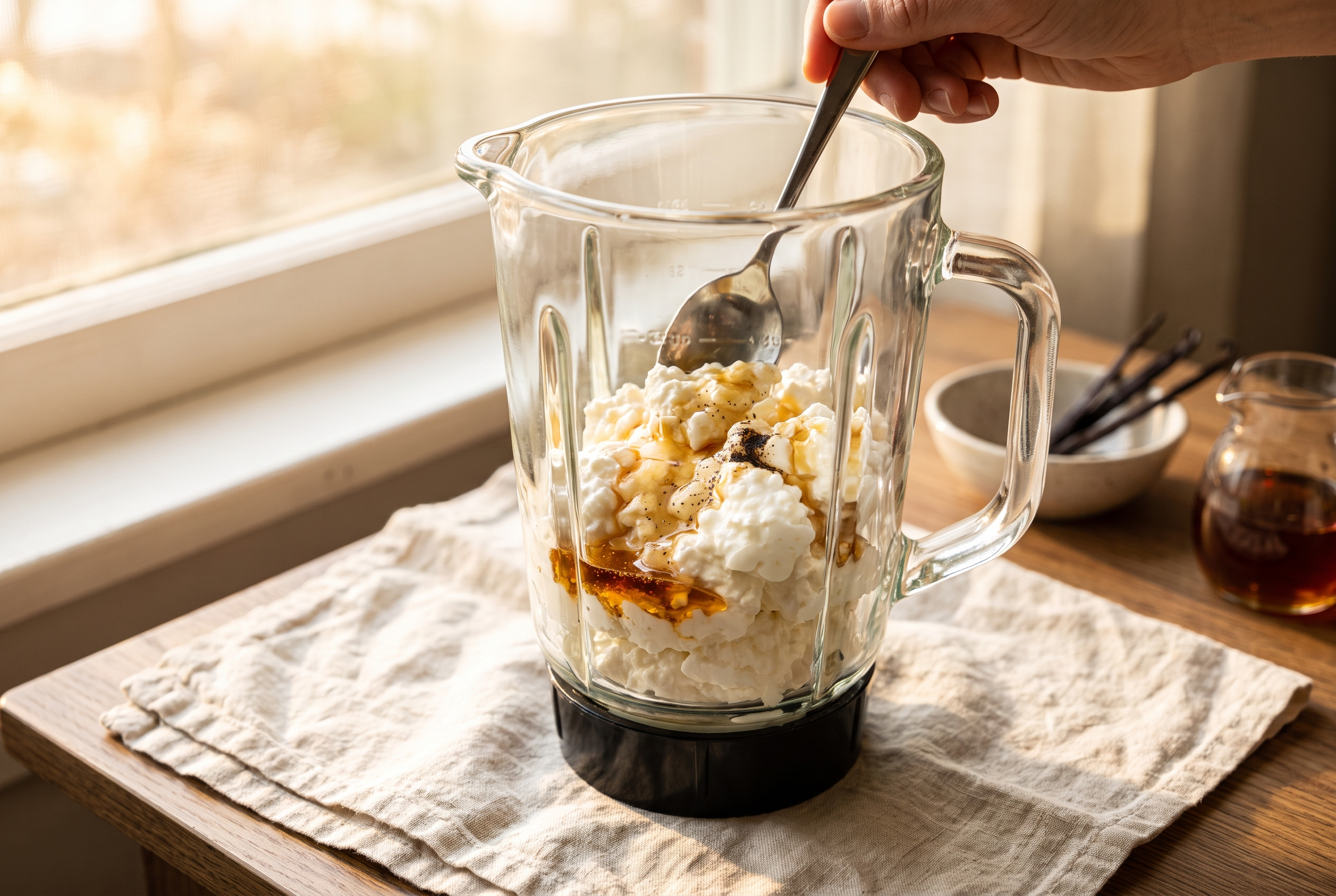
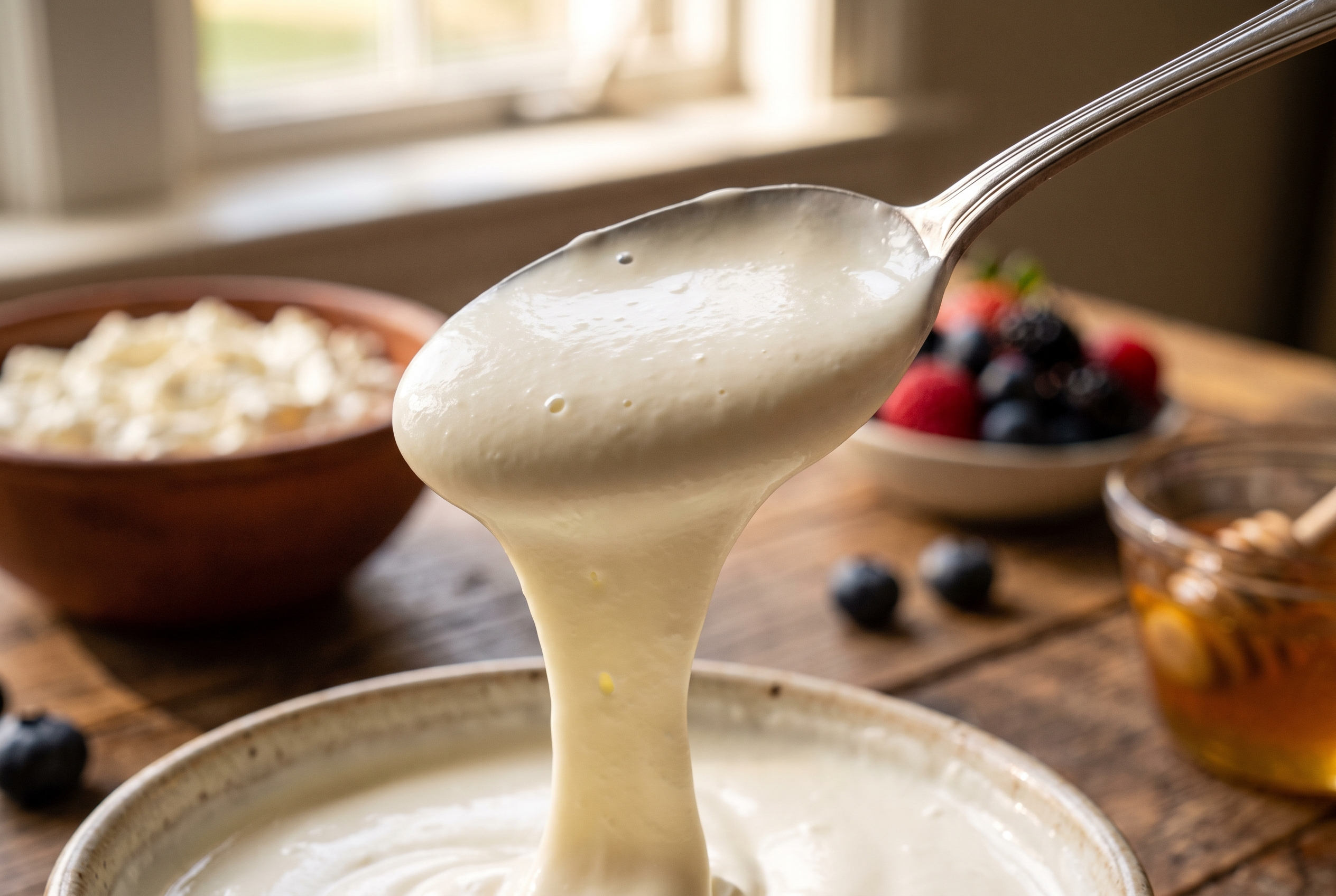
Run it on high for three minutes, stopping once to scrape the sides down. Keep going well past the point where it looks smooth — the last minute is what removes the graininess you'd otherwise taste.
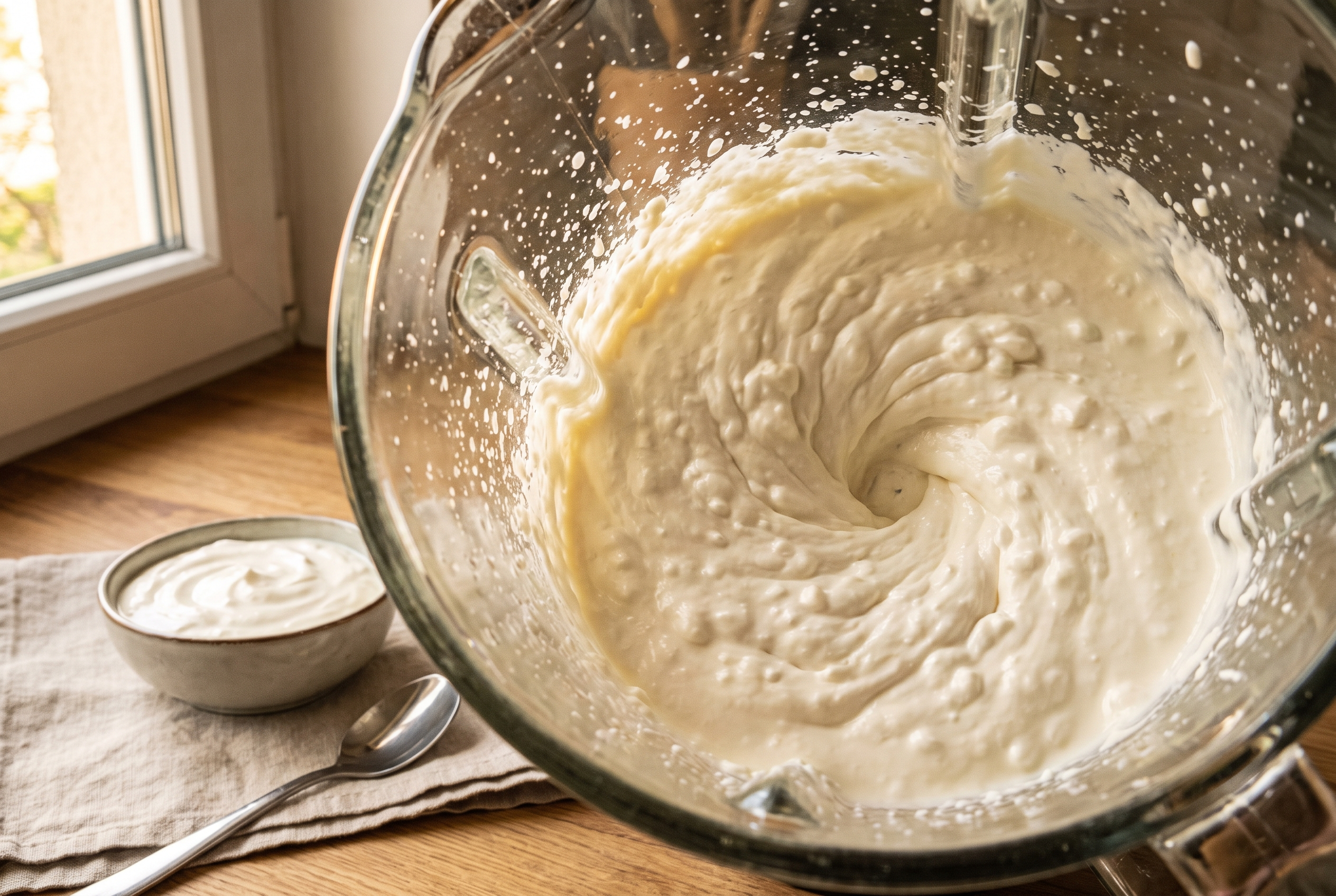
Rub a little between your fingers. If you feel any grain at all, blend another minute. This is the single check that determines whether the finished thing tastes like ice cream or like frozen cottage cheese.
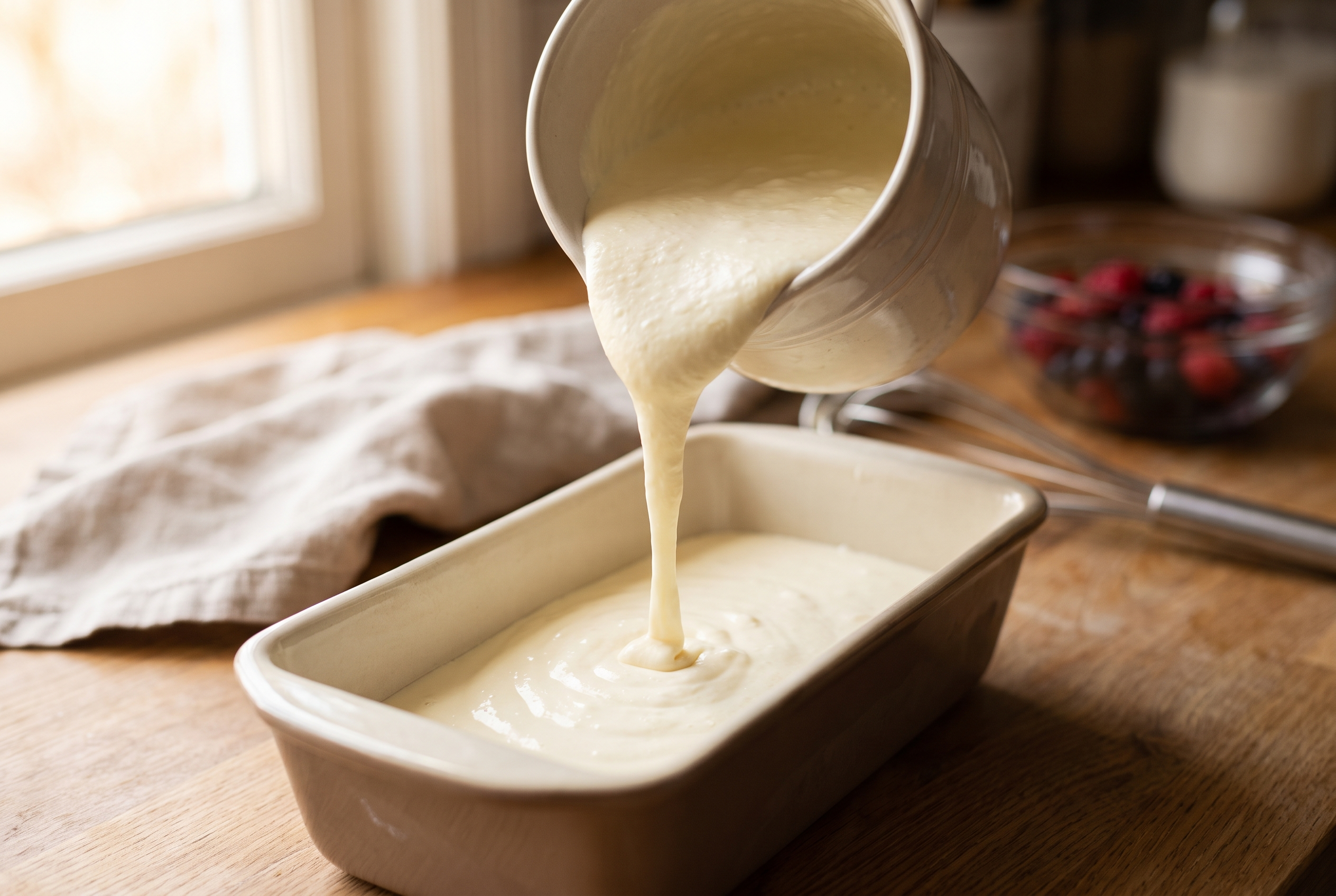
Transfer the base to a loaf pan or a wide shallow dish rather than a deep tub. Shallow freezes faster and more evenly, which means smaller ice crystals and a smoother scoop.
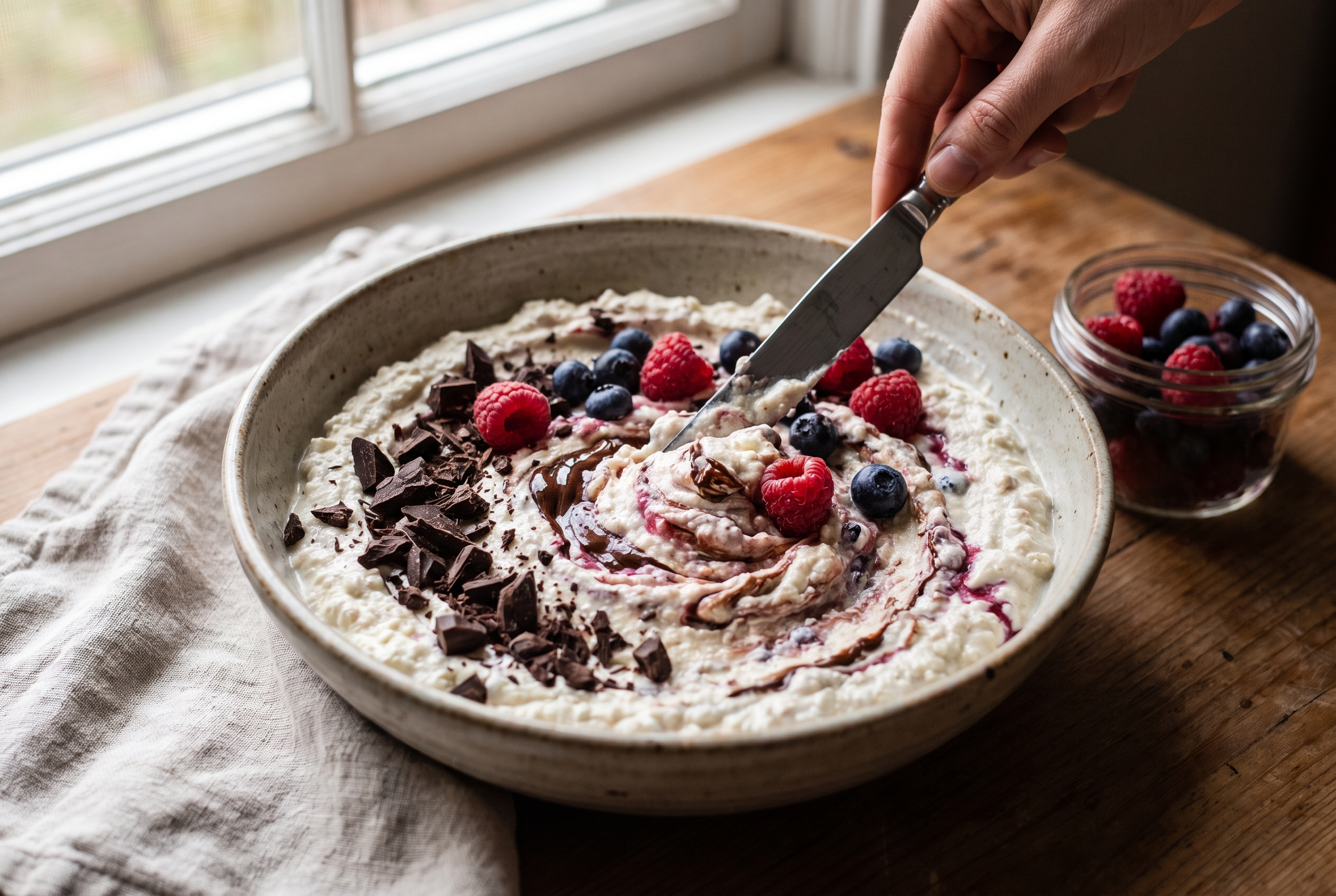
Swirl through the chopped chocolate or berries with a knife, keeping the ribbons loose rather than fully mixed. Folding them in completely makes everything uniformly beige and loses the contrast.
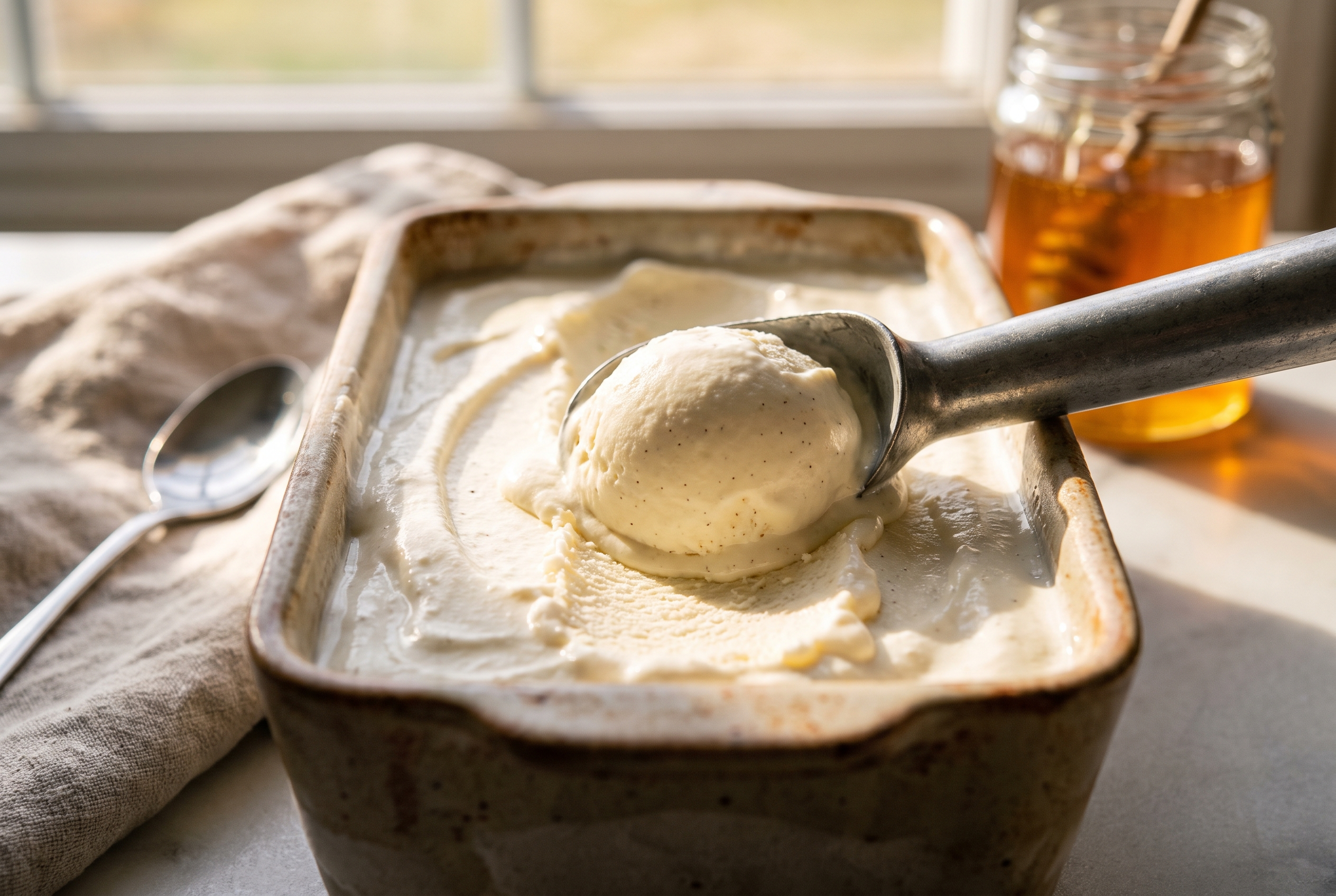
Freeze for 3 to 4 hours, stirring once at the 90-minute mark to break up any crystals forming at the edges. Let it sit out 10 minutes before scooping.
 Eating higher-protein on purpose? The Ultimate GLP-1 High Protein High Fiber Cookbook is full of meals like this one.
Things I learned while testing this recipe.
- Full fat, or don't bother. 4% cottage cheese freezes soft and scoopable. Low fat and fat free freeze into a solid icy block, and there's no technique that gets around it.
- Blend past smooth. Three minutes minimum. The visual smoothness arrives well before the textural smoothness, which is the trap in every version of this recipe.
- Shallow container, always. A wide shallow pan freezes in half the time of a deep tub, and faster freezing means smaller ice crystals and a creamier result.
- Ten minutes on the counter before scooping. Straight from the freezer it's too hard. A short temper makes it behave like real ice cream.
Make it ahead, or make it yours.
- Best within a week. It keeps for two weeks but firms up and gets icier as it sits. The first three days are noticeably the best.
- Blend the base a day ahead. The unfrozen base keeps in the fridge for 48 hours, so you can blend it whenever and freeze it when you want dessert.
- Endless flavor variations. Cocoa powder and espresso, peanut butter and banana, lemon zest and blueberry, or a scoop of protein powder for even more. The base takes almost anything.
Here's what I'd serve with this.
- Fresh berries and a little flaky salt over the top.
- A drizzle of warm peanut butter, which sets slightly on contact.
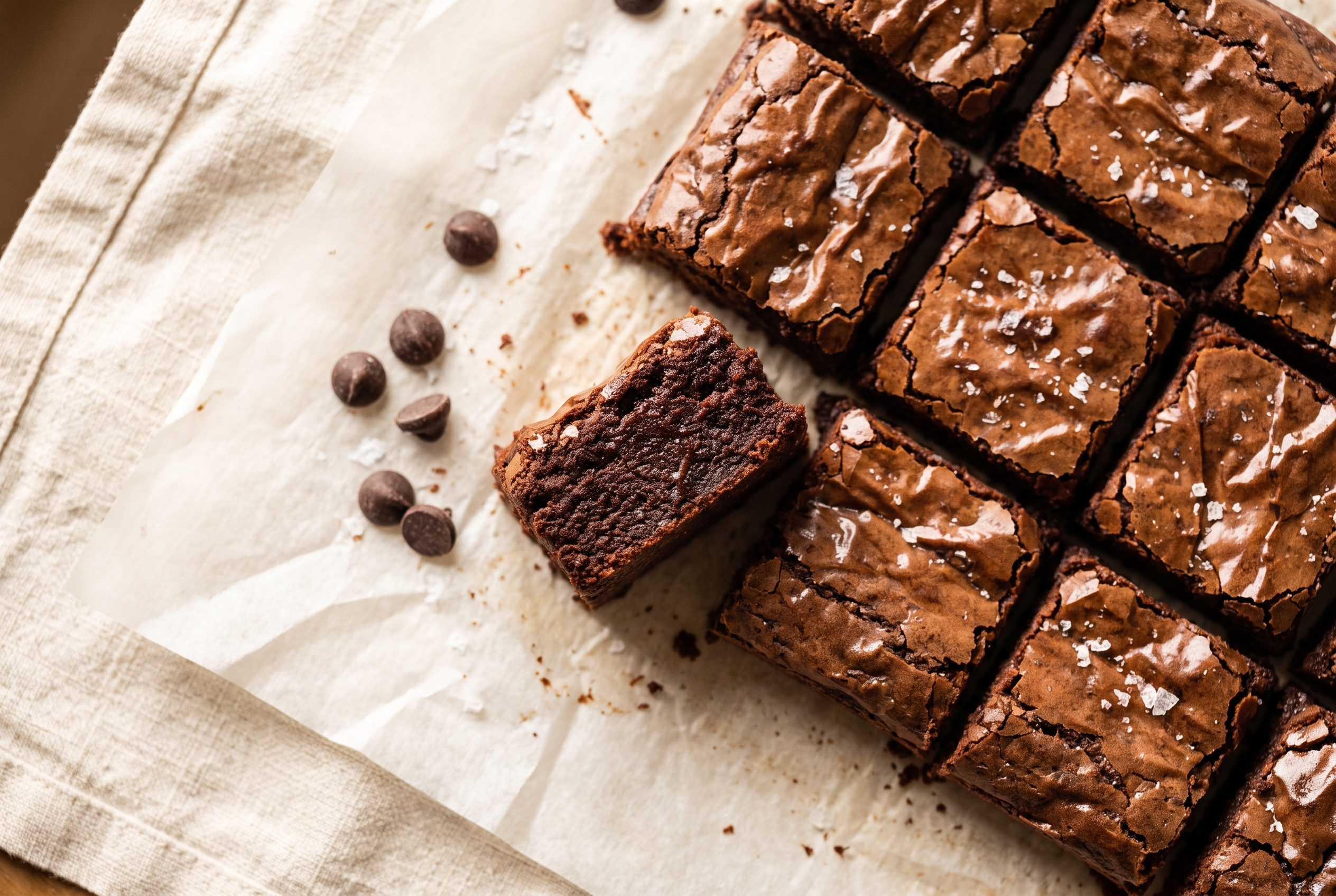
- Fudgy protein brownies warm, with a scoop melting on top.
- Apple crisp straight from the oven for a hot-and-cold thing.
- Greek yogurt chocolate bark broken over it for crunch.
Just in case you have leftovers.
Storing: keep it in an airtight shallow container in the freezer for up to 2 weeks, with a piece of parchment pressed onto the surface to limit ice crystals. It's meaningfully best in the first three days.
Reheating: not applicable, but let it stand at room temperature for 10 to 15 minutes before scooping. If it has been in the freezer more than a few days, a quick 20-second blitz in the blender restores the original texture completely.
More high protein recipes...
Cottage cheese ice cream
★★★★★ 4.7 from 143 reviews — cottage cheese ice cream blended from four ingredients with no machine, 20g protein a serving and a genuinely creamy scoop.
Ingredients
- 2 cups full fat (4%) cottage cheese
- 1/3 cup maple syrup or honey
- 2 tsp vanilla extract
- 1/4 tsp kosher salt
- 3 oz dark chocolate, chopped, or 1 cup berries
Instructions
- Blend. Add the cottage cheese, maple syrup, vanilla and salt to a high-speed blender.
- Go long. Blend on high 3 full minutes, scraping down once, until completely smooth with no grain.
- Check. Rub a little between your fingers. If you feel any texture, blend another minute.
- Pour. Transfer to a shallow loaf pan rather than a deep container.
- Swirl. Ripple the chopped chocolate or berries through with a knife, keeping the ribbons loose.
- Freeze. Freeze 3-4 hours, stirring once at 90 minutes. Stand 10 minutes before scooping.
Notes: Full fat 4% cottage cheese is essential — low fat freezes rock hard and icy. Blend a full 3 minutes; visual smoothness comes well before textural smoothness. Use a liquid sweetener, which lowers the freezing point and keeps it scoopable. Freeze in a shallow pan for smaller ice crystals. Best in the first 3 days. A 20-second re-blend restores the texture after a week.
Nutrition (per serving, estimated): 240 calories · 20g protein · 26g carbs · 8g fat · 1g fiber
If this is how you want to eat every day, this cookbook makes it easy.
The Ultimate GLP-1 High Protein High Fiber Cookbook for Weight Loss is built on the same idea as this recipe — lean protein, plenty of fiber, real food and portions big enough to keep you full. Simple, tested recipes for anyone eating higher-protein on purpose, on a GLP-1 medication or not.
Get the cookbook on AmazonMeal-plan the whole week around recipes like this with RecipeLoop — save recipes from anywhere, get a grocery list automatically.FAQ
- Does cottage cheese ice cream actually taste like ice cream?
- Closer than you'd expect, provided you blend it long enough and use full fat. The texture is genuinely creamy and the tang reads as something like frozen cheesecake rather than plain dairy. It isn't identical to churned ice cream, which has air whipped into it, but it's a satisfying dessert in its own right.
- Why is my cottage cheese ice cream grainy?
- Under-blending, almost always. Cottage cheese curds need about three minutes in a high-speed blender to break down completely, and the mixture looks smooth well before it actually is. Rub a little between your fingers — if you can feel any texture at all, keep going.
- Can I use low fat cottage cheese?
- You can, but the result freezes into a hard icy block rather than something scoopable. Fat is what interrupts ice crystal formation and keeps the texture soft. If you only have low fat, add two tablespoons of heavy cream or a tablespoon of neutral oil to compensate.
- Do I need an ice cream maker?
- No. The high protein and fat content plus a liquid sweetener keeps it soft enough without churning. Freezing it in a shallow pan and stirring once at the ninety-minute mark does most of what a machine would do for texture.