Pastina Soup (Italian Penicillin, 25 Minutes)
This pastina soup is the recipe I make before anything else when someone in my house has a cold: carrot, celery and onion sweat in butter until soft, chicken broth goes in, and then the whole thing gets blended smooth into a golden, sweet, velvety broth that tiny star-shaped pastina cooks right in. A beaten egg and a handful of parmesan whisked in at the end thicken it just enough to coat a spoon, and a pat of butter on top is the part nobody skips. Italians call it pastina, half the internet calls it Italian penicillin, and in my kitchen it is simply what you eat when you need to feel better. It takes 25 minutes, lands 14g of protein for 260 calories a bowl, and it sits next to my chicken noodle soup and creamy chicken tortellini soup as the comfort food I come back to from October through March. On nights when soup needs to be dinner, I pair it with the one pot sausage pasta I posted today, or just a lot of bread.

 Save recipes like this straight from TikTok and plan your week in minutes with RecipeLoop, the free AI meal planner.
Why this pastina soup tastes richer than it has any right to.
- Blending the vegetables makes the broth itself the body of the soup. Most pastina recipes leave the carrot and celery in little dice. Blending them smooth into the broth is what gives this version its golden color, its gentle sweetness and a texture that feels creamy with no cream at all. It is the single step that makes people ask what is in it.
- The egg and parmesan finish is the Italian trick. Whisking a beaten egg with parmesan into the hot soup in a thin stream — the same move as a stracciatella — thickens the Italian penicillin soup into something silky and adds protein without a single extra pan. Done right, there are no visible strands of egg, just body.
- It is 25 minutes from a bag of pastina to a bowl. The pasta cooks in 5 or 6 minutes, the vegetables take 10, and there is nothing to chop finely because it all gets blended anyway. That makes it faster than my broccoli cheddar soup and gentler than my zuppa toscana, and it is the comfort food recipe I can make half-asleep when I am the one who is sick.
Here's what you'll need.
Thirteen simple ingredients: pastina (stelline or acini di pepe), chicken broth, a carrot, a celery stalk, half an onion, garlic, one egg, parmesan, butter, olive oil, parsley, salt and pepper.

Here's how it all comes together.
Melt the butter with the olive oil in a medium pot over medium heat. Add the diced carrot, celery and onion with a pinch of salt and cook, stirring now and then, until very soft and the onion is translucent, 8 to 10 minutes. Add the garlic for the last minute. You want soft, not browned.

Pour in the chicken broth, bring it to a simmer and cook 5 minutes so the vegetables finish softening completely — a knife should slide through the carrot with no resistance.

Turn off the heat and blend the soup with an immersion blender until completely smooth and golden, about 1 minute. If you are using a regular blender, work in batches, fill it no more than halfway and vent the lid. Return the soup to the pot.

Bring the blended broth back to a lively simmer and pour in the pastina, stirring right away so it does not clump. Cook, stirring often, until tender, 5 to 6 minutes for stelline (check the package; acini di pepe takes closer to 8). It will thicken noticeably as the pasta releases starch.

In a small bowl, beat the egg with the parmesan and a little pepper. Drop the heat to low and pour the egg mixture into the soup in a thin, steady stream while whisking constantly. It thickens the soup almost instantly into something silky. Keep whisking for 30 seconds so the egg disperses rather than scrambles.

Taste for salt — broths vary — and ladle the soup into bowls. Top each with a small pat of butter, more parmesan, a little parsley and black pepper. Eat it right away; pastina keeps thickening as it sits.


 If simple, nourishing food like this is how you want to eat more often, there are dozens of soups, broths and vegetable-first dinners in the Ultimate Slow Cooker Mediterranean Diet Cookbook.
Things I learned while testing this recipe.
- Use real stelline or acini di pepe. Pastina means "tiny pasta," and the star shapes are what make this feel like the soup from childhood. Orzo works in a pinch but takes 9 minutes and changes the texture; ditalini is too big.
- Use the best broth you have. With so few ingredients, the broth is the flavor. Homemade or a good low-sodium boxed bone broth makes a noticeable difference, and the bone broth bumps the protein up a couple of grams per bowl.
- Temper the egg if you are nervous. Whisk a ladle of hot soup into the beaten egg first, then pour that back into the pot. It is foolproof and guarantees a silky, not stringy, finish.
- Make the broth base ahead, cook the pastina fresh. The blended vegetable broth keeps 4 days in the fridge and freezes beautifully. The pastina itself swells and goes soft overnight, so for leftovers I cook only as much pasta as I am eating right then.
Why this is the soup I reach for before anything else.
- Gentle enough for a sick day, filling enough for dinner. Soft pasta, mild vegetables, warm broth and a little egg and cheese: it is easy on a sore throat and an upset stomach, which is exactly why it earned the nickname Italian penicillin. Add shredded rotisserie chicken and it is a 25g-protein dinner — the protein calculator can tell you if that is where you need to land.
- A cup of vegetables in every bowl, invisibly. Because the carrot, celery and onion are blended in, this is one of the few soups my pickiest eater drinks to the bottom without picking anything out.
- It costs almost nothing and uses what you have. A box of pastina, a carton of broth, one egg and a wedge of parmesan. There is no shopping trip involved, which matters when the person who needs the soup is the one who would have to go to the store.
Here's what I'd serve with this.
- Greek yogurt bagels — warm, torn and dragged through the bottom of the bowl
- Cottage cheese flatbread — a high protein bread to turn soup into dinner
- Greek yogurt chicken salad — a light, cold sandwich filling alongside a hot bowl
- Air fryer chicken tenders — for the kids who need something to dip
- Crockpot chicken alfredo — today’s other new recipe — the big comfort-food dinner for the night you feel better
Just in case you have leftovers.
Storing: Refrigerate in an airtight container for up to 3 days. The pastina keeps absorbing broth, so by the next day it is closer to a thick porridge than a soup — some people (my kids) actually prefer it that way. For true leftovers, store the blended broth base on its own for up to 4 days or freeze it for 3 months, and cook fresh pastina into it when you reheat.
Reheating: Warm gently in a saucepan over medium-low with a splash of broth or water to loosen it, stirring often, 4 to 5 minutes. In the microwave, use 70% power in 60-second bursts and stir between each. Do not boil it hard once the egg is in or the texture goes grainy.
More easy comfort food recipes...
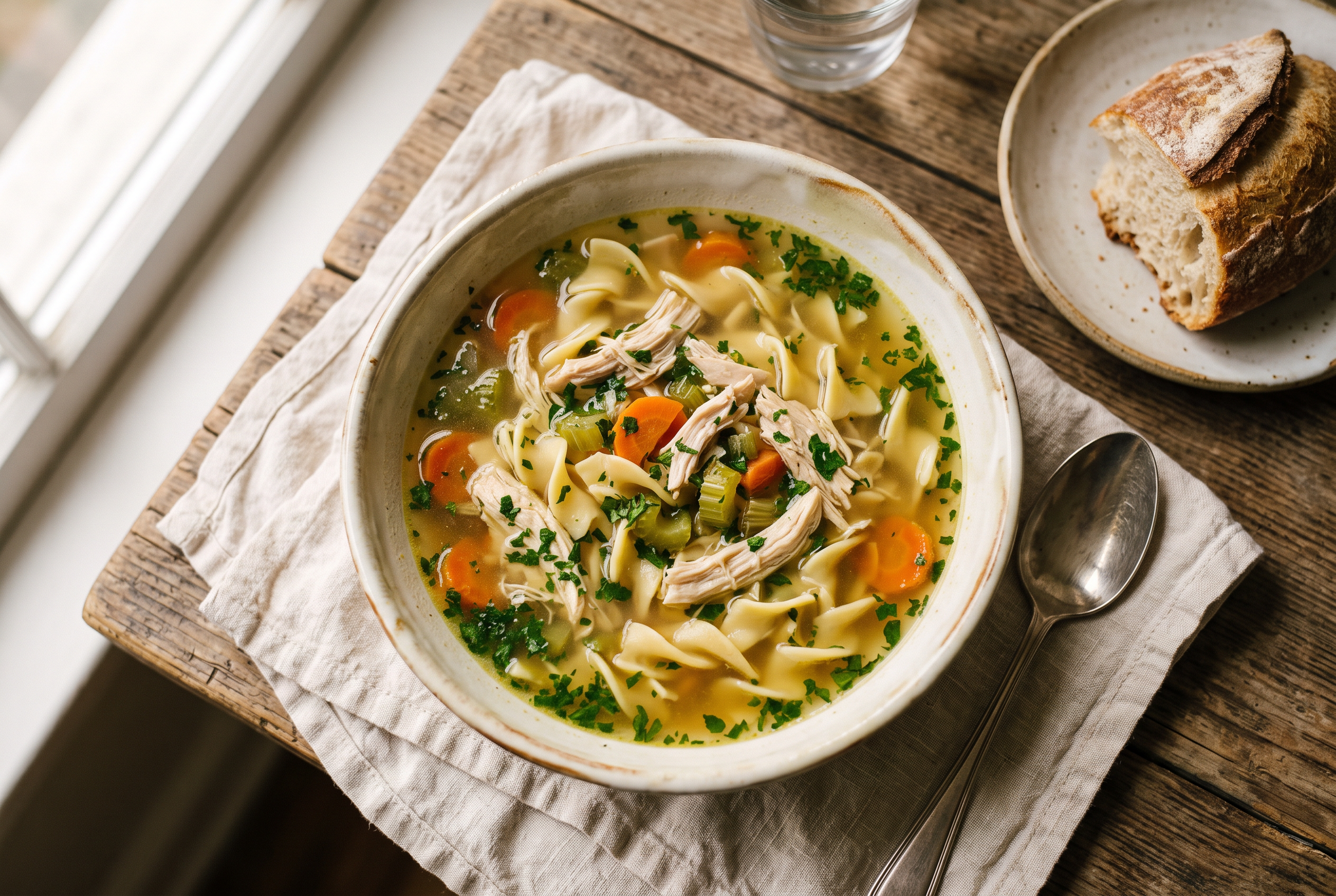
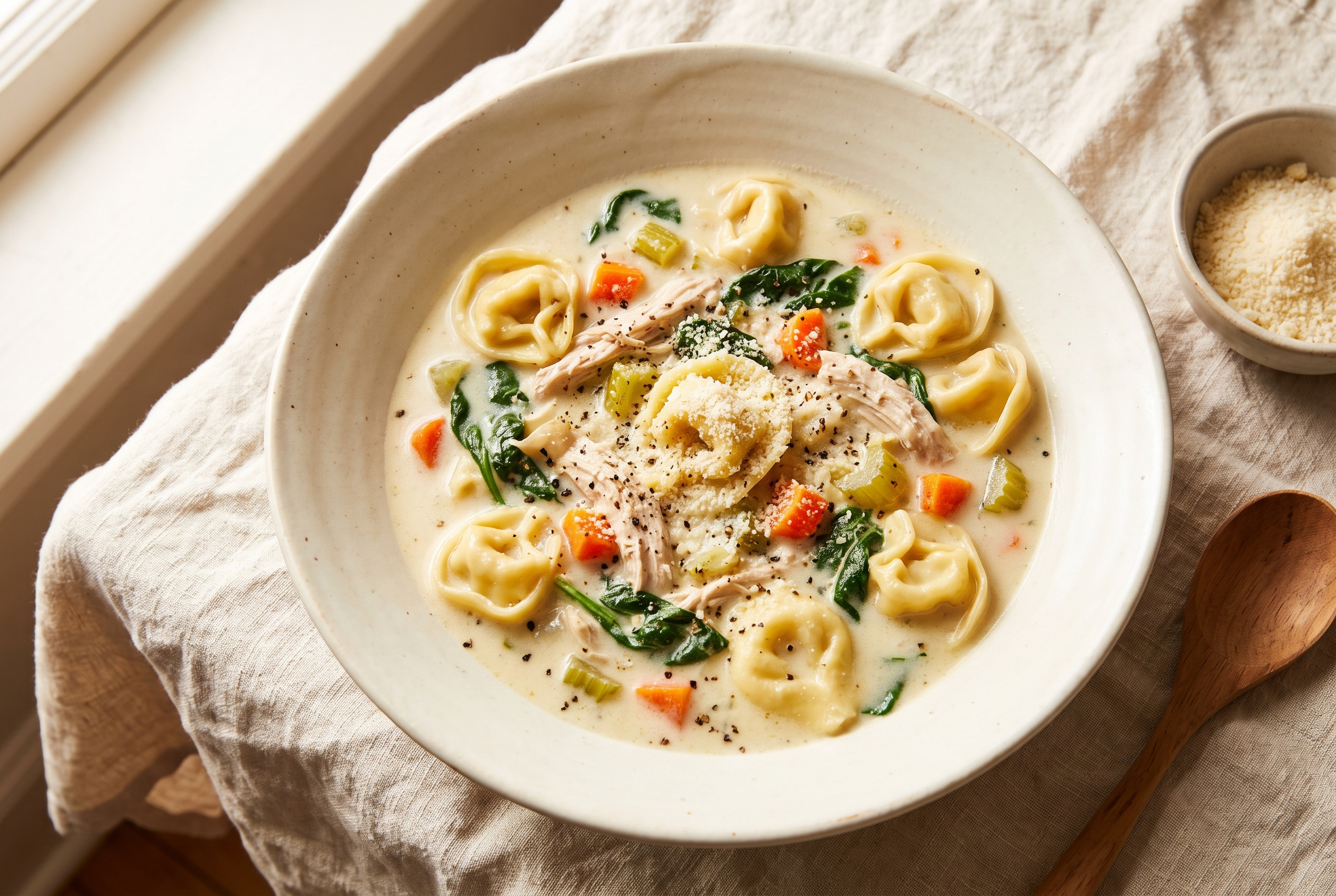
Also new today: crockpot chicken alfredo — tender shredded chicken and fettuccine in a silky slow cooker alfredo with 39g protein a serving.
Pastina Soup (Italian Penicillin)
Tiny star pastina cooked in a golden broth blended smooth from carrot, celery, onion and garlic, finished with a beaten egg and parmesan whisked in, then butter and parsley on top. 25 minutes, 14g protein a bowl.
Ingredients
- 1 tablespoon butter, plus more to serve
- 1 tablespoon olive oil
- 1 medium carrot, diced
- 1 stalk celery, diced
- 1/2 medium yellow onion, diced
- 2 cloves garlic, smashed
- 6 cups low-sodium chicken broth (or bone broth)
- 1 cup pastina (stelline or acini di pepe)
- 1 large egg
- 1/2 cup freshly grated parmesan, plus more to serve
- 1/2 teaspoon kosher salt, or to taste
- 1/4 teaspoon black pepper
- 2 tablespoons chopped fresh parsley
Instructions
- Sweat the vegetables: Melt the butter with the olive oil in a medium pot over medium heat. Cook the carrot, celery and onion with a pinch of salt until very soft, 8 to 10 minutes, adding the garlic for the last minute.
- Simmer: Add the broth, bring to a simmer and cook 5 minutes until the vegetables are completely tender.
- Blend: Off the heat, blend with an immersion blender until smooth and golden (or carefully in batches in a blender). Return to the pot.
- Cook the pastina: Bring back to a simmer, stir in the pastina and cook, stirring often, until tender, 5 to 6 minutes.
- Add the egg: Beat the egg with the parmesan and pepper. Reduce the heat to low and pour it into the soup in a thin stream while whisking constantly, then whisk 30 seconds more.
- Finish: Season with salt. Ladle into bowls and top with a pat of butter, more parmesan and the parsley. Serve immediately.
Notes
For more protein, stir in 2 cups shredded rotisserie chicken with the pastina (about 25g protein a bowl). Vegetarian: use vegetable broth. The soup thickens as it sits; thin leftovers with broth. For a sick-day version for little kids, skip the pepper and parsley and add an extra pat of butter.
More simple, nourishing soups and broths
If you liked how much comfort came out of so few ingredients, the Ultimate Slow Cooker Mediterranean Diet Cookbook is full of the same kind of honest, vegetable-first soups and stews that cook themselves while you rest.
Meal-plan the whole week around recipes like this with RecipeLoop — save recipes from anywhere, get a grocery list automatically.Pastina soup questions I get asked.
What is pastina soup and why is it called Italian penicillin?
Pastina is any tiny pasta — stelline (little stars) or acini di pepe are the classics — cooked in broth, usually with butter, parmesan and often an egg. Italian families serve it to anyone who is sick or sad because it is warm, gentle and easy to digest, which is how it earned the Italian penicillin nickname.
How long does pastina take to cook?
Stelline cook in about 5 to 6 minutes at a simmer; acini di pepe take 7 to 8. Stir often because the tiny shapes clump and sink. It will thicken the broth as it cooks, so pull it as soon as it is tender.
Do you put an egg in pastina soup?
Traditionally, yes. A beaten egg whisked in at the end with parmesan thickens the broth and adds protein, like a quick stracciatella. Pour it in slowly while whisking over low heat so it melts into the soup rather than scrambling. You can skip it and the soup is still delicious, just thinner.
Can I make pastina soup ahead?
Make the blended broth base ahead — it keeps 4 days in the fridge or 3 months frozen. Cook the pastina fresh when you reheat, because the pasta swells and turns soft overnight and soaks up most of the broth.
Is pastina soup good for a cold?
It is warm, hydrating, salty and soft, which helps with a sore throat and a poor appetite, and the broth and egg give you protein and electrolytes. It is not medicine, but there is a reason generations of nonnas reach for it first.