Salmon Sushi Bake (Creamy, Spicy, No Rolling Required)
This salmon sushi bake is what I make when everyone wants sushi and nobody wants to pay for it: a layer of seasoned sushi rice goes into a baking dish, flaked baked salmon gets folded with cream cheese, Kewpie mayo and sriracha and spread on top, and the whole thing bakes for 15 minutes until the edges turn golden and bubbly. You scoop it onto little seaweed snack sheets with cucumber and avocado and eat it like a hand roll. It takes 40 minutes start to finish, there is zero rolling, and at 29g of protein a serving it has quietly become a bigger weeknight hit at my house than the salmon rice bowl and bang bang salmon bites that got my kids eating salmon in the first place.

 Save recipes like this straight from TikTok and plan your week in minutes with RecipeLoop, the free AI meal planner.
Why this salmon sushi bake recipe is the one worth making.
- The rice is properly seasoned, not just cooked. Most sushi bake recipes skip the vinegar step and end up tasting like a salmon casserole. Tossing hot rice with rice vinegar, sugar and salt is what makes a sushi bake taste like actual sushi — tangy, a little sweet, and sturdy enough to hold its shape on a seaweed sheet.
- Cream cheese plus Kewpie mayo is the creamy layer that holds. Mayo alone goes greasy in the oven. Softening cream cheese into the Kewpie and sriracha gives the salmon sushi bake topping a rich, scoopable texture that browns on top and stays creamy underneath, the same way the sauce holds together in my creamy Tuscan salmon.
- It uses baked salmon, so you control the fish. Fresh salmon baked for 12 minutes and flaked gives big, tender pieces instead of the mushy texture you get with canned. If you already make air fryer salmon, cook an extra fillet or two one night and this dinner is half done.
Here's what you'll need.
Twelve ingredients, most from the Asian aisle of a regular grocery store: sushi rice, rice vinegar, a salmon fillet, cream cheese, Kewpie mayo, sriracha, soy sauce, furikake, scallions, cucumber, avocado and a pack of roasted seaweed snack sheets.

Here's how it all comes together.
Cook the sushi rice according to the package (I rinse it until the water runs mostly clear first). While it is still hot, drizzle over the rice vinegar, sugar and salt mixture and fold it in with a rice paddle using a slicing motion, not a stirring one, so the grains stay whole. Let it cool for 5 minutes.

While the rice cooks, season the salmon with salt and a splash of soy sauce and bake at 400°F for 12 to 14 minutes, until it flakes easily. Let it rest a few minutes, discard the skin and flake it into a bowl with a fork, keeping the pieces chunky.

Add the softened cream cheese, Kewpie mayo, sriracha, soy sauce and half the scallions to the flaked salmon and fold until everything is coated and pale pink. Taste — this is the moment to add more sriracha if you want real heat.

Lightly oil a 9x13 baking dish (or an 8x8 for a thicker bake). Press the seasoned rice into an even layer with damp hands or the back of the paddle so it compacts slightly, then sprinkle generously with furikake.

Spoon the salmon mixture over the rice and spread it to the edges. Whisk a little extra Kewpie with sriracha, snip a corner off a sandwich bag and zigzag it across the top. More furikake goes on now too.

Bake at 400°F for 12 to 15 minutes, until the top is lightly golden at the edges and bubbling. Finish under the broiler for 1 to 2 minutes if you want more color. Scatter the remaining scallions, then scoop warm sushi bake onto seaweed sheets with cucumber and avocado.


 If this is the kind of fish-forward, big-flavor dinner you want more of, the whole way of eating behind it is laid out in the Ultimate Slow Cooker Mediterranean Diet Cookbook.
Things I learned while testing this recipe.
- Rinse the rice and season it hot. Rinsing removes surface starch so the rice is fluffy instead of gluey, and vinegar only absorbs properly into hot rice. Cold rice just sits in it.
- Kewpie is worth seeking out. Japanese mayo is made with egg yolks and rice vinegar, so it is richer and tangier than American mayo. If you only have regular mayo, add 1/2 teaspoon rice vinegar and a pinch of sugar.
- Soften the cream cheese first. Cold cream cheese leaves white lumps through the salmon. Fifteen seconds in the microwave or 20 minutes on the counter solves it.
- Do not overbake. Everything is already cooked — you are just heating it through and browning the top. Past 15 minutes the rice starts to dry out and the mayo goes oily. Golden edges and bubbling is done.
Why this is my go-to easy salmon dinner.
- 29g of protein a serving from real salmon. A pound and a half of salmon plus the cream cheese layer gets you to 29g protein a serving, which puts a casual, scoopable dinner solidly into protein-goal territory. Serve it with extra cucumber and avocado and it is a complete meal.
- It feeds a crowd for the price of two sushi rolls. A 9x13 pan feeds six and costs less than takeout for two. It is my go-to for game nights and for the weeks when my teenagers bring friends home without warning.
- Kids actually eat it. The build-your-own seaweed scoop is the whole trick. Mine will not touch a sushi roll but will clear a plate of this, the same way they do with teriyaki chicken bowls.
Here's what I'd serve with this.
- Smashed cucumber salad — cold, crunchy and sesame-dressed — the ideal side for a warm sushi bake
- Air fryer honey garlic shrimp — a 10-minute second protein for a bigger spread
- Air fryer brussels sprouts — toss them with a little soy and sriracha to match
- Salmon rice bowl — the bowl version if you want the same flavors on a single plate
- Green spaghetti — also new today — a creamy roasted poblano pasta for the next night
Just in case you have leftovers.
Storing: Cool completely, cover the dish tightly or portion into airtight containers and refrigerate for up to 3 days. Keep the seaweed sheets, cucumber and avocado separate; the seaweed goes soft the moment it touches the rice. I do not recommend freezing it — the mayo-based topping separates once thawed.
Reheating: Cover with foil and warm in a 350°F oven for 12 to 15 minutes, or microwave individual portions at 70% power in 60-second bursts with a damp paper towel over the top so the rice does not dry out. Finish under the broiler for a minute if you want the top crisp again.
More easy dinner recipes...
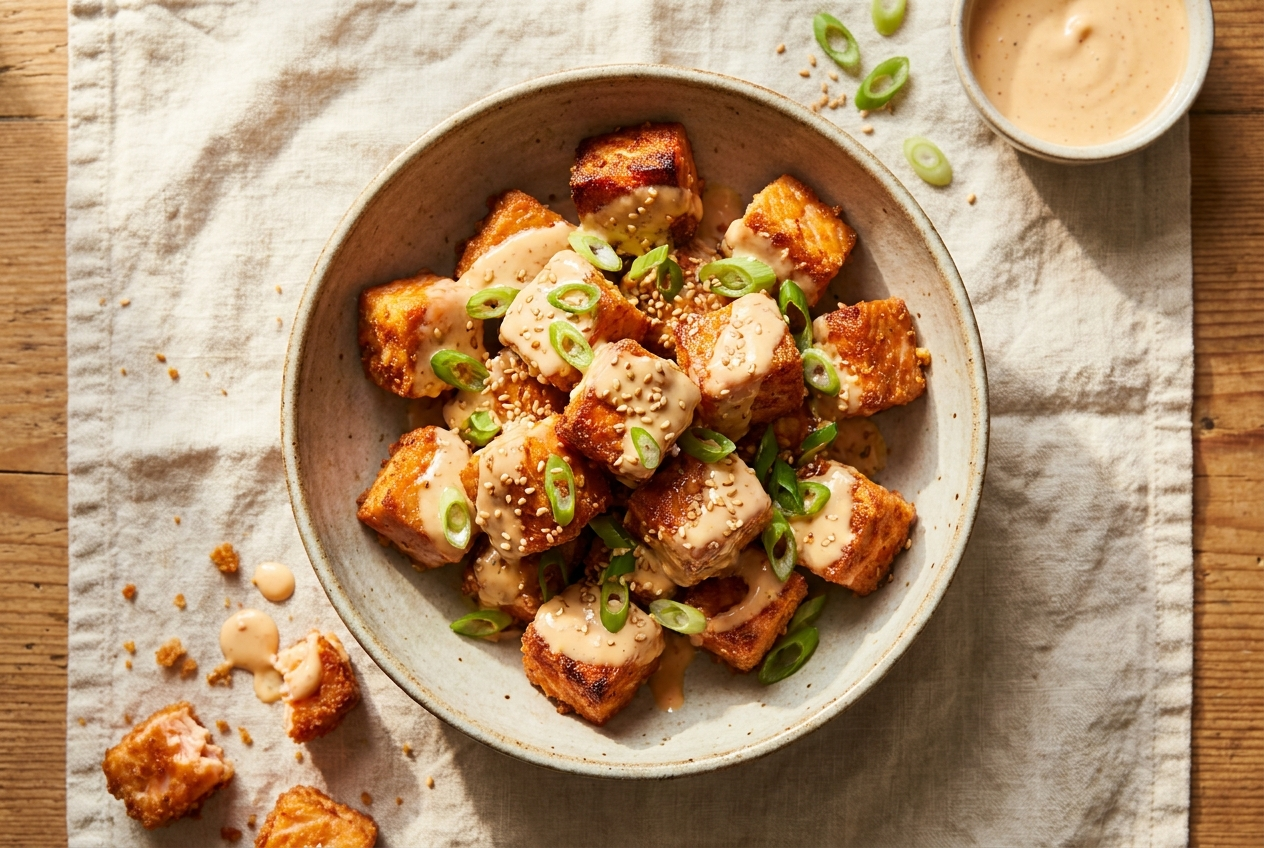
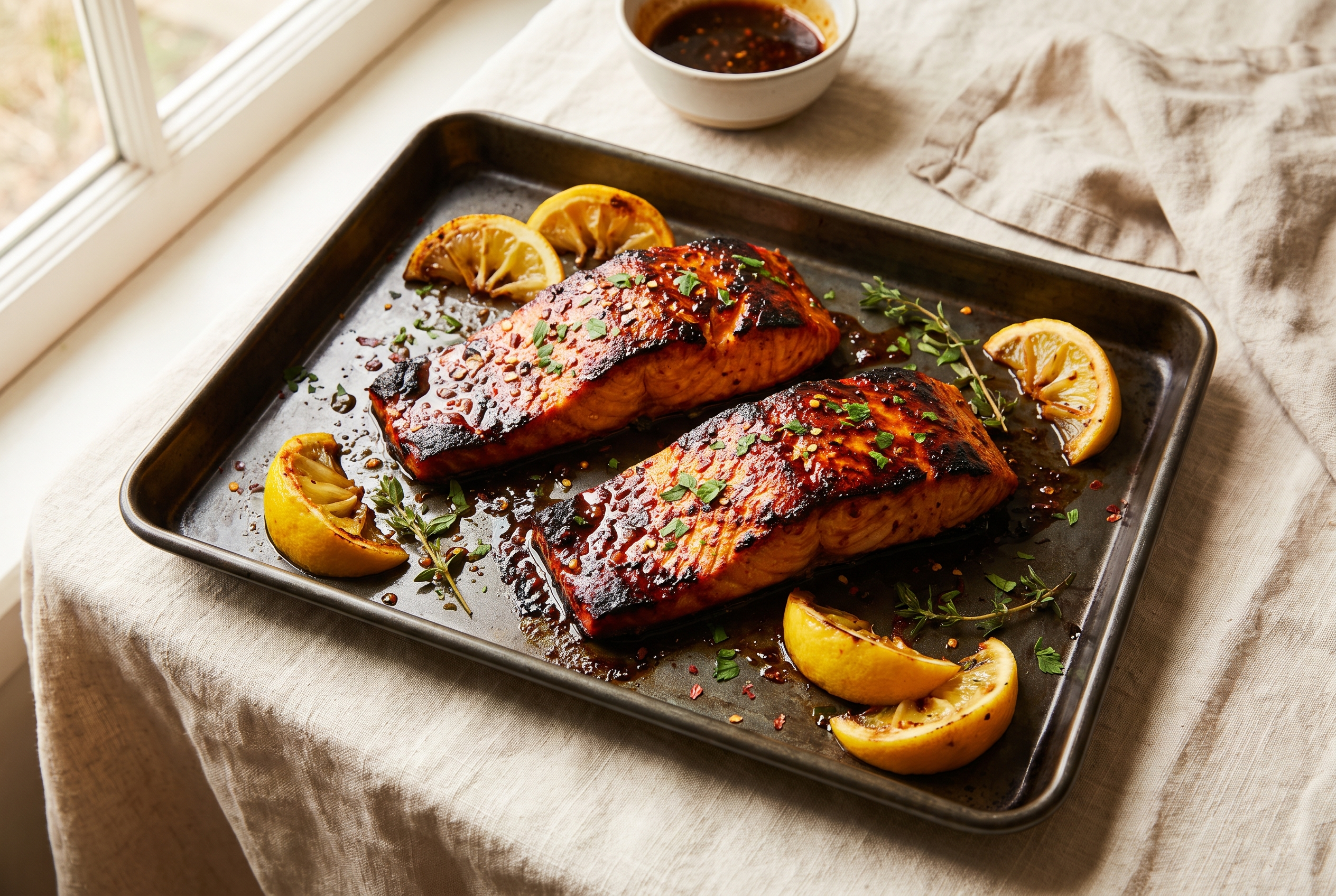
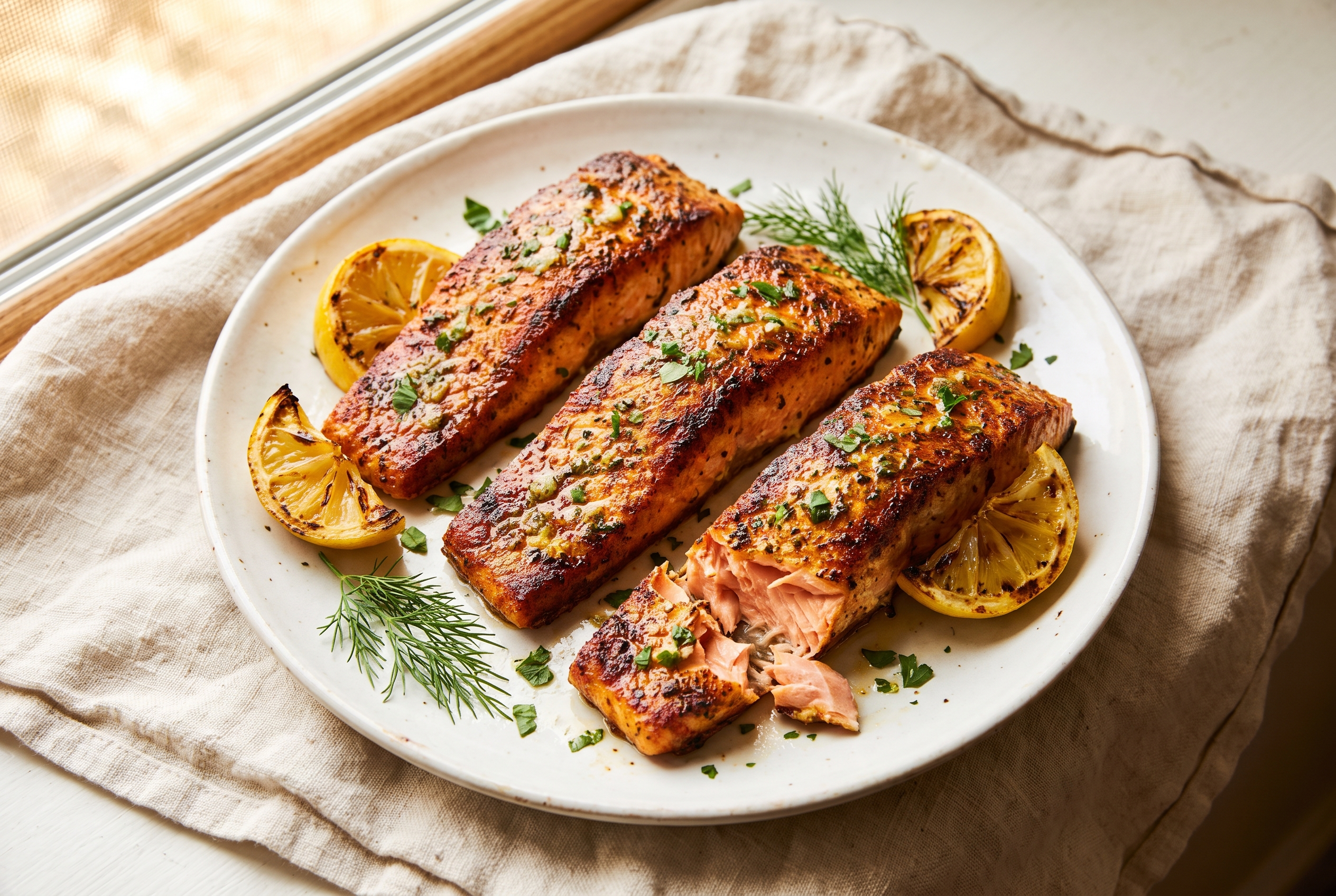
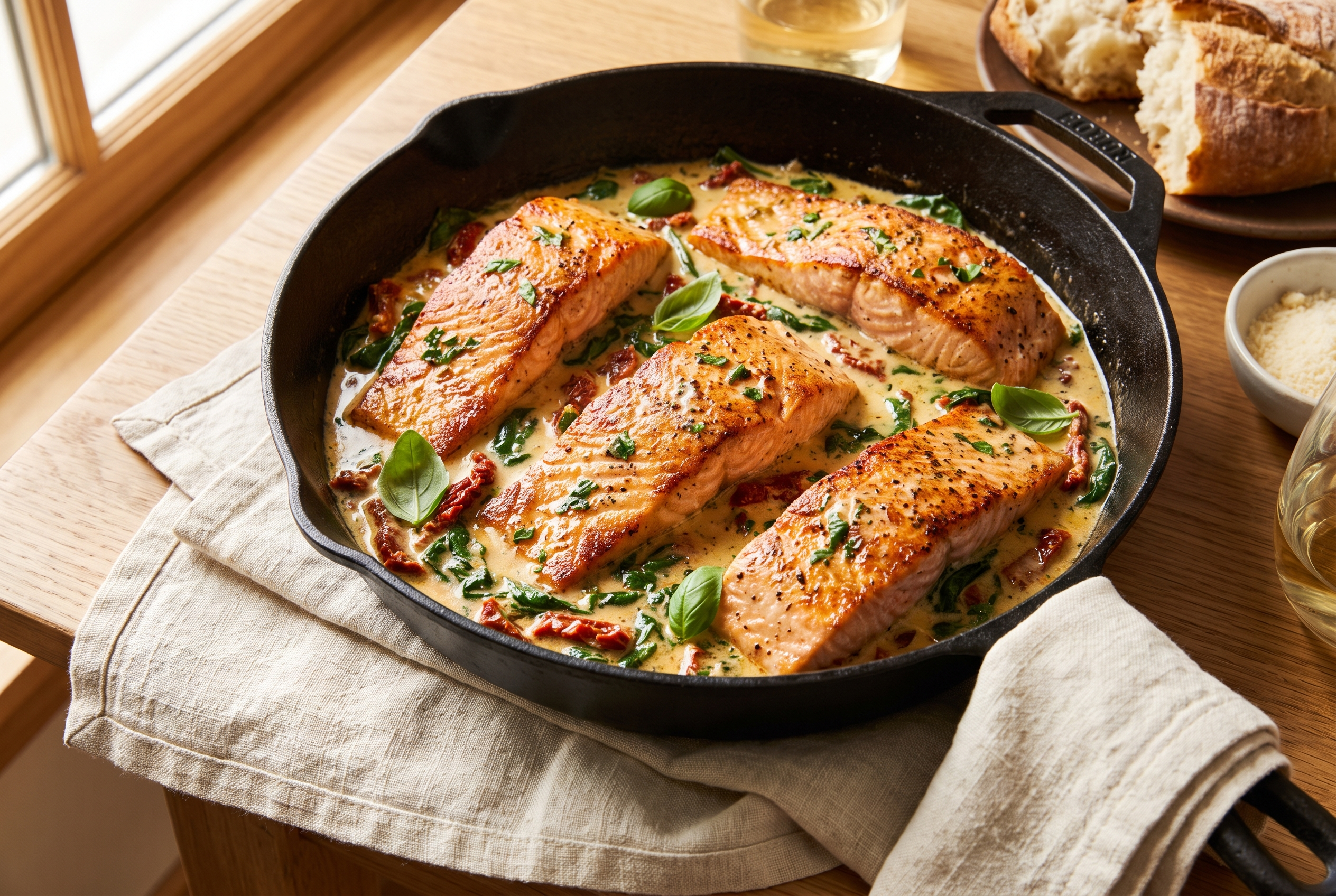
Also new today: penne alla vodka — the glossy blush-pink pasta that takes 30 minutes and tastes like a restaurant made it, and apple cider chicken for when fall dinner needs to feel like fall.
Salmon Sushi Bake
Seasoned sushi rice baked under a creamy salmon, cream cheese, Kewpie mayo and sriracha topping with furikake, finished with sriracha mayo and scallions, and scooped onto seaweed snack sheets with cucumber and avocado. 40 minutes, 29g protein a serving.
Ingredients
- 2 cups uncooked sushi rice (short grain), rinsed
- 3 tablespoons rice vinegar
- 1 tablespoon sugar
- 1 teaspoon kosher salt
- 1 1/2 lb salmon fillet
- 1 tablespoon soy sauce, plus 1 teaspoon for the salmon
- 4 oz cream cheese, softened
- 1/2 cup Kewpie mayo, plus 2 tablespoons for drizzling
- 2 to 3 tablespoons sriracha, plus 1 teaspoon for drizzling
- 3 tablespoons furikake, divided
- 4 scallions, thinly sliced, divided
- To serve: 2 packs roasted seaweed snack sheets, 1 cucumber (thinly sliced), 1 avocado (sliced)
Instructions
- Season the rice: Cook the rice according to the package. Stir the rice vinegar, sugar and salt together until dissolved, fold into the hot rice with a slicing motion and let cool 5 minutes.
- Bake and flake the salmon: Heat the oven to 400°F. Season the salmon with 1 teaspoon soy sauce and a pinch of salt and bake 12 to 14 minutes, until it flakes. Discard the skin and flake into a bowl.
- Mix the topping: Fold the cream cheese, 1/2 cup Kewpie, 2 to 3 tablespoons sriracha, 1 tablespoon soy sauce and half the scallions into the salmon until creamy.
- Layer the rice: Press the rice evenly into a lightly oiled 9x13-inch baking dish and sprinkle with 2 tablespoons furikake.
- Add the salmon layer: Spread the salmon mixture over the rice. Whisk the remaining Kewpie and sriracha together and drizzle over the top, then sprinkle with the remaining furikake.
- Bake and serve: Bake 12 to 15 minutes, until bubbling and golden at the edges (broil 1 to 2 minutes for more color). Top with the remaining scallions and serve warm, scooped onto seaweed sheets with cucumber and avocado.
Notes
Imitation crab, canned salmon (well drained) or leftover cooked salmon all work in place of fresh. For a lighter version, swap half the Kewpie for plain Greek yogurt. Nutrition includes the rice, salmon layer and drizzle but not the seaweed sheets, cucumber and avocado.
More fish dinners that do not feel like a chore
If a salmon dinner like this one is the kind you will actually make on a Tuesday, the Ultimate Slow Cooker Mediterranean Diet Cookbook is full of simple, fish-and-vegetable-forward meals that mostly cook themselves.
Meal-plan the whole week around recipes like this with RecipeLoop — save recipes from anywhere, get a grocery list automatically.Salmon sushi bake questions I get asked.
What temperature do you bake a sushi bake and for how long?
Bake it at 400°F for 12 to 15 minutes, until the top is golden at the edges and bubbling. Everything is already cooked going in, so you are heating it through and browning the top, not cooking the salmon. A 1 to 2 minute broil at the end gives extra color.
Can I use canned salmon for salmon sushi bake?
Yes. Use two 14.75 oz cans of salmon, drained very well, with any skin and bones removed. Fresh baked salmon gives chunkier, more tender pieces, but canned makes a perfectly good weeknight version and skips the first bake entirely.
What do you eat sushi bake with?
Roasted seaweed snack sheets are the classic — you scoop a spoonful onto a sheet, add cucumber and avocado and eat it like a hand roll. It is also good over a bowl of extra rice or on butter lettuce leaves for a lower-carb option.
Can I make sushi bake ahead of time?
You can assemble it up to a day ahead, cover and refrigerate, then bake straight from the fridge, adding about 5 minutes to the time. It is best eaten the day it is baked but keeps 3 days as leftovers.
What is furikake and is there a substitute?
Furikake is a Japanese rice seasoning of toasted sesame seeds, dried seaweed flakes, salt and a little sugar. If you cannot find it, mix 2 tablespoons toasted sesame seeds with 1 crumbled seaweed snack sheet and a pinch of salt.