Burnt Basque Cheesecake (Crustless, No Water Bath, One Bowl)
This Basque cheesecake is the dessert I make when I want people to think I worked much harder than I did: five ingredients beaten in one bowl, poured into a pan lined with crinkled parchment, and baked hot and fast until the top turns a deep mahogany brown and the center is still trembling. There is no crust, no water bath, no gentle cooling in a cracked-open oven — everything that normally goes wrong with cheesecake is the point here. The burnt top tastes like the edge of a crème brûlée, the center is as creamy as custard, and the rustic, uneven parchment edges mean it never has to look perfect. It takes about an hour, it feeds 12, and it has quietly replaced my cottage cheese cheesecake as the one I bring to holiday dinners, right next to a tray of pecan pie bars.

 Save recipes like this straight from TikTok and plan your week in minutes with RecipeLoop, the free AI meal planner.
Why burnt Basque cheesecake is the easiest cheesecake you will ever bake.
- The “burnt” top is the whole point. A classic New York cheesecake bakes low in a water bath so the top stays pale and smooth. A Basque cheesecake, from the bar La Viña in San Sebastián, is baked at 425°F with no protection at all, so the sugars on the surface caramelize nearly to black. That bitter-sweet top against the creamy center is what makes it taste like more than cheesecake. Cracks, dips and dark patches are features, not failures.
- No crust, no water bath, no springform leaks. There is no graham crust to press and pre-bake, and because the cheesecake is meant to collapse and crinkle as it cools, you do not need a water bath to keep it smooth. Two sheets of parchment pushed into the pan do all the work, and they double as the serving wrapper.
- Five ingredients and 10 minutes of mixing. Cream cheese, sugar, eggs, heavy cream and a spoonful of flour, plus vanilla, salt and a little lemon zest. The batter takes less time than my pumpkin cheesecake bars, and it is the most forgiving dessert on this site: I have overbaked it, underbaked it and dropped it, and it was delicious every time.
Here's what you'll need.
Just the basics: four blocks of full-fat cream cheese, granulated sugar, eggs, heavy cream, a little all-purpose flour, vanilla, salt and lemon zest — plus two sheets of parchment paper and a 9-inch springform pan.

Here's how it all comes together.
Heat the oven to 425°F with a rack in the center. Butter a 9-inch springform pan, then dampen and crumple two large sheets of parchment and press them into the pan at angles so they overlap and stand 2 inches above the rim. Wet parchment molds to the pan, and the folds and pleats are exactly what you want.

In a stand mixer with the paddle (or a large bowl with a hand mixer), beat the room-temperature cream cheese on medium-low for a minute, then add the sugar and salt and beat 2 to 3 minutes more until completely smooth and glossy, scraping the bowl and paddle twice. Cold cream cheese is the number one cause of lumps, so let it sit out for 2 hours first.

With the mixer on low, add the eggs one at a time, letting each one disappear completely before adding the next, and scrape the bowl between additions. Keep the speed low — whipping air into cheesecake batter makes it puff dramatically and then sink into a crater.

Add the vanilla and lemon zest, then pour in the heavy cream with the mixer on low. Sift the flour over the batter and mix just until no streaks remain. The batter should be silky and pourable, like thick pancake batter. If you see any lumps, push the batter through a fine sieve.

Pour the batter into the parchment-lined pan and tap the pan firmly on the counter a few times to pop any large bubbles. It will fill the pan nearly to the metal rim; the parchment collar above it is there for the rise.

Bake 45 to 50 minutes, until the top is deeply browned — mahogany with some nearly black spots — and puffed, and the center 3 inches still wobble like set jello when you nudge the pan. It should read about 150°F in the center. If the top is browning too slowly at 40 minutes, move it to a higher rack. Cool in the pan on a rack for at least 2 hours; it will sink and crinkle as it cools. Serve at room temperature or chilled.


 If you love desserts that look impressive but are built on a handful of ingredients and a forgiving method, you will find more of the same spirit — simple, satisfying, no fuss — in the Ultimate GLP-1 High Protein High Fiber Cookbook.
Things I learned while testing this recipe.
- Everything at room temperature. Cream cheese, eggs and cream should all sit out for 1 to 2 hours. Cold ingredients make a lumpy batter and a cheesecake that bakes unevenly. In a hurry, cut the cream cheese into cubes and microwave in 10-second bursts, and set the eggs in warm water for 10 minutes.
- Full-fat block cream cheese, not whipped or tub. Philadelphia-style brick cream cheese has the right fat and water content. Whipped and tub styles have air and stabilizers that make a loose, grainy cheesecake.
- Trust the jiggle. A Basque cheesecake that looks fully set in the oven will be dense and dry once cool. Pull it when the outer edge is set but the center 3 inches sway as one piece. It firms up a lot as it cools.
- Dark top, light hand. If your oven does not brown the top enough by 45 minutes, switch the broiler on for 1 to 2 minutes at the very end and watch it the whole time. If it is browning too fast at 30 minutes, lay a loose sheet of foil over the top.
Why this is the cheesecake I make for every holiday.
- It is nearly impossible to ruin. Cracks, uneven color, a sunken center — every classic cheesecake failure is the correct result here. For a first-time cheesecake baker or a busy holiday kitchen, that is a gift.
- It bakes in under an hour and needs no special equipment. No water bath, no roasting pan, no foil-wrapped springform. One mixer bowl, one pan, parchment, and 50 minutes while you make dinner. It is on the table faster than my apple crisp.
- Smaller slices satisfy. It is so rich that a thin slice is genuinely enough. Twelve slices from a 9-inch pan lands around 460 calories and 7g protein each — if you are tracking, the protein calculator helps you fit a slice into the day — and it keeps for days, so nobody has to finish it in one sitting.
Here's what I'd serve with this.
- Pecan pie bars — the other half of my Thanksgiving dessert table, done the day before
- Cinnamon apple cake — a humbler, fruitier cake to put beside something this rich
- Blackberry cobbler — warm, tart fruit is the best partner for a cold slice of this
- Apple crisp — for a fall dessert spread with something for everyone
- Greek yogurt chocolate bark — a few shards on the side for the chocolate people
Just in case you have leftovers.
Storing: Cool completely at room temperature, then cover loosely (the parchment is perfect for this) and refrigerate for up to 5 days. It is creamiest at cool room temperature, so take slices out 30 minutes before serving; straight from the fridge it is firmer, more like a classic cheesecake. It freezes well too: wrap the whole cooled cheesecake or individual slices tightly in plastic and foil, freeze up to 2 months, and thaw overnight in the fridge.
Reheating: There is nothing to reheat — Basque cheesecake is served cold or at room temperature. A slice can take 10 seconds in the microwave if you want the caramel flavor louder, but I would not.
More easy dessert recipes...
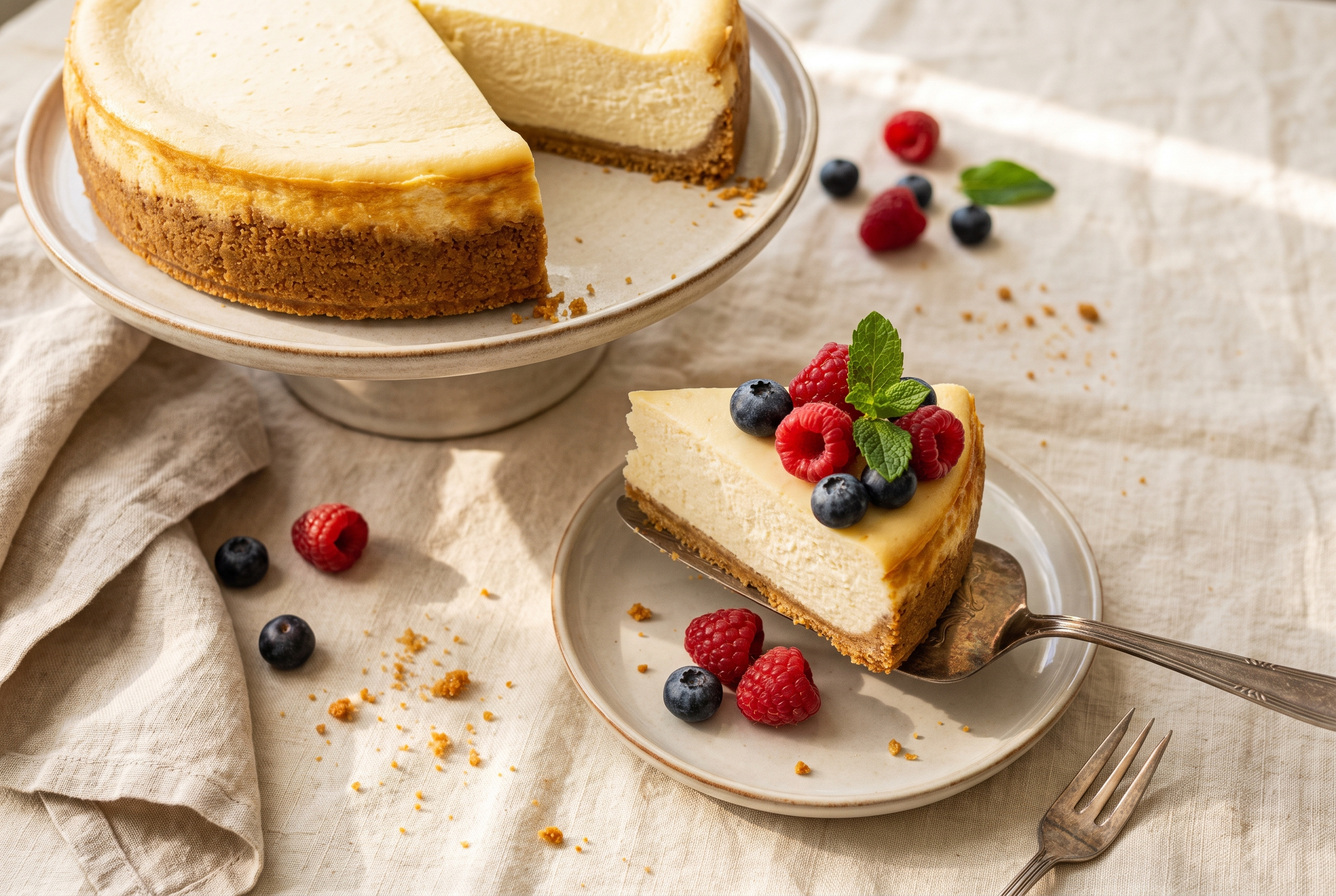 Cottage cheese cheesecake
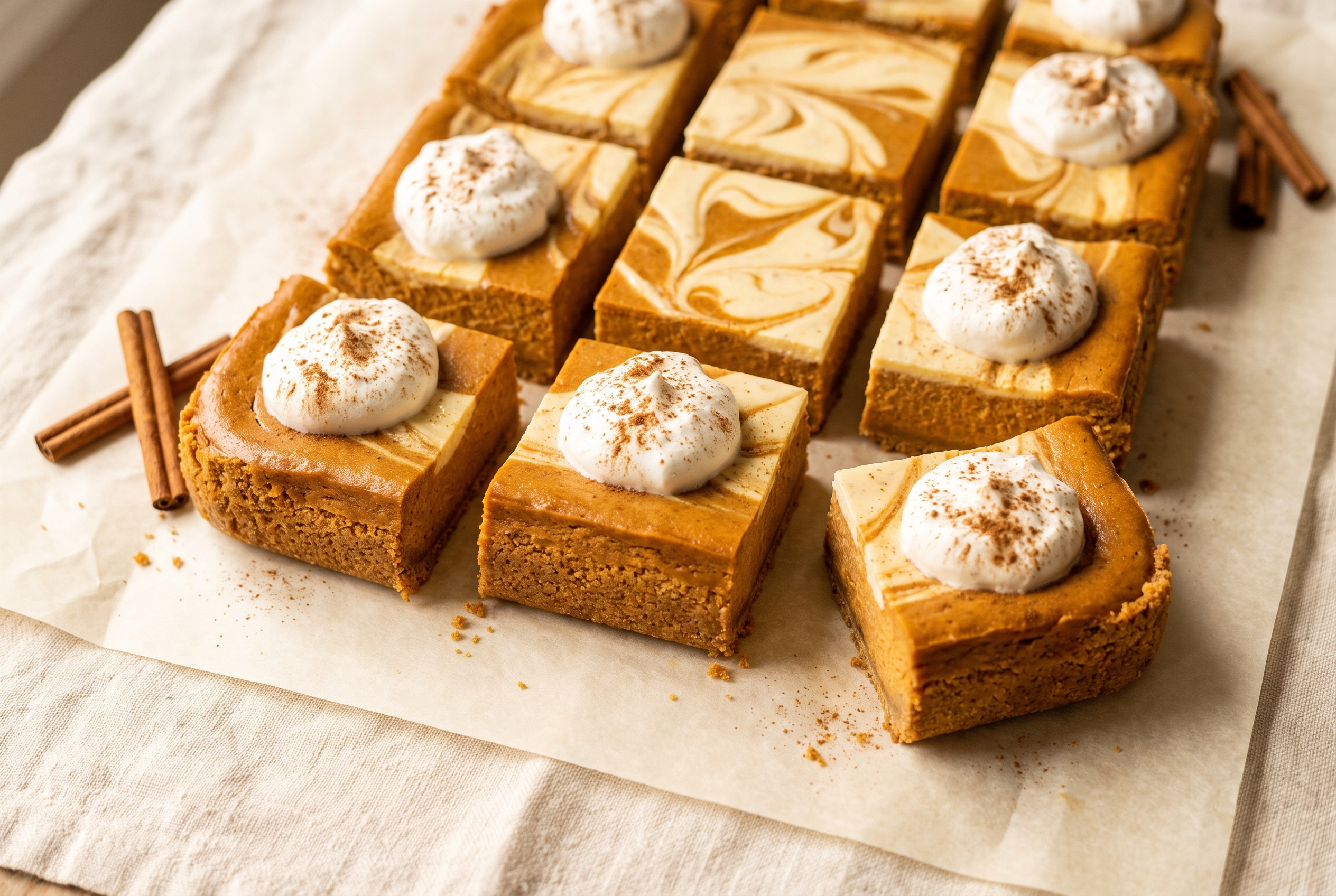 Pumpkin cheesecake bars
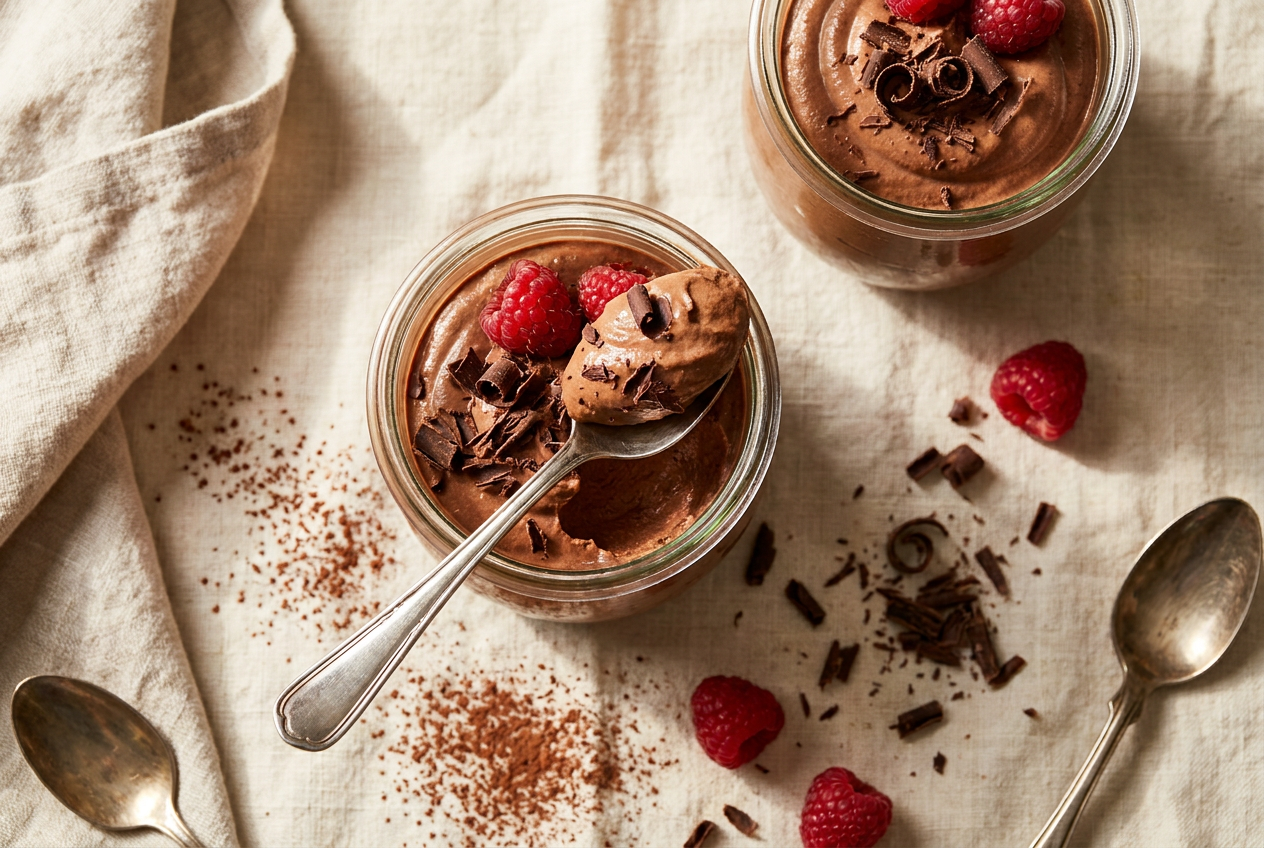 Chocolate cottage cheese mousse
 Pumpkin cheesecake dip
Also new this week: pecan pie bars — a buttery shortbread crust under a gooey brown sugar pecan filling, cut into 16 squares, and far easier than rolling a pie crust.
Burnt Basque Cheesecake
A crustless Spanish-style cheesecake of cream cheese, sugar, eggs and heavy cream baked hot in a parchment-lined pan until the top is deeply caramelized and the center stays creamy and custardy. No water bath, one bowl, 12 slices.
Ingredients
- 2 pounds (four 8-oz blocks) full-fat brick cream cheese, at room temperature
- 1 1/4 cups granulated sugar
- 1/2 teaspoon kosher salt
- 4 large eggs, at room temperature
- 2 teaspoons vanilla extract
- 1 teaspoon finely grated lemon zest
- 1 1/4 cups heavy cream, at room temperature
- 3 tablespoons all-purpose flour
- Butter for the pan and 2 large sheets of parchment paper
Instructions
- Line the pan: Heat the oven to 425°F with a rack in the center. Butter a 9-inch springform pan. Dampen and crumple two sheets of parchment and press them into the pan, overlapping, so they extend 2 inches above the rim.
- Beat: Beat the cream cheese on medium-low 1 minute, then add the sugar and salt and beat until completely smooth, 2 to 3 minutes, scraping the bowl twice.
- Add the eggs: On low speed, add the eggs one at a time, mixing until each is fully incorporated and scraping between additions.
- Finish the batter: Mix in the vanilla and lemon zest, then the heavy cream on low. Sift in the flour and mix just until smooth.
- Fill: Pour the batter into the lined pan and tap the pan on the counter to release large bubbles.
- Bake and cool: Bake 45 to 50 minutes, until the top is deep mahogany and the center still jiggles (about 150°F). Cool in the pan at least 2 hours, then unmold, peel back the parchment and slice. Serve at room temperature or chilled.
Notes
Gluten-free: swap the flour for 2 tablespoons cornstarch. For an 8-inch pan, bake 50 to 55 minutes; for a 10-inch pan, start checking at 38 minutes. Ovens vary a lot on browning — the color of the top matters more than the clock, so move the rack up or finish under the broiler for a minute if needed. A slice is rich; cutting 16 thinner slices brings it to about 345 calories each.
Simple desserts for a smaller appetite
A thin slice of something this rich is more satisfying than a big bowl of something bland, and that idea runs through the dessert chapter of the Ultimate GLP-1 High Protein High Fiber Cookbook — small, honest sweets that fit the way you eat now.
Meal-plan the whole week around recipes like this with RecipeLoop — save recipes from anywhere, get a grocery list automatically.Basque cheesecake questions I get asked.
What temperature do you bake Basque cheesecake at?
Hot — 425°F in a conventional oven for 45 to 50 minutes for a 9-inch pan. Some recipes go to 450°F or even 500°F for a darker top in less time. The high heat is what caramelizes the surface while leaving the center soft, so do not bake it at a normal cheesecake temperature.
How do you know when a Basque cheesecake is done?
The top should be deeply browned and puffed, the outer 2 inches set, and the center still wobbly like jello when you nudge the pan. On a thermometer, 150°F in the middle. It will look underdone — that is correct. It sets fully as it cools.
Why is my Basque cheesecake not burnt on top?
Usually the oven is not hot enough or the pan is too low. Make sure the oven is fully preheated to 425°F, use the center or upper-center rack, and if the top is still pale at 45 minutes, switch on the broiler for 1 to 2 minutes while watching closely.
Does Basque cheesecake need to be refrigerated?
Yes, after it has cooled completely at room temperature (2 to 3 hours). It keeps in the fridge for 5 days. For the creamiest texture, pull slices out 30 minutes before serving; straight from the fridge it is firmer and more like a classic cheesecake.
What is the difference between Basque cheesecake and New York cheesecake?
New York cheesecake has a graham crust, bakes low and slow in a water bath, and is dense, pale and smooth. Basque cheesecake is crustless, bakes hot and fast with no water bath, and has a dark caramelized top with a lighter, custardy center. It is also far more forgiving to make.